20 Illustrated Books That Spark Kids’ Visual Imagination
20 Illustrated Books That Spark Kids’ Visual Imagination. Have you ever wanted to hide in a cupboard, press two small palms to the wood, and listen until the world made sense again?
You’re not alone. You opened a picture book, plunked yourself onto the floor like an adult-sized child, and discovered that illustrated coziness is a legitimate, sanctioned hiding place. Katherine Rundell’s essay nagged at you like the nicest possible guilt — the kind that says, “Maybe go read the books you loved when the world felt softer” — and so you did. After personal losses and political noise became the soundtrack of your days, you found solace not in grand manifestos but in pocket-sized universes bound in board or paper, where nothing catastrophic happens for at least twenty-seven pages and the word cupboard is a verb (in your head, at least).

This image is property of images.pexels.com.
Why illustrated picture books feel like a cupboard you can live in
You’ll notice that these books do something subtle: they shrink the world down to human (or mouse-sized) scale and make everything slightly warmer. That warmth feels like a blanket knitted by someone who knows your name and your allergies.
Illustrated picture books construct micro-utopias — places where community is gentle, chores are meaningful, and seasons are rich character actors. They aren’t about erasing pain. They’re about reminding you that small things can be good, and that calm is not the same as indifference.
Cosy as concept, not escape
You’re not using picture books to run away. You’re learning a method: rest in a believable smallness, then carry that peacefulness back into a big, loud life. It’s like emotional triage — the soft, illustrated world stabilizes you enough to keep functioning.
These books give you permission to be small for a while. They model how to be kind, intentional, and quietly brave — and they do it without high stakes or moral grandstanding.
What makes a picture book “cosy”?
If you were to make a checklist (and you’ll compulsively check it twice), these are the features that flick the cosy switch.
- Warm colour palettes: muted pastels, soft sepias, and comforting greens that say “stay.”
- Domestic rituals: baking, mending, lighting lamps — everyday acts elevated to ritual.
- Intimate scale and composition: dollhouse interiors, cross-sections, tiny doorways.
- Seasonality and nature: leaves, snow, rain, mushrooms — nature as a steady character.
- Gentle community: neighbours who help and meals that appear when someone needs one.
- Low narrative stakes: misplace-a-item plots, seasonal cycles, good-natured curiosity.
You’ll notice each component behaves like a velcro strip, sticking calm to your mental jacket.
Aesthetic choices that soothe
Illustration techniques — pen strokes, watercolor blooms, the grain of paper — all determine how safe a page feels. You like softer edges and fewer harsh lines, because stress loves a corner to wedge itself into.
Textures matter. When an illustrator paints a wool sweater, you can almost itch loyally. When a page shows a small house in winter with light pooling like soup from the windows, your chest loosens by a millimeter and you allow yourself to breathe slower.
Seasonality, cottagecore, and nature-based tranquillity
These aren’t fads you scroll past; they’re visual languages tuned to the brain’s desire for rhythm. You respond to cyclical scenes because they say the world is predictable in useful ways.
Cottagecore isn’t about living in a hedge alone with bees. It’s about valuing small domestic skills, tending things carefully, and letting the outdoors be your therapy couch. Seasons act like chapters in a gentle book: spring brings repair and new bread; summer offers slow afternoons; autumn is for mending and sharing soup; winter invites lamps and stories.
Nature in picture books behaves like an old friend who is both reliable and tenderly exhortative. Trees change color; ponds freeze with comic timing; mice have plans and follow them. This predictable choreography teaches you that change is manageable and often lovely.
You’ll find that a two-page spread of a forest floor can be as instructive as a therapist with a very calm voicehttps://booksforminds.com/category/bedtime-stories/: it shows you cycles, interdependence, and a sense that small creatures matter.
Gentle community values: why they land so hard
When political discourse feels like a blender set to “apocalypse,” illustrated communities show you a quieter alternative. You learn how to be neighborly in increments.
These books model empathy through action: knitting, cooking, inviting, repairing. Characters don’t perform grand moral acts; they do the mundane kindnesses that, accumulated, keep everyone whole. That is both revolutionary and accessible.
Low-stakes storytelling with high emotional yield
You’ll be pleasantly surprised at how much emotion can live in a lost mitten, a repaired boat, or the return of a bird in spring. Low narrative stakes allow emotional bandwidth without trauma triggers. You can sit with feelings and then close the book and go on folding laundry with a steadier heart.

This image is property of images.pexels.com.
Notable contemporary illustrators and what they do to your brain
You have taste now, and the names below are like herbs you sprinkle into the perfect cosy tea. Each illustrator has a signature mood and a palette you might try to steal by wearing a lot of bottle-green sweaters.
Illustrator | Signature traits | How they make you feel |
|---|---|---|
Sophie Blackall | Intricate linework, gentle humour, light-as-a-lantern palettes | You sigh. Then you remember your childhood toy you lost and find closure. |
Eunyoung Seo | Textural watercolours, seasonal lifts, charming flaps | You want a scarf and the key to a tiny cottage. |
Alice Melvin | Quiet naturalism, anthropomorphic animals, lyrical pacing | You feel the year passing like a slow, friendly caravan. |
Phoebe Wahl | Folk textures, nostalgic moonlight, soft character eyes | You remember someone who smelled like cinnamon and forgiveness. |
Teagan White | Delicate flora and fauna, muted winter palettes | You develop an affinity for ice and mittens you never knew you had. |
Naoko Stoop | Whimsical layouts, layered collage, tender portraiture | You want to make tea and a scrapbook simultaneously. |
Emily Sutton | Luminous interiors, cozy domestic scenes, playful composition | You find your way back to being fond of lamps. |
You’ll notice patterns: all these artists keep human proportions humble and domestic details monumental.
Why contemporary illustrators matter now
They’re making books adults want to re-enter repeatedly, not because the world is easier, but because these books provide a template for how to be calm and useful. They show you how to arrange a life of small rituals that stave off panic.
These artists also resist hyper-efficiency. Their books encourage slowness — a valuable skill in a culture that celebrates hustle as if it were a personality trait.
Standout books that will teach you to hide in a cupboard and love the world again
Each of these titles is a small sanctuary. You’ll recognize the pull: a cover that whispers “stay” and spreads that hold you like a friend who knows when to sit in companionable silence.
Book | Author/Illustrator | Why you should live here for a week |
|---|---|---|
Farmhouse | Sophie Blackall | A dollhouse-like intimacy where domestic life is elevated into an affectionate symphony of chores, meals, and small ceremonies. You will mentally rearrange your spice rack. |
Hello Lighthouse | Sophie Blackall | Light, color, rhythmic life at a lighthouse. The cadence of days and the steadfastness of light make you feel anchored. Caldecott Medal winner, and for good reason. |
Cat Family: Four Seasons | Lucy Brownridge & Eunyoung Seo | Lift-the-flap seasonal charm that behaves like a quilt — each flap a pocket of comfort. Great if you like to guess what will be behind things. |
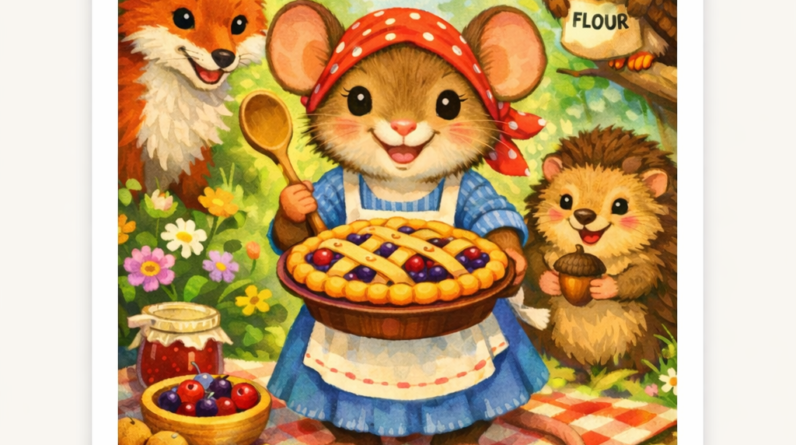
Mouse’s Wood series | Alice Melvin | A year in the life of a small mouse with big seasonal plans. You’ll learn how to make a woodpile into a philosophy. |
Little Witch Hazel | Phoebe Wahl | Four gentle forest stories that smell of nostalgia and marshmallows. You’ll want to borrow her hat. |
The Complete Brambly Hedge | Jill Barklem | The platonic ideal of a caring, sustainable hedgerow community. Everything here runs on kindness and good forage. It’s like a small UK village wrapped in bramble and empathy. |
You can read any of these cover-to-cover or open them to random pages and feel equally restored.
Quick reading guide: When to pick which book
Bad week at work: Hello Lighthouse will steady your tides.
Grief that’s too loud: Farmhouse will let you inhabit a home where grief can sit politely in the corner.
Seasonal ennui: Mouse’s Wood series or Cat Family will give you the comfort of cyclical rhythm.
Want nostalgia without real historical discomfort: The Complete Brambly Hedge is a responsible, over-civilized retreat.
This image is property of images.pexels.com.
Classics and reissues: why they still matter
Some books carry an atmosphere that’s been polished by years of returns. They aren’t stuck in the past; they are places that time recognizes and revisits like an old friend.
The Wind in the Willows (Inga Moore illustrations): You get riverbank days, motorcar outrage (but in a quaint way), and animals who take life very seriously but also nap prolifically.
Elsa Beskow’s Children of the Forest: Folklore-infused gentleness with art that makes you want to trace leaves with your finger.
These reissues remind you that the cosy aesthetic has deep roots, and that timeless comfort can be new again when re-illustrated for contemporary eyes.
What reissues do for the modern reader
Reissues reframe older texts through modern illustration and design choices, making them accessible without flattening their original magic. They’re like vintage sweaters that fit a little better now.
Books about creative and nature-minded figures
When you want your solace to come with a model for creative living, these books are a bridge between art and the values you aspire to.
Woods & Words (Mary Oliver biography, Naoko Stoop): A visual hymn to a poet who loved rambling. The art matches the quiet lyricism of Oliver’s life.
Bud Finds Her Gift (Robin Wall Kimmerer & Naoko Stoop): Nature and reciprocity as life lessons. It’s instructive without proselytizing.
You’ll close these books then immediately feel the urge to carry a pocket sketchbook and compost correctly.
Other cosy titles you should start hoarding (gently)
There are birch-tree shelves of these, so be picky like you’re choosing houseplants.
The Tree Keepers (Gemma Koomen): Seasonal caretaking and stewardship with soft edges.
At Home in a Book (Lauren O’Hara): A book that literally invites you to take up residency in reading nooks.
Mice Skating (Annie Silvestro & Teagan White): Ice and friendship and very refined mittens.
Betty and the Mysterious Visitor (Anne Twist & Emily Sutton): Curiosity tempered with tea and hospitality.
The House with the Little Red Door (Grace Easton): Home as an invitation, not an obligation.
You’ll find that each of these books offers a different room in your mental cupboard.
Interactive/cozy-spot books: page as habitat
Some books are not just stories but habitats you can inhabit with your eyes.
Keeping Cosy and Snuggling Up / Brown Bear Wood series: Two-page spreads that sit quietly and reward long looks.
Cat Family lift-the-flap and other interactive designs: These create a tactile sense of discovery while maintaining the low stakes you crave.
Interactive elements are like tiny doors in your cupboard that open to reveal improbable crumbs of joy.
How to use these books as actual therapy (practical rituals)
You do not necessarily need a couch and a whiteboard. You need a plan that involves tea, a book, and small, ritualized steps.
Create a Cupboard-Reading Kit: a blanket, a mug, low-light lamp, and the book of the week. No notifications allowed.
Habit-stack the reading: After you brush your teeth, read one picture book page. That’s it. Your brain will make a habit out of that micro-joy.
Seasonal reading rotation: Assign books to seasons so you have a predictable emotional diet.
Shared reading as practice: Read aloud to someone smaller than you, or someone who forgot how to be small. Their laughter is medicine.
Sketch-and-collect: After a reading session, sketch a detail you loved. This helps memory consolidate calm.
These small rituals train your nervous system in gentle attentional redirection. You’ll be calmer, which is suspiciously useful.
What to do if your mind is obnoxious and insists on worrying
When intrusive thoughts barge in, use the book as a sensory anchor. Name a color on the page, trace a line on the illustration with your finger, count the objects on a mantelshelf. This is not avoidance; it’s a recalibration.
If you find yourself crying, let it happen. The cupboard is also a permitted place for tissues.
Gifting and curating: how to build a cosy shelf
You’ll probably want to give these books away and keep them all at once. Start with small principles.
Build a theme shelf: seasonal, community-focused, or artist-specific (Blackall corner, anyone?).
Pair a book with a small object: a tea tin, a knitted mitten, a tiny lantern candle.
For friends in crisis: choose low-stakes, high-tenderness books (Farmhouse, Hello Lighthouse, The Complete Brambly Hedge).
For kid-adjacent adults: choose lift-the-flap or interactive books so they get to be surprised again.
Packaging matters because anticipation is half the healing. Wrap a book like it’s a small promise.
Why these books matter in turbulent times
You might worry that embracing small comforts is capitulation. It isn’t. Cosiness is a form of resistance: a refusal to let constant crisis steal your attention.
These books create memory banks of calm. They teach you how to keep life together through daily practices rather than grand gestures. In a culture bent on spectacle, the quietness these books model is a radical, necessary skill.
There’s a distinction between hiding and nourishing. You’re not closing the cupboard forever. You’re giving yourself a time-limited reprieve to regroup and return. That’s responsible self-maintenance, not shirking.
The rituals you learn in picture books — sharing food, tending the garden, helping neighbours — are the opposite of apathy. They are low-energy acts of sustained care.
How to curate a reading session that actually works
You’re not reading an encyclopedia; you’re staging a soft intervention.
Duration: 15–40 minutes. Long enough to reset, short enough not to invite existential dread.
Sensory context: low warm light, a blanket, something fragrant. No glaring screens.
Social frame: optional. Invite one person or make it a solo ritual.
Aftercare: a small activity (tea, walk, journal) to bring the calm into motion.
Think of this as a mini-retreat you can execute between emails. Your inbox will survive.
The cupboard as metaphor and practice
Physically hiding in a cupboard is optional unless you own a particularly charming one. The idea is to practice containment: a single room, a single activity, a single sensory palette. You live inside it for a short time, then re-emerge with more capacity.
Containment is not about ignorance; it’s about conserving emotional resources so you can be useful later.
When you don’t have kids but want to read picture books anyway
You will be judged only by the people who dislike joy, and they are not worth unpacking. Picture books are for humans, not strictly for those under six.
Buy the books, hoard them, read them aloud to your cat. You’ll benefit from the same patterns of attention and rhythm. They just happen to be packaged in small, well-illustrated doses.
How to chunk your adult life with children’s literature
Alternate picture-book sessions with longer novels. Use picture books as palate cleansers the way sommeliers use sorbet. Your emotional tastebuds will thank you.
Reading list with short actionable notes
Below is a compact list you can use when you are at the bookstore and your hands are judged by strangers.
Farmhouse — Read when your living room needs a physical redesign in your head.
Hello Lighthouse — Read when the tides of anxiety are metaphorically and somewhat literally high.
Cat Family: Four Seasons — Read when you want to play detective with flaps.
Mouse’s Wood series — Read as a year-long companionship.
Little Witch Hazel — Read on nights when you miss inexplicable warmth.
The Complete Brambly Hedge — Read like you’re opening a diary of polite mice.
The Wind in the Willows (Inga Moore) — Read for river days and grand naps.
Children of the Forest (Elsa Beskow) — Read for folkloric coziness.
Woods & Words (Naoko Stoop) — Read to learn how to walk gently through the world.
Bud Finds Her Gift — Read for reciprocity in accessible, illustrated form.
Keeping Cosy / Brown Bear Wood — Read to train your eyes on detailed, calming spreads.
You’ll own these books in different moods, like a wardrobe for your emotions.
Final takeaway: the cupboard is not escape; it’s rehearsal
You will not live in a cupboard forever, nor is that advisable for your posture. What you will gain is a series of practiced, repeatable moments of calm that rewire your emotional reflexes. Illustrated picture books teach you how to repair, how to make tea as ritual, how to organize a tiny community dinner with mushrooms and apologies.
You are allowed to prefer cardboard-bound universes over constant internet outrage. You are allowed to retreat, return, and then do the next kind thing. These books are practice: they train you to be small and brave, domestic and generous, anchored and free — sometimes all at once.
So pick a book. Make tea. Close the door for a little while. When you come out, the world will still be its complicated self, but you will have the equipment to love it again, one gentle page at a time.