Quick bedtime stories for children to spark sweet dreams
Quick Bedtime Stories for Children to Spark Sweet Dreams. This article gathers ideas, guidance, and a collection of short bedtime tales designed to soothe, comfort, and encourage peaceful sleep. It addresses why brief stories work well at bedtime, how to select or adapt stories to suit different ages and temperaments, and provides many ready-to-read mini-stories that can be told in two to five minutes. The writing is friendly and practical, helping caregivers create a calming nightly ritual without a long commitment.
Why quick bedtime stories work
Short stories often fit into the rhythm of modern family life while offering the key emotional benefits of a longer reading ritual. They provide predictability, comfort, and a narrative closure that helps signal the transition from active evening to restful night.
Attention span and modern rhythms
Children frequently respond better to shorter tales, especially after a busy day. Short stories respect limited attention spans and help maintain interest through gentle pacing rather than overstimulation.
Ritual and predictability
Even a two-minute story becomes part of a consistent bedtime ritual that signals safety and routine. Repeated characters, recurring phrases, or a familiar closing line create predictability, which supports emotional regulation and relaxation.
Calming language and imagery
Brief stories often rely on soft sensory details — low lights, warm blankets, slow breaths, and gentle animal friends. Such imagery invites the nervous system to slow down, mirroring quiet breathing and relaxed muscles.

How to choose a quick bedtime story
Choosing the right story involves attention to age, temperament, length, and tone. Caregivers may select from classic lullaby-like narratives or freshly written micro-stories tailored to a child’s interests.
Toddlers typically prefer simple, repetitive texts with sensory cues, while preschoolers enjoy short, comforting adventures that end predictably. Early school-age children may appreciate slightly longer micro-adventures that emphasize kindness and gentle problem-solving.
Length and structure
A good quick bedtime story often ranges from 100 to 400 words. It should have a clear beginning, a calming middle, and a restful ending. Short sentences and steady pacing help maintain relaxation.
Soothing tone and language
Words that evoke warmth, safety, and gentle motion (rocking, floating, drifting) create a sleepy atmosphere. Repetition and soft consonant sounds can enhance a lull-like quality.
Cultural sensitivity and representation
Caregivers may select stories that reflect the child’s family, language, or environment. Inclusive characters and relatable settings help children feel seen and secure while learning about others.
Tips for storytelling at bedtime
Good storytelling is less about perfection and more about connection. Simple adjustments to voice, pacing, and physical interaction can transform a quick tale into an effective sleep cue.
A lower pitch and slower tempo help the child’s body match the story’s calm state. Pauses between sentences allow the child’s breathing to slow and the imagination to imagine the scene.
Physical closeness and touch
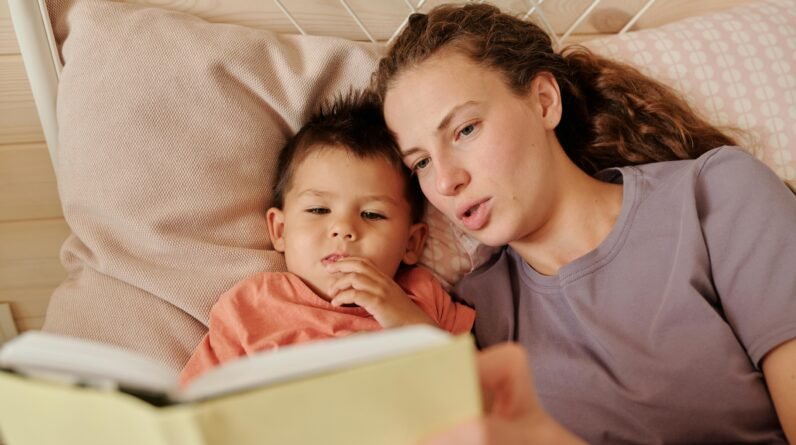
Gentle touch, a soft hand on the shoulder, or a warm blanket supports the narrative. Hushed tones combined with a gentle stroke can be calming without overstimulation.
Repetition and signature endings
A familiar closing line — for instance, “And then all of them drifted into soft, soft sleep” — gives closure and security. Repeating a phrase across nights builds ritual.
Adapting to the child’s response
If the child becomes alert, noisy, or restless, the storyteller may shorten the tale further or transition to a breathing exercise. If the child is drowsy, the story may be slowed more and end sooner.

This image is property of images.pexels.com.
Quick story formats and templates
These templates help caregivers craft micro-stories quickly, even on busy nights. Each template includes purpose, structure, and a sample opening.
Template | Purpose | Structure | Sample opening |
|---|---|---|---|
Lullaby scene | Immediate calm through sensory detail | Setting + sensory description + gentle action + closing | “In a tiny house, the curtains breathed with the evening wind…” |
Gentle quest | Mild curiosity resolved safely | Problem + small action + comforting solution + rest | “A small fox wanted to find a star that had fallen into a puddle…” |
Repetitive refrain | Predictability and rhythm | Refrain + new image each paragraph + same ending | “Soft clouds, soft clouds, carry the world; soft clouds, soft clouds, carry it home…” |
Animal comfort | Comfort through friendly creatures | Introduce animal + comforting action + sleep image | “A sleepy owl wrapped its wings around the moon and hummed a lullaby…” |
Magic object | Imagination with limits | Object introduced + small wish + soothing consequence | “A tiny lantern glowed only for the kindest thoughts and lit the path home…” |
How to use the templates
Caregivers may pick one template and fill three to five short paragraphs to create an instant story. Templates help maintain calming structure while allowing personalization to a child’s preferences.
Quick breathing and transition exercises to pair with a story
Pairing a simple breathing exercise with a short story can deepen relaxation. These small practices are easy to do in the dark or low light.
Ask the child to breathe in as if smelling a cookie, hold briefly, and blow out like blowing on hot cocoa. Repeating this three times slows the nervous system.
Balloon belly
Encourage the child to imagine the belly as a balloon that slowly inflates and deflates. One slow cycle combined with a line of the story enhances a sleepy rhythm.
Counting clouds
A soft count of clouds with each exhale helps steady breath — “One cloud floats away… two clouds drift…” Little counting anchors attention gently.

Short original bedtime stories
The following micro-stories are crafted to be told in roughly two to five minutes each. They are written in friendly third person and end with calming closure. Caregivers may read them aloud or adapt them slightly to match a child’s name or favorite animals. Each story is followed by a one-line suggestion for variations.
1. Moonlight Mail
On a quiet street, the moon sent little silver envelopes to every window. A small child, tucked cozy in a snuggled blanket, heard a soft tap and opened an envelope filled with tuning-fork sounds: a soft chime for calm, a slow hum for dreams, and a tiny bell for kindness. The child placed each sound on a shelf in the heart and watched them glow.
Outside, the moon drifted across the sky like a slow ship, scattering specks of sleep-dust. The child chose the slow hum and hummed along, matching the rhythm until eyelids felt heavy and good. The moon, satisfied, folded the last envelope into the pocket of the night and sailed away, leaving the house warm and quiet.
Suggestion: Replace “child” with a name or slightly alter the sounds (whisper, purr, lull) to match preference.
2. The Little Cloud Who Forgot to Sleep
A small cloud had a problem: it loved watching the world so much that it forgot to sleep. It hovered over playgrounds and gardens, listening to laughter and the drip of evening rain. One kind breeze noticed and invited the cloud to rest on the high branch of a very old tree. The tree told a slow story about deep roots and quiet seasons, and the cloud felt its fluffy edges unwind.
As the tree’s words wrapped it soft and slow, the cloud curled into a round, cotton ball and drifted down to tuck itself behind the hills. When the child looked up and saw that small cloud wrapped like a blanket, they smiled and breathed out, thinking that even busy things can rest.
Suggestion: Add an interaction where an animal sings a lullaby to the cloud for extra warmth.
3. The Littlest Lighthouse
There was a tiny lighthouse on a gentle cove that was no taller than a bookshelf. Ships were not its job; it welcomed lost little songs. Every evening, it switched its light on with a button made from kindness and hummed a soft tune to each note that came by. A small song that felt lonely floated in and found shelter on its rocks.
The lighthouse wrapped the note in a shell and played it back as a lullaby. The waves clapped softly and the moon leaned close. The little song felt safe and small, and it learned to close its eyes. The child listening by the window felt the same warmth, like a tiny light tucked into a pocket.
Suggestion: Change the “song” into a nameable character such as “a whistling kite” or “a tired bell.”
4. The Warm Blanket Bridge
In a town where stars loved to visit, there was a blanket that could fold into a bridge. A small fox used it every night to cross from the den to the field of dandelions. The blanket bridge smelled of lavender and old books, which made the fox yawn at each span it crossed. Midway, the fox met a sleepy beetle who told a joke so soft that both yawned twice and walked slower.
At the end of the bridge, the fox tucked the last dandelion under its chin and curled into the shape of a comma. The blanket folded itself around the fox like a hug and hummed a tune that smelled of moonlight. The child imagined the bridge and felt the warm hush settle down.
Suggestion: Use different scents (honey, pine) if those are comforting for the child.
5. The Star That Learned to Rest
There was a tiny star who practiced twinkling all day and night. One evening, a sleepy comet whispered, “Even stars need a pause.” The little star listened and tried a new twinkle: softer, slower, like a slow blink. When the star paused, neighboring stars blinked back, and the sky felt like a room with a shared rhythm.
The child counted the slow blinks and felt eyelids match the pace. The star learned that rest could be bright and gentle at the same time, and the whole sky settled like a soft blanket draped over the world.
Suggestion: Invite the child to add a slow blink with their own eyelids as the story ends.
6. The Garden of Pockets
Behind a small house, a secret garden grew pockets instead of flowers. Each pocket held a tiny comfort: a whispered story, a pebble of giggle, a ribbon of night air. A child wandered through the garden each night, slipping a little hand into a pocket and pulling out a sigh like a silver ribbon. The pockets were warm, and they smelled of dinner that had been shared and socks fresh from the sun.
When the child found a pocket labeled “dreams,” it opened like a sleepy door. Soft creatures tumbled out and arranged pillows in a circle, inviting the child to sit down and watch the slow parade of peaceful things. The garden hummed quietly, and even the crickets practiced whispering.
Suggestion: Turn the pockets into pockets of clothing or pockets in an imaginary coat for tactile association.
7. The Night Train’s Last Stop
A night train ran through the hills carrying tiny wishes. The conductor was a kind badger who checked each wish for tiredness. The train’s last stop was a small station with a wooden bench and a lantern that never burned bright, only warm. Each wish hopped off and found a small nest made of soft songs.
A child imagined listening to the conductor announce gentle names into the dark as the train breathed and sighed. The lantern’s light drifted like honey on the bench, and the wishes unfurled into slow shapes of clouds. One by one, the wishes tucked themselves in, and even the train whispered, “All safe,” before it closed its doors.
Suggestion: Replace the train with a boat or cloud-lift if those images appeal more.
8. The Pillow Market
Once a month, a quiet market opened where sellers traded pillows. One pillow sold slow footsteps, another sold lullabies, and an old woman traded hats that smelled like rain. A small child visited with a free coin of curiosity and chose a pillow that breathed like an old cat. The pillow promised no jostles, only a soft rocking.
That night, the chosen pillow hummed steady as the moon and tucked the child into a harbor of sleep. The market closed until the next moon, leaving only the hush and a faint scent of chamomile on the air.
Suggestion: Add a small ritual: tapping the pillow three times to start the hum.
9. The Sleepy River
A river that whispered instead of gurgled was full of slow stones that hummed low notes. A small rowboat drifted on it, carrying a lantern that blinked once every time someone let out a slow breath. A child floated in the boat and watched the reeds bend like hands waving goodnight.
Fish with velvet fins swam under and left tiny stars on the water. The child counted the stars as the boat drifted toward a gentle bay where reeds formed a nest. The river’s whisper made a pattern in the chest like a lullaby, and the child let the pattern take them into a soft, drifting sleep.
Suggestion: Encourage the child to hum softly in sync with the river’s whisper.
10. Mr. Cuddlebird’s Coat
Mr. Cuddlebird had a coat with many pockets full of small lights. Each light carried a memory of kindness: a shared cookie, a help given to a neighbor, a song taught to a friend. On nights when the wind felt chilly, Mr. Cuddlebird went door to door, shining a pocket-light that smelled like warm bread.
A child peered through the window and felt the warmth seep like honey. When a pocket-light settled on the sill, its glow hugged the room, and the child’s worries folded softly into the pocket. Mr. Cuddlebird tripped home and hummed, pleased to know all these small lights were safe for sleeping.
Suggestion: Replace Mr. Cuddlebird with a cat or small owl depending on preference.
11. The Calendar of Gentle Days
This was no ordinary calendar; it kept track of the gentlest moments. Each square showed a tiny scene: a shared blanket, a quiet rain, a small hand finding a friend. When a week looked busy and loud, the calendar offered a weekend square that glowed with quiet.
A child sat on the floor and traced a finger over the square that blinked calm. The calendar whispered that every day held one soft thing if one looked closely. The child breathed in and felt the week smooth out, like clay pressed slowly into a round ball, ready for a gentle rest.
Suggestion: Invite the child to add one gentle moment to the calendar before bed.
12. The Little Suitcase of Stars
A small suitcase sat beneath a bed, filled with stars that had been too shy to shine. The owner, a tiny dream-collector, opened it once every night and let out one shy star to walk across the ceiling. The stars left a scent of honey on the blanket.
The child nestled under the stars, which twinkled like slow pulses. Each star told one quiet secret about kindness and then slowly folded itself back into the suitcase until morning. By the time the moon whispered, the suitcase was zipped and the room felt like a safe, small universe.
Suggestion: Change the suitcase to a jar or a drawer if preferred.
13. The Garden Gate That Closed Softly
There was a gate in a garden that closed only with a whisper. It listened for stories of the day and folded them into petals. A child told a small tale of a lost shoe that turned into a boat, and the gate giggled, closing with a soft, satisfied sound. The petals kept the shoe-boat safe for tomorrow.
Night settled with the smell of wet soil and warm tea cups left on the porch. The child lay back on the grass pillow and watched the gate breathe out a final hush, folding the day into a pocket and tucking it under the stars.
Suggestion: Have the child whisper one sentence into the gate as a calming closure.
14. The Bakery That Baked Moonbeams
A tiny bakery on a quiet lane baked moonbeams into tiny biscuits. Each biscuit tasted like a warm memory. The baker, a hedgehog with flour on its nose, handed a child one with a ribbon, saying, “This one is for gentle dreams.” The biscuit melted into a soft cloud on the tongue and made yawns come easy.
The child sat at a small table with the cat that slept like a ball and nibbled slowly. With each bite, the room dimmed softer and the pastry filled the air with the smell of cinnamon and calm. The bakery closed its shutters, and the hedgehog hummed a last tune as the child’s eyes closed.
Suggestion: Replace “biscuit” with “cup of sleepy tea” for non-food preferences.
15. The Rock That Hummed
A mossy rock by the pond had a hum like a very low bell. Animals sat on it to listen when they wanted to rest. A small hedgehog came every evening, pressing its back against the rock until it felt its spine match the hum. The hum made shapes of slow circles in the air.
A child sat near the pond and felt the hum travel through the ground and into the toes. Each hum was like a slow heartbeat shared by the earth. The child yawned wide and let the hum carry them into sleep, as if the world itself had tucked them in.
Suggestion: Have the child place a hand on their chest to feel a matching heartbeat as the story ends.
Adapting stories for different ages and needs
Caregivers might adjust language, length, or content depending on the child’s developmental stage and mood.
For toddlers (1–3 years)
Use repetitive phrases, sensory details, and large, predictable actions. Keep stories under two minutes and include touch or motion such as gentle rocking or hand-over-heart to pair with words.
For preschoolers (3–5 years)
Introduce a small, non-threatening problem and a gentle resolution. Allow slightly longer storytelling (three to five minutes) and invite the child to add a sound or a one-word contribution.
For early school-age (6–8 years)
Offer micro-adventures with a small moral or a calm surprise. Encourage imagination but keep the ending restful and certain. Stories can be five to seven minutes if needed, but keep the final segment slow and quiet.
For anxious or stimulated children
Avoid cliffhangers, loud conflicts, or suspenseful crescendos. Focus on images of warmth, safety, and predictability. Use a repetitive closing phrase and consider pairing the story with a breathing exercise.
Story rotation and personalization
Changing up stories keeps the ritual fresh, while personalization enhances attachment. A balance of rotation and familiarity helps.
Rotation schedule ideas
Small rotation: three favorite stories repeated nightly for a week.
Monthly theme: one theme per month (animals, stars, kitchens) with five related micro-stories.
Special nights: a longer story once a week if the child craves more adventure.
Personalization techniques
Insert the child’s name or favorite toy into the story.
Use family landmarks or pets to create familiarity.
Invite the child to choose between two story starters to invite gentle agency.
Sample bedtime routine using quick stories
A structured routine helps the story function as an end-of-day cue. The table below outlines a calm thirty-minute bedtime ritual that includes a quick story.
Time before sleep | Activity | Purpose |
|---|---|---|
30 minutes | Dim lights, quiet play | Transition from active play to calm |
20 minutes | Warm bath or cozy snack | Physical relaxation |
10 minutes | Pajamas and teeth brushing | Predictable hygiene routine |
5–8 minutes | Quick bedtime story (2–5 min) | Mental closure and calm |
0–2 minutes | Gentle touch, final phrase, lights down | Signal sleep time |
Caregivers may shorten or lengthen each step based on family needs, but keeping the story near the end anchors the bedtime.
Creating a signature closing line
A consistent closing line signals that story time is over and sleep time begins. Examples: “And then the whole world sighed, soft and slow.” or “They drifted into the quiet as the moon tucked the roof in.” The signature line can become a cue that prepares the child for sleep.
Quick printing and storage ideas
Caregivers who like convenience can keep a small jar or box of story prompts or printed micro-stories at the bedside. A card or strip labeled with a title and a one-line prompt makes it simple to pick a story without thinking too hard.
Storage suggestions
Ring of index cards with story names and one-sentence prompts.
A small notebook with themed micro-stories.
Voice recordings of favorite stories for nights when a caregiver’s voice is unavailable.
Safety, comfort, and boundaries
Bedtime storytelling is a time for bonding, not negotiation. Stories should not be used as bargaining chips or extended into long bargaining sessions. Gentle boundaries help preserve the calming purpose.
Setting limits kindly
If a child requests more stories repeatedly, a caregiver may set a loving limit: “Tonight there is room for one quick story and then we rest.” Using the signature closing line helps maintain that boundary with warmth.
Maintain a comfortable room temperature, soft bedding, and minimal light. Gentle white noise can be helpful for some children but should be consistent so it becomes part of the routine.
Incorporating songs and movement
Short songs or simple gestures can be woven into the micro-story to support rhythm and relaxation.
A single-line melody repeated each night becomes familiar and soothing.
Slow arm crosses or a soft pat on the back during the story can help embodiment of the calm.
Encouraging independent bedtime storytelling
Older children may enjoy creating their own micro-stories as a way to process the day and practice self-soothing.
Offer a nightly “one-sentence story” time where the child tells a small tale before lights out.
Keep story-building prompts handy, such as “A quiet animal…”, “A small light…”, “A friendly sound…”
What small story might gently close a busy day and invite a child into sweet dreams?
Final thoughts
Quick bedtime stories are compact rituals that combine narrative, rhythm, and closeness to create a reliable signal for rest. They are flexible, easily personalized, and often enough to carry a child gently into sleep. Caregivers who lean into gentle pacing, sensory detail, and a consistent closing line will find these micro-stories a powerful tool for evening calm.
The shortlist of micro-stories above offers many options for sleepy nights, and the templates and tips make it simple to invent new ones whenever a fresh lullaby is needed. With a soft voice and a steady pace, the tiny tales become warm invitations to sweet dreams.