Bedtime Stories for Tired Toddlers – Calm, Gentle Stories to Help Them Sleep
Bedtime Stories for Tired Toddlers. I write bedtime stories like I assemble puzzles: equal parts patience, a stubborn piece that refuses to fit, and a triumphant, sleepy sigh at the end. In this article I’ll share practical tips, ready-to-read mini-stories, and my slightly ridiculous secrets for turning chaotic evenings into calm, cuddly rituals.
Why gentle bedtime stories work
I believe bedtime stories work best when they act like a soft landing rather than a trampoline powered by sugar and shouting. Gentle tales lower energy, invite empathy, and create a predictable rhythm that signals the body and brain: it’s time to slow down.
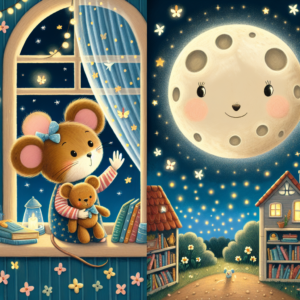
Have you ever tried convincing a tiny human that the moon is just a nightlight who forgot to switch off?
What makes a good bedtime story for toddlers?
In my experience, a great toddler bedtime story is short, sensory, and predictable, with a safe resolution that leaves the listener feeling secure. I also like humor tucked in like a quiet giggle—enough to smile, not enough to launch a second wind.
- Short: 3–10 minutes is ideal for most toddlers.
- Predictable rhythm: repeated phrases or refrains soothe the brain.
- Calm imagery: moonlight, soft blankets, friendly animals.
- Emotional safety: no sudden surprises that could trigger night fears.
- Positive closure: characters settle in, hug, count, or whisper goodnight.
Age ranges and ideal story lengths
I always match story length and complexity to the child’s developmental stage; it’s the difference between a nap and a sprint. Below I’ve summarized practical timeframes and story types that tend to work well for each age group.
| Age Range | Suggested Story Length | Typical Themes | Why this works |
|---|---|---|---|
| Ages 2–3 | 3–5 minutes | Familiar routines, simple emotions, rhythmic phrasing | Short attention spans; comfort in repetition |
| Ages 3–4 | 5–7 minutes | Friendship, gentle adventures, basic problem solving | Growing language skills and curiosity |
| Ages 4–5 | 7–10 minutes | Mild adventures, mindfulness, multi-step routines | Longer attention spans and imaginative play |
How to choose the right length
I test the length like I test spaghetti for doneness—poke and observe. If the child’s eyes glaze over or they climb on you like a mountain goat, it’s too long; if they beg for more, you can push the time a bit.

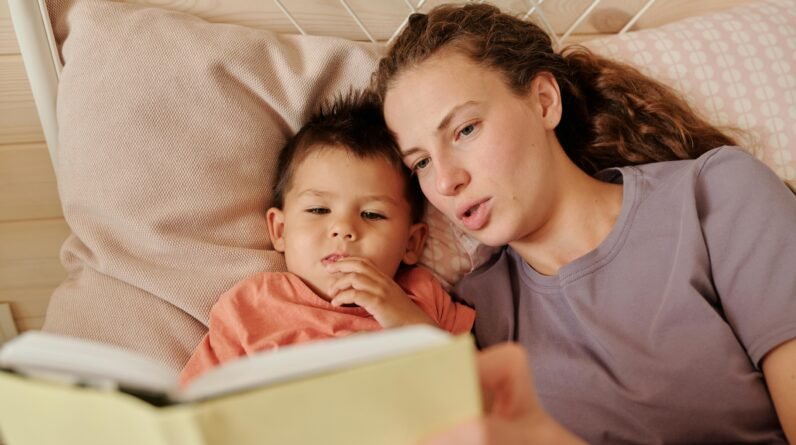
This image is property of images.pexels.com.
5-minute read-aloud picks (quick synopses I love to read)
I keep a short list of 5-minute favorites in my mental pocket for nights when time, energy, or tolerance for theatrics runs low. Each synopsis below is written the way I’d narrate it—soft, slightly silly, and perfect for whispering into a tiny ear.
Lily loves her toys but feels a little sad when the day says, “Okay, curtain call.” I talk about how her toys tuck in one by one, and I whisper the toys’ goodnights like I’m sneaking secrets to a friend.
The Sleepy Train
Tico the toy train chugs slowly from the living room to the bedroom, saying goodnight to every carpet, couch, and cookie crumb. I make the choo-choo quiet and rhythmic, like a heartbeat that helps eyelids droop.
Moon’s Blanket
Little Bear and Mama Bear take fluffy clouds and stitch them into a blanket for the cold moon, learning patience and the funny idea that even the sky can get chilly. I read this with a calm, patient cadence that mirrors the slow sewing.
The Tired Garden
Mina the mouse says goodnight to every plant and bug in her garden and notices how everything quietly shifts into sleep mode. I make the garden sounds soft—rustle, drip, buzz—so the listener can feel the hush.
Free Starlight Wishes
Finn the fox makes small wishes—some for family, some for his toys, some for his own soft dreams—and discovers that wishes are like tiny kindnesses you tuck under your pillow. I read this like a gentle spell that multiplies warmth.
Dream Boat Sailing
Pippin the penguin chick sails a cozy boat with Papa, floating into a bed of blankets that look like waves. I give the waves a lullaby rhythm and let the words rock the child toward rest.
The Night-Time Wiggles
Pip the bear cub has wiggles that won’t quit until Papa Bear shows him a slow breathing game and a warm hug. I use a playful, soft tone for the wiggles then drop to near-whisper for the calming trick.
Too Sleepy for Starlight
An owlet who’s too tired to watch the other owls play learns that resting is its own kind of bravery. I make the owlet’s yawns contagious but in a dignified, tiny-owl way.
The Goodnight Walk
A raccoon counts his friends on a slow walk and says goodnight to each as he passes, turning counting into a sleepy ritual. I use counting as scaffolding—numbers become anchors for the mind.
A chipmunk who zooms through the day learns a gentle “slow game” from Papa that turns rest into a playful exercise. I narrate the slowing down as an amusing challenge: “Can you be slower than a snail? Let’s try!”
How to read aloud for maximum calm
I take reading aloud seriously, like a mix of low-key opera and sneaky meditation. Delivery is as important as words: a calm voice, intentional pauses, and small predictable cues can do more to quiet a toddler than the fanciest plot.
Voice and pace
I use a soft, warm tone with slower pacing than I’d use for anything else—even slower than my spoon stirring soup. Pauses after key lines give toddlers time to imagine and breathe, and repeated refrains become comfortable anchors.
Volume and pitch
I keep volume low but audible, and I drop my pitch during the last lines to signal finality and rest. A steady volume helps toddlers settle; sudden loudness—even if enthusiastic—can reset their alertness.
Using repetition and refrains
I repeat phrases like “and then they yawn” or “goodnight, little ____” because repetition is a toddlers’ emotional floss—comforting and necessary. I let children anticipate the repeated line; that prediction itself can be sleep-inducing.
Managing wiggles and interruptions
When a toddler wiggles, I sometimes incorporate the movement into the story—“The bear stretches like you!”—then guide them back to the narrative with a quiet challenge. If interruptions persist, I shorten the next paragraph and offer a calming choice: “Would you like one more lullaby sentence or a hug?”
Themes that calm toddlers
I pick themes that have gentle stakes and relatable emotions: friendship, routine, nature, and tiny acts of kindness. These themes reassure toddlers that the world is predictable and manageable.
Friendship and kindness
I focus on quick scenes where characters help each other or share a blanket, which models social safety without drama. I read these stories with a smile in my voice because kindness is contagious in a way that’s actually scientifically adorable.
Nature and night
Nature offers built-in calming imagery: moonlight, soft winds, sleepy animals. I use sensory language—cool air, quiet crickets, soft moss—so the toddler can feel the scene as much as hear it.
Everyday routines and transitions
I treat routines as plot points: brushing teeth, putting on pajamas, one last hug. By turning routines into story beats, I help toddlers see bedtime as a satisfying conclusion, not a mystery.
Story structure templates I use (and you can steal)
I create short structures that make story-writing easy, and I’m handing them to you like cheat codes for cozy storytelling. Each template can be filled with your own characters or borrowed from the list above.
Template 1: Goodnight Walk (3–5 minutes)
I introduce a friendly character and name 5 small things they say goodnight to, ending with a final safe place to sleep. Repetition and counting anchor the rhythm, and I always finish with a soft, final line: “Goodnight, little [character].”
- Opening: “Once upon tonight, [Character] decided to say goodnight.”
- Middle: Five small goodnights, each with a tiny sensory detail.
- Ending: Return home and tuck-in with a repeating phrase.
Template 2: The Slow-Down Game (4–6 minutes)
I present a busy character who’s introduced to a playful slow-motion game taught by a caregiver. The climax is a shared deep breath and a sleepy snore.
- Opening: Busy day description.
- Middle: Slow-game instructions with pretend counting.
- Ending: Shared victory and sleep.
Template 3: Moon Helper (3–5 minutes)
I craft a story about helping something big (the moon, the breeze) feel cozy, which models empathy and small acts of kindness. The story ends with a satisfied sigh and soft blanket imagery.
- Opening: Problem: something is cold/lonely.
- Middle: Gentle teamwork, simple solutions.
- Ending: Cozy resolution and nod to night.
Sample five-minute read-aloud scripts (ready to read)
I wrote a couple of short, ready-to-read scripts in the spirit of the provided story list. You can read them verbatim or make them your own with character names.
Script: The Sleepy Train (script, ~4 minutes)
Tico the tiny train had a small puff of steam and a very big yawn. He chugged from the big chair to the soft rug, saying “goodnight” to every toy he passed.
“Goodnight, sock,” he whispered as he rolled by the sock that always lost its friend.
“Goodnight, sofa,” he hummed, as the sofa gave a sleepy creak.
“Goodnight, teddy,” he sighed, nudging the teddy into a blanket of crumbs and cushions.
By the time he reached the bedroom, the stars were blinking like dozing candles. Tico parked beside the pillow, turned off his little lantern, and took one long, tiny whistle of contentment. “Night-night,” he hummed, and the house answered with a soft, sleepy hush.
Script: The Tired Garden (script, ~5 minutes)
Mina the mouse had tied her shoes three times and then untied them again because she forgot which shoe was which. She tiptoed out into the garden to say goodnight to everybody.
“Goodnight, bellflower,” she whispered as the bellflower bent low and folded its petals.
“Goodnight, beetle,” she hummed, and the beetle clicked his tiny feet and curled into a sleep-ball.
She counted the moonbeams—one, two, three—and tucked them like coins into her pocket for safe-keeping.
When Mina curled up in her mossy bed, the garden hummed a lullaby of rustles and drip-drops. She breathed in the cool night and out came a whisper: “Sleep tight.” The garden sighed back and the whole patch of earth felt softer.
Soothing activities to pair with stories
I pair a simple activity with each story to create a consistent bedtime ritual that toddlers begin to expect and enjoy. A tiny routine becomes a cue: when this tiny ritual happens, sleep follows.
| Activity | Duration | Purpose |
|---|---|---|
| Gentle back rub | 1–3 minutes | Lowers heart rate and signals physical relaxation |
| Counting soft toys | 1–2 minutes | Focuses attention and creates predictability |
| Deep-belly breaths with hand-on-heart | 30–60 seconds | Teaches self-regulation and slows breathing |
| Dim lights + night sound machine | 2–5 minutes | Reduces visual stimulation and adds steady background calm |
How to use activities without overstimulating
I keep activities tactile and brief—think of them as appetizers, not a full meal. If anything wakes the child, I scale down immediately and return to the story or a firm, quiet hug.
Making stories inclusive and accessible
I intentionally include diverse characters and experiences so every child can see themselves in sleep-time adventure. I also adapt language and sensory elements for kids with different needs because I believe calm should be universal.
Simple adaptations I use
I swap words, shorten sentences, and add sensory cues: “soft,” “warm,” “fuzzy.” I also offer visual supports (a single picture or object) and allow nonverbal responses like pressing a stuffed animal as “yes.”
Language and cultural sensitivity
I use neutral or inclusive cultural markers unless I’m modeling a specific tradition. If you want to include your child’s cultural bedtime rituals, I encourage it—those familiar elements are often the most soothing.
Common pitfalls and how I avoid them
I have learned things the hard way—like reading an action-packed finale at midnight and then wondering why nobody slept. Here are the mistakes I try not to repeat.
- Overly exciting plots: I avoid cliffhangers that demand immediate action.
- Long descriptive flourishes: I use sensory snippets instead of epics.
- Switching characters mid-story: consistency keeps toddlers anchored.
- Reading with inconsistent tone: I keep the voice steady, not performance-theater.
If a story backfires
If a story causes excitement or fear, I switch to a predictable, calming refrain—like counting or a familiar line—and hold the child until they relax. I always keep a backup plan: a short, proven-to-sleep script or a quiet song.
Frequently asked questions (with my slightly opinionated answers)
I get a lot of practical questions from parents, and I answer them with experience and a smidge of theatricality.
How many stories should I read?
I usually read one complete story and then offer a short extra if energy allows. Two stories is often the sweet spot; more than that risks re-energizing the audience.
What if my toddler wants a story over and over?
I pretend to forget the ending on purpose sometimes—“Wait, what happens after the moon says goodnight?”—and then read the same book again but slower. Repetition is normal and soothing, and I remind myself that patience is part of the job description.
Should I let my child choose the story?
Yes, letting them choose gives them a sense of control, which is calming in itself. I provide two options and gently shepherd the choice to avoid a midnight book marathon.
Are audio stories a good substitute?
Audio stories can be excellent, especially for nights I’m not available to read aloud. I prefer live reading because I can adjust tone and timing, but a soft-narrated audio with gentle cadence works well in a pinch.
Quick checklist I use every night
I keep a short mental checklist so bedtime doesn’t feel like a surprise pop quiz. You can print this in your head like I do.
- Room dimmed, comfortable temperature.
- Soft, consistent noise or silence per child’s preference.
- One short, gentle story selected.
- Post-story ritual: 30 seconds of breathing or a brief hug.
- Lights off or nightlight on, with a soft, final verbal cue: “Time to sleep.”
My final bedtime confession
I sometimes whisper the last line of a story so quietly that only the blanket hears it, and then I pretend the blanket hoots in approval. In all seriousness, bedtime stories are my way of making the world feel a little smaller, softer, and more comfortably predictable—for both of us.
Closing thoughts and a tiny challenge
I challenge you to try one new ritual this week: a two-sentence slow-down game, a five-minute counting walk, or making one household object the “goodnight hero.” If you try it, tell me how it went—I’ll probably write another story and name the hero after you, because my inner storyteller never rests.
If you want, I can also write a custom 3–5 minute bedtime story tailored to your toddler’s favorite animal, toy, or bedtime quirk—just tell me the details and I’ll draft something delightfully sleepy.
Visit us again for more great books reading and recommendations at: https://booksforminds.com/