Twenty Soothing Bedtime Books for Kids
Twenty soothing bedtime books for kids. This article steers clear of intimidating sleep charts and complicated rituals. Instead, it presents a friendly, humorous guide to 20 books that act like reading chamomile—gentle, mildly hypnotic, and suspiciously effective. They will find a mix of board books, picture books, and gentle stories that soothe, reassure, and often end with a satisfying yawn. Each selection includes why it works, ideal ages, reading tips, and a calming ritual suggestion.
Why bedtime books help (and why that matters)
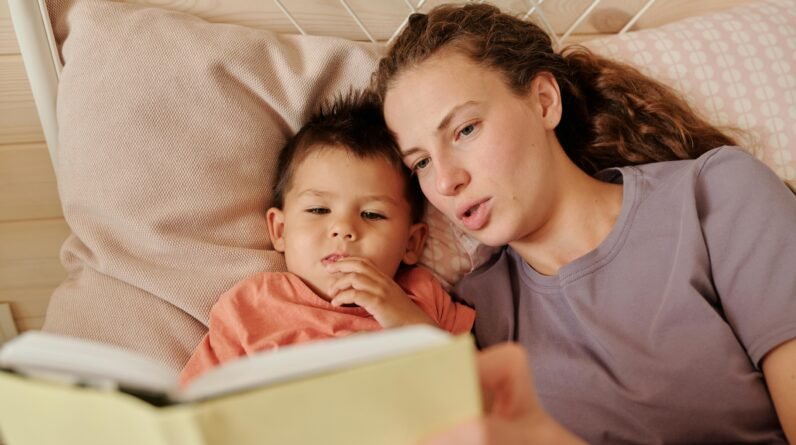
Reading before bed is not magic in the supernatural sense, although it may sometimes feel that way. It is a predictable, shared routine that signals the body and brain that the day is winding down. Books supply rhythm, repetition, and the comforting presence of a caring voice — ingredients that short-circuit the brain’s tendency to treat bedtime like an Olympic sport of stalling.
They also help with emotional regulation. When a child meets a character who feels hesitant, brave, sleepy, or comforted, the child practices empathy and learns coping scripts. That tiny piece of rehearsal can be the difference between an epic bedtime battle and a quiet exit to the land of nod.

How to choose a soothing bedtime book
Choosing a book that encourages sleep is more craft than guesswork. They should consider the child’s age, temperament, and the desired tone—reassuring, dreamy, rhythmic, or comedic.
- Age and attention: Board books and very short texts suit infants and toddlers. Picture books with calm pacing and gentle vocabulary suit preschoolers. Slightly longer stories work for early readers who still rely on a read-aloud ritual.
- Rhythm and repetition: Books with a lullaby cadence, repeated phrases, or a slow countdown encourage predictable listening and relaxation.
- Illustrations and color palette: Soft, muted illustrations with cozy scenes reduce stimulation. Bright neon pages are better left for daytime reading marathons.
- Predictability vs. novelty: Predictable patterns ease anxiety; occasional gentle novelty keeps things interesting without overstimulating.
Reading tips to make books more sleep-inducing
A book is only half the trick; the way it is read performs the other half. They will find these tips handy:
- Slow the pace: Read slower than usual, pause for breaths, and let long sentences breathe. That snoozy stretch of cadence is contagious.
- Use a low, warm tone: A calmer register tends to be more soporific than cartoonish voices. That said, one soft, silly voice for a favorite character is perfectly permitted.
- Dim the lights: Soft, warm lighting signals melatonin to start its work. A night light or lamp with a warmer bulb reduces visual alertness.
- Encourage participation sparingly: A small refrains such as “hug the pillow” or “whisper goodnight” can be engaging without awakening the energy tanks.
- Stop on a calm note: If a child is fascinated and wide awake, it’s better to pick a less stimulating ending or choose an earlier stopping point in the book.

Quick reference table: the 20 books at a glance
# | Title | Author(s) | Ideal age | Why it soothes (short) |
|---|---|---|---|---|
1 | Goodnight Moon | Margaret Wise Brown, Clement Hurd | 0–3 | Rhythmic, gentle repetition; cozy room imagery |
2 | The Runaway Bunny | Margaret Wise Brown, Clement Hurd | 0–4 | Reassurance of love and return; poetic, calming prose |
3 | Guess How Much I Love You | Sam McBratney, Anita Jeram | 0–4 | Expressive affection; quiet back-and-forth text |
4 | Good Night, Gorilla | Peggy Rathmann | 0–3 | Minimal text, humorous pictures; gentle end-of-day silliness |
5 | The Napping House | Audrey Wood, Don Wood | 1–4 | Cumulative, dreamy chain of sleepers; slow tempo |
6 | Owl Babies | Martin Waddell, Patrick Benson | 2–5 | Reassurance about parental return; soft nighttime hues |
7 | Time for Bed | Mem Fox, Jane Dyer | 0–3 | Lyrical, calm rhyme; sleepy animal vignettes |
8 | Goodnight, Goodnight, Construction Site | Sherri Duskey Rinker, Tom Lichtenheld | 2–6 | Rhythmic, repetitive; machines winding down |
9 | On the Night You Were Born | Nancy Tillman | 0–5 | Lyrical celebration; warm, ethereal illustrations |
10 | The Kissing Hand | Audrey Penn | 2–6 | Comforting separation remedy; simple ritual idea |
11 | Llama Llama Red Pajama | Anna Dewdney | 2–5 | Honest bedtime feelings; reassurance at the end |
12 | The Going-To-Bed Book | Sandra Boynton | 0–3 | Silly yet soothing routines; short and rhythmic |
13 | I Love You to the Moon and Back | Amelia Hepworth, Tim Warnes | 0–5 | Tender refrains; moon imagery calms bedtime anxiety |
14 | The Sleep Book | Dr. Seuss | 3–7 | Witty, circular rhymes; whimsical lullaby energy |
15 | Pajama Time! | Sandra Boynton | 0–4 | Silly, musical vibe with a sleep-focus ending |
16 | Good Night, Little Blue Truck | Alice Schertle, Jill McElmurry | 1–4 | Friendly farm scenes; predictable cadence |
17 | Bedtime for Frances | Russell Hoban, Lillian Hoban | 2–6 | Familiar character worries overcome; gentle reassurance |
18 | The Invisible String | Patrice Karst | 3–8 | Strong emotional comfort for separation worries |
19 | Bear Snores On | Karma Wilson, Jane Chapman | 2–6 | Cozy hibernation theme; mellow ending |
20 | How to Catch a Star | Oliver Jeffers | 3–7 | Quiet yearning and gentle resolution; soft illustrations |
The list, expanded: one soothing book at a time
Each selection below includes what makes it calming, suggested ages, reading tips, and a tiny ritual that pairs well with the story.
1. Goodnight Moon — Margaret Wise Brown, Clement Hurd
Goodnight Moon reads like a lullaby in book form. The painting of a little room and a gentle, rhythmic goodnight to objects makes the story feel like a checklist for slumber. Babies and toddlers respond to the repetition. It is short enough to be read even if a child is mid-yawn and long enough to structure the transition.
Suggested reading tip: Slow each “goodnight” down and linger on the illustrations the way a cat would linger in a sunbeam. Ritual: After the “goodnight” sequence, whisper one personal goodnight for the child.
2. The Runaway Bunny — Margaret Wise Brown, Clement Hurd
This story reassures anxious children through a playful metaphor: no matter how far the bunny runs, the mother’s love follows in all forms. The dreamy cadence and the ultimate return provide emotional safety. The gentle illustrations enhance a sense of timelessness.
Suggested reading tip: Use a soft, steady voice and slightly lower the pitch on “No matter where you go.” Ritual: Finish with a pretend “follow” — a soft hand on the child’s forehead or back.
3. Guess How Much I Love You — Sam McBratney, Anita Jeram
A sweet tug-of-love between Little Nutbrown Hare and Big Nutbrown Hare. The escalating comparisons are charming and end on a cuddle-ready note. It reassures children that love is both measurable and immeasurable—comforting in a bedtime context.
Suggested reading tip: Alternate voices very subtly for the two hares, keeping both voices mellow. Ritual: Parents or caregivers can invent a tiny measuring game—“How many cuddles tall?”—and give an extra squeeze.
4. Good Night, Gorilla — Peggy Rathmann
Mostly silent (in a delightful way), this book relies on pictures and gentle mischief. The gorilla’s nighttime smuggling of zoo inhabitants will provoke a smile but resolves quietly with everyone in bed. The sparse text and clear pictures work wonders at bedtime when concentrated attention is short.
Suggested reading tip: Whisper the minimal text; let the child narrate the pictures when semi-awake. Ritual: After the last page, tuck in an actual stuffed animal and say a small, humorous goodnight.
Who else suspects that a bedtime story has the secret job of turning tiny whirlwinds into horizontal, quiet humans?
5. The Napping House — Audrey Wood, Don Wood
A cumulative tale of sleepers piling on a bed becomes increasingly cozy instead of chaotic. The story ends in a dreamlike curtain call that signals rest. Its hypnotic building structure often relaxes listeners into drowsiness before the final syllables.
Suggested reading tip: Build suspense slowly as the list of nappers grows; pause before revealing the next sleeper. Ritual: Everyone in the room takes one slow “lullaby breath” together after the story.
6. Owl Babies — Martin Waddell, Patrick Benson
When three baby owls worry about Mom’s absence, the reassurance of her return offers a calm emotional arc. The moody night palette and gentle pacing help stabilize separation anxieties, making it an ideal pre-sleep regimen for anxious children.
Suggested reading tip: Allow the child to imitate the owls’ worry sound and then a relieved sigh when Mom returns. Ritual: A nightly “I will come back” phrase, replacing the worry with certainty.
7. Time for Bed — Mem Fox, Jane Dyer
Soft, lullaby-like verse paired with sleepy animals makes Time for Bed practically designed to slow down a room. The rhyme is easy to follow and the imagery consistently cozy—perfect for smaller audiences who respond to poetic cadences.
Suggested reading tip: Read in a sing-song whisper. Ritual: Try a consistent closing line, such as “Now it is time for bed,” said in an extra-soft voice.
8. Goodnight, Goodnight, Construction Site — Sherri Duskey Rinker, Tom Lichtenheld
Not every child dreams of cranes, but many do. This book anthropomorphizes heavy machinery and tucks each hardworking vehicle into sleep. Its predictable repetition (“Goodnight, truck”) and gentle ending are surprisingly soporific for motor-obsessed listeners.
Suggested reading tip: Use a slow, steady rhythm with a slight bass for the “Goodnight” refrain. Ritual: Place a toy truck under the blanket of a favorite stuffed animal as a symbolic tuck-in.
9. On the Night You Were Born — Nancy Tillman
This book is a poetic celebration of a child’s arrival, composed in affirming, lyrical phrases. It uses expansive metaphors to make the child feel cherished in the cosmic sense, a lovely feeling to carry into sleep.
Suggested reading tip: Emphasize the emotional lines while keeping the overall cadence slow. Ritual: After the book, say one specific thing that made the child’s presence special that day.
10. The Kissing Hand — Audrey Penn
Written to soothe separation anxiety, The Kissing Hand offers a small physical ritual: a secret kiss that travels through a chubby little hand. That actionable ritual is pure bedtime gold, especially when caregivers must leave the child overnight.
Suggested reading tip: Practice the kissing-hand ritual in a quiet, private voice. Ritual: After the story, actually perform a small kiss on the inside of the child’s hand and let it rest over their heart.
11. Llama Llama Red Pajama — Anna Dewdney
Honest and heartfelt, this book addresses the common bedtime experience of calling for a caregiver. The rhythmic text and reassuring conclusion help normalize minor bedtime separation and end with comfort.
Suggested reading tip: A slightly amplified “Mooom!” voice for the llama’s call can provoke a smile but should be followed by a soft, calm resolution. Ritual: Pause at the calming end and perform a slow, routine tuck-in.
12. The Going-To-Bed Book — Sandra Boynton
Playful, brief, and musically paced, this title turns the routine of getting into pajamas and brushing teeth into a cozy caper. The silliness is low-energy enough to be suitable for bed.
Suggested reading tip: Keep silly voices to a minimum and let the funny pictures be the comic relief. Ritual: After the story’s final tooth-brushing scene, dim the light and hum a short tune.
13. I Love You to the Moon and Back — Amelia Hepworth, Tim Warnes
Simple declarations of love tied to moon imagery create a sense of safety and wonder. The repetition of loving expressions helps the child feel secure as the world grows darker.
Suggested reading tip: Draw out the echoing line “I love you to the moon and back” to make it resonate. Ritual: Trace a soft circle over the child’s hand to mimic the moon’s orbit and say the phrase.
14. The Sleep Book — Dr. Seuss
Dr. Seuss normally does zany, but The Sleep Book is slyly sedative: it imagines the world’s creatures heading to bed with whimsical, repetitive phrasing that can lull listeners. The rhythm and rhyme are playful yet calming when read at a whisper.
Suggested reading tip: Reduce the pace to near a whisper and emphasize the circular, ending rhythm. Ritual: Count down together in a Seussian cadence from five to one before lights out.
15. Pajama Time! — Sandra Boynton
This musical, upbeat title can be surprisingly low-key when read gently. A short, upbeat routine that culminates in a pajama-clad bedtime helps children associate pajamas with the cozy end of the day.
Suggested reading tip: Keep the musical energy present but tempered; think soft jazz rather than a drum solo. Ritual: Put on pajamas right before the story and use the last page as a segue to lie down.
16. Good Night, Little Blue Truck — Alice Schertle, Jill McElmurry
This friendly farm outing offers small vignettes that end with everyone heading home and settling down. The combination of rhythm, friendly animals, and the quiet highway to bed makes it soothing.
Suggested reading tip: Let the animal sounds be soft; the book’s rhythm should feel like a gentle engine lull. Ritual: Dim lights and hum the truck’s low rattle while the child snuggles.
17. Bedtime for Frances — Russell Hoban, Lillian Hoban
Frances frets about the process of falling asleep, and the story reassures children that such worries are normal and manageable. The narrative acknowledges bedtime anxieties and resolves them with a cozy conclusion.
Suggested reading tip: Be honest in the tone—acknowledge the worry in a calm voice and then soften it as the story resolves. Ritual: At the end, invite the child to name one small worry and imagine it drifting away.
18. The Invisible String — Patrice Karst
This gentle, modern classic arms children with an imaginative coping tool for separation: an invisible string that connects loved ones. It is particularly useful before sleep for children who fear distance from caregivers.
Suggested reading tip: Describe the string slowly and ask the child to feel where their string is. Ritual: Trace a slow, imaginary line from the child’s chest to the bed or to the caregiver and say one comforting sentence.
19. Bear Snores On — Karma Wilson, Jane Chapman
Though the story includes a lively party, it ends on a mellow, hibernation-ready note. The theme of rest after activity can resonate with kids who need permission to stop and sleep.
Suggested reading tip: Keep the party’s energy low-key; speed up slightly only to show excitement, then decelerate. Ritual: After the last page, do a slow, exaggerated yawn together that matches the bear’s.
20. How to Catch a Star — Oliver Jeffers
A quiet, slightly wistful fable about a boy who wants a star, it ends gently and philosophically, providing just the right balance of wonder and closure. The soft colors and hopeful ending ease the mind.
Suggested reading tip: Read the reflective lines with a soft voice and leave a minute of silence at the end to let wonder settle. Ritual: Wish on any small light in the room and then switch it off.
Special sections: board books, little libraries, and longer picture books
Board books are durable and usually concise. They work best right before bed for babies and toddlers who need calming repetition and tactile engagement. Titles like Goodnight Moon, The Going-To-Bed Book, and Good Night, Gorilla fall into this category.
How to use them: Keep one or two favorites within reach of the child for shared reading. Let the child turn pages if it helps them feel involved, but keep the pace slow.
Picture books for deeper bedtime ritual
Longer picture books like Guess How Much I Love You or The Runaway Bunny create emotional depth. They suit slightly older children who can follow a narrative and benefit from the story’s emotional arc.
How to use them: Allow the story’s arc to mirror the child’s feelings: worry, reassurance, resolution. Pair these books with a closing ritual linked to the book’s theme.
For anxious, energetic, or reluctant sleepers
Anxious sleepers: Choose books with explicit reassurance (The Kissing Hand, Owl Babies, The Invisible String). Add a physical ritual from the book (a kiss, tracing, or string gesture).
Energetic kids: Pick books with predictable endings and limit interactive prompts. Use more lullaby cadence and fewer participatory moments after the first page.
Reluctant readers: Give them limited choices—two pre-approved books to pick from so control feels shared. Use low, calming lighting and a fixed time to read.
Pairing books with sensory elements (gentle, not stimulating)
Soft blankets and favorite stuffed animals increase comfort; designate one as the official “bedtime pal.”
Warm milk or a low-sugar comfort drink can be part of a calm ritual, but avoid sugary snacks that hype energy.
Aromas like lavender (lightly applied to a pillow or diffuser) can be supportive for many children. Check for sensitivities first.
How to rotate the bedtime routine without chaos
Consistency is soothing, but monotony sometimes leads to revolt. Rotate books on a simple schedule: one week of board-book brevity, one week of a longer picture book, and one week of favorite repeats. That preserves predictability while keeping bedtime interesting.
A helpful tip: Keep one “anchor” book that appears every night (e.g., Goodnight Moon) and rotate a second book. The anchor book signals the brain that bedtime is in progress.
When to stop reading and let sleep start
Reading is a sleep cue, not a replacement for it. If the child is yawning and eyes are closing, it’s fine to stop mid-book and pick it up tomorrow. If the child is pepped up by the story itself, choose a shorter, calmer title next time or cut down the number of pages.
A useful rule of thumb: stop while the mood is calming but before the child becomes overstimulated. That way, the last memory before lights out is tranquil.
Final notes and a tiny, humorous confession
Parents, caregivers, and bedtime readers should know that books are not guarantees—just helpful accomplices. A good story can make bedtime smoother, but sometimes a child will turn out to be a plot-twist aficionado and require gentle persistence. When that happens, they can always claim it was “experimental literature.”
And finally, it should be said that a bedtime book is the one piece of parental performance art that usually rewards the artist immediately: children often fall asleep while listening, which, let it be noted, is the family’s most cost-effective magic trick.
May the yawns be many and the lights be dim.