How to Stop Bedtime Stalling: Practical Tips for Calmer Evenings
To stop bedtime stalling, make the end of the evening predictable: use a short routine, offer only a few appropriate choices, meet reasonable needs before lights out, and respond to repeated requests with the same calm, brief message.
Bedtime stalling can sound like “one more story,” “I need water,” “I need another hug,” “I have to use the bathroom again,” or “I’m not tired.” These requests are not always simple avoidance. Children may be seeking connection, reassurance, autonomy, or help managing tiredness, worry, or a routine that changes from night to night.
The goal is not to make bedtime rigid or confrontational. It is to create a routine that feels warm, clear, and consistent enough that your child knows what happens next.
Key Takeaways
- Meet predictable needs such as water, bathroom, connection, and storytime before the routine ends.
- Use a short bedtime sequence that stays broadly the same from night to night.
- Offer limited choices inside the routine rather than making bedtime itself optional.
- Use one calm response to repeated requests instead of entering a new discussion each time.
- If screens regularly extend the evening, create a consistent stopping point before bedtime.
- Track patterns if you are unsure what is driving the stalling.
- Persistent fears, breathing concerns, or significant daytime sleepiness deserve professional advice.
How Do You Stop Bedtime Stalling?
Bedtime stalling usually improves when children know what the routine includes, when it ends, and how parents will respond to repeated requests.
A simple pattern might be:
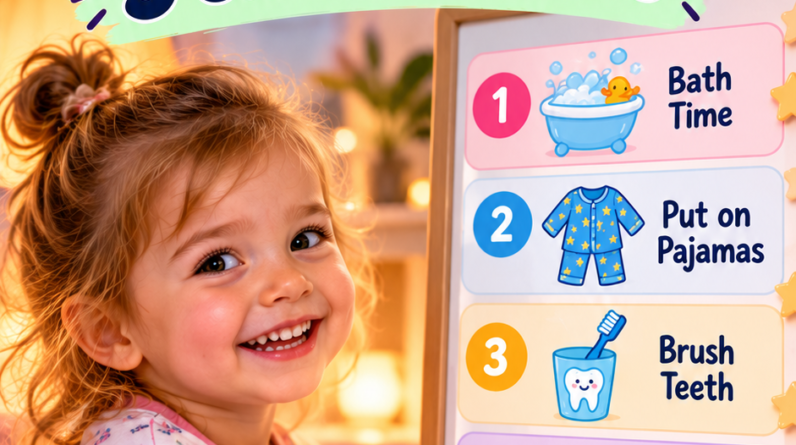
Bathroom → Pyjamas → Teeth → One story → Cuddle → Water if needed → Goodnight
Before the final goodnight, give your child an opportunity to meet ordinary needs. Once the routine is complete, keep responses to repeated requests brief and calm.
If your child is genuinely frightened, unwell, in pain, or needs the bathroom, respond to that need. Consistency should never mean ignoring a real problem.
Watch: How to Stop Bedtime Stalling
What Is Bedtime Stalling?
Bedtime stalling means repeated requests or behaviours that extend the bedtime routine after the family is trying to move toward sleep.
It may include:
- “One more story.”
- “I need another drink.”
- “I have to go to the bathroom again.”
- “I’m hungry.”
- “I’m scared.”
- “I’m not tired.”
- “Can you stay?”
- “Just five more minutes.”
- repeatedly leaving the bedroom, or
- starting new conversations after the routine has ended.
Occasional delaying is common. It becomes more difficult for families when it is frequent, significantly extends bedtime, or regularly creates conflict.

Why Bedtime Stalling Happens
Children can stall for different reasons, so it helps to look at what usually happens before and during the delay.
1. Your Child Wants More Connection
Bedtime creates a natural separation point. Some children ask for more stories, conversation, cuddles, or check-ins because they want more time with a parent.
Instead of waiting for repeated requests after goodnight, build connection into the routine itself.
A few minutes of undistracted reading, cuddling, or quiet conversation can provide a clear moment of togetherness before the routine ends.
2. Your Child Wants More Control
Bedtime involves many adult-led transitions, so children may push for control by delaying the next step.
Offer small choices inside the routine:
- “Blue pyjamas or green pyjamas?”
- “Moon story or bear story?”
- “Teddy beside you or on the pillow?”
The choice is real, but the overall routine continues either way.
3. Your Child May Be Extremely Tired
Very tired children do not always look sleepy. Some become more emotional, restless, silly, argumentative, or easily overwhelmed.
If stalling tends to happen after very long or busy days, experiment with beginning the quieter part of the routine earlier.
4. Your Child May Not Be Ready to Settle Yet
Stalling can also happen when bedtime is being attempted before the child is ready for sleep. Nap timing, activity, schedule changes, and individual sleep needs can all play a role.
If the child lies awake calmly for long periods every night, review the overall schedule rather than automatically treating the behaviour as defiance.
5. Screens May Be Extending the Evening
Videos, games, and devices can make the transition into bedtime difficult when they continue right up to the routine or create repeated requests for “one more.”
A clear stopping point can be easier to enforce than deciding separately every night.
6. The Routine Changes Too Often
If extra requests sometimes lead to another story, another video, or a much later bedtime, children may continue asking because the end point is unclear.
If inconsistency is the larger issue, read
How to Fix Inconsistent Bedtime Routines
.
A 7-Step Plan to Reduce Bedtime Stalling
Step 1: Make the Routine Predictable
Choose a short sequence your family can realistically repeat most nights.
For example:
“Wash, pyjamas, teeth, story, cuddle, goodnight.”
Step 2: Meet Predictable Needs Before Goodnight
Before ending the routine, make reasonable space for:
- the bathroom,
- a drink if needed,
- one agreed story,
- a comfort item, and
- a brief moment of connection.
This reduces the number of ordinary tasks that genuinely still need to happen after lights out.
Step 3: Offer Limited Choices
Use two acceptable options rather than open-ended questions.
Instead of:
“What do you want to do before bed?”
try:
“Do you want the moon story or the sheep story?”
Step 4: Create a Clear End Point
Use the same final step or phrase each evening:
“Our bedtime routine is finished. I love you. Goodnight.”
Step 5: Keep Repeated Responses Brief
Once a reasonable need has already been met, avoid beginning a new debate.
Use a short response and then return to the bedtime boundary.
Step 6: Look for Patterns
Notice whether stalling increases after:
- late naps,
- especially stimulating evenings,
- screen use,
- changes in caregivers,
- busy days,
- family stress, or
- changes in bedtime timing.
Step 7: Adjust One Thing at a Time
If the problem continues, change one part of the routine and observe what happens rather than redesigning the entire evening every few nights.
Bedtime Stalling Solutions by Age and Stage
Toddlers
Toddlers usually benefit from very simple language and a short sequence.
- Keep the routine manageable.
- Use the same order whenever possible.
- Offer one or two simple choices.
- Use a familiar comfort object when appropriate.
- Keep stories short on very tired evenings.
Example:
“Pyjamas, story, cuddle, goodnight.”
For tired toddlers, see
Bedtime Stories for Tired Toddlers
.
Preschoolers
Preschool children may combine delaying with imaginative questions, worries, requests, and a strong desire to make choices.
Try:
- a simple visual routine,
- two choices rather than many,
- one agreed number of stories, and
- a consistent goodnight phrase.
If repeated bargaining is the main problem, read
How to Stop Bedtime Negotiations
.
School-Age Children
Older children may delay bedtime through unfinished homework, questions, reading, devices, worries, or repeatedly getting out of bed.
- Prepare school items earlier in the evening.
- Create a clear device stopping point.
- Allow time to discuss worries before the routine is finished.
- Agree in advance on reading time.
- Use a checklist if repeated reminders are creating conflict.
Teens
Adolescents can have different sleep timing from younger children and need a more collaborative approach.
Rather than using young-child scripts, discuss practical boundaries around:
- homework,
- phone use,
- morning commitments,
- late evening activities, and
- a realistic bedtime plan.

Calm Scripts for Common Bedtime Stalling
Scripts work best when they are brief, respectful, and matched to the actual situation.
“One More Story”
“We finished tonight’s story. We’ll choose another one tomorrow. Goodnight.”
“I Need Water”
If your child genuinely needs a drink, meet the need simply rather than turning it into a negotiation.
“Here’s your drink. Then we’re going back to bed.”
“I Need the Bathroom Again”
“Okay. Quick bathroom, then straight back to bed.”
“I’m Hungry”
If late-night hunger happens regularly, look at the timing and adequacy of the evening meal or an appropriate planned snack rather than arguing about food after lights out.
“Breakfast is in the morning. If you’re often hungry at bedtime, we’ll plan for that tomorrow.”
“I’m Scared”
Fear deserves reassurance rather than a dismissive script.
“I hear that you’re scared. I’m here, and you’re not alone. Let’s check what you need to feel comfortable.”
If fears are frequent, explore
How to Make Bedtime Feel Safe
.
“I’m Not Tired”
“You don’t have to make yourself fall asleep. This is quiet rest time now.”
Getting Out of Bed Repeatedly
Keep the return calm and low-key while checking that there is no unmet physical or emotional need.
“It’s bedtime. Let’s go back to bed.”
Can a Visual Timer Help With Bedtime Stalling?
Some children find visual timers helpful because they make transitions easier to see.
You might use one for:
- quiet play,
- storytime,
- getting ready for bed, or
- the final wind-down period.
How to Use a Timer
- Explain what the timer represents before starting it.
- Give the child a reminder as the end approaches if that is helpful.
- When it finishes, move calmly to the next routine step.
- Avoid repeatedly resetting the timer in response to bargaining.
Example:
“When the timer finishes, we’ll close the book and move to goodnight.”
Timers are optional. If they make your child more anxious or focused on the countdown, use another transition cue instead.
Should You Use a Reward Chart for Bedtime Stalling?
Some families find simple positive reinforcement helpful, particularly when the goal is specific and achievable.
Rather than rewarding a vague outcome such as “sleeping perfectly,” focus on behaviours the child can actually control.
| Bedtime Goal | Possible Recognition |
|---|---|
| Started bedtime routine when prompted | Sticker or check mark |
| Completed pyjamas and teeth | Sticker or check mark |
| Chose the agreed number of stories | Sticker or check mark |
| Used the visual routine independently | Praise or check mark |
| Returned to bed calmly after a reminder | Praise for the successful return |
Possible non-food rewards might include choosing tomorrow’s story, choosing breakfast music, extra daytime reading together, or selecting a weekend family activity.
Keep reward systems simple. If the chart itself creates pressure or conflict, it is not necessary.
Create a Bedroom Environment That Supports the Routine
The bedtime environment does not need to be perfect, but reducing unnecessary stimulation can make it easier to maintain a calm final routine.
- Use comfortable, lower lighting during the wind-down.
- Reduce sudden household noise where practical.
- Keep the sleeping space comfortable for your child.
- Limit distracting devices around the bed.
- Keep frequently used bedtime items easy to find.
- Use age-appropriate comfort objects where safe.
Every household is different. Focus on realistic adjustments rather than trying to create a perfectly silent or perfectly styled bedroom.
How to Stop Screen-Based Bedtime Stalling
Screen-based stalling often happens because the stopping point is unclear: one episode becomes another, a game needs “one more round,” or a child asks repeatedly to keep a device.
Practical Screen Boundaries
- Choose a consistent device stopping point before the bedtime routine.
- Turn off autoplay.
- Keep devices away from the bed if they repeatedly extend bedtime.
- Give a warning before screen time ends.
- Offer a clear next activity such as reading, drawing, or quiet conversation.
- Use parental controls or downtime tools if they make the boundary easier to maintain.
Example:
“Screens are finished for tonight. Now you can choose your story or quiet drawing.”
Bedtime Stalling Tracker
If bedtime is difficult most nights, tracking the pattern for a short period can help you identify what is happening before making additional changes.
| Night | Routine Started | Bedtime | Main Requests | Out of Bed? | Possible Trigger |
|---|---|---|---|---|---|
| 1 | |||||
| 2 | |||||
| 3 | |||||
| 4 | |||||
| 5 | |||||
| 6 | |||||
| 7 |
You can continue the tracker for another week if that helps. The purpose is to identify repeated patterns, not to prove that the routine is succeeding or failing by a particular deadline.
Special Considerations for Bedtime Stalling
Children differ significantly in how they experience transitions, sensory input, worries, and bedtime. Adapt strategies to the individual child rather than assuming every form of stalling has the same cause.
Children With ADHD
Some children with ADHD may find multi-step transitions or lengthy verbal instructions difficult.
Depending on the child, useful supports may include:
- a short visual checklist,
- one instruction at a time,
- a predictable order of activities,
- advance warning before transitions, and
- reducing unnecessary decisions at bedtime.
If bedtime or sleep is a persistent concern, discuss it with a qualified healthcare professional who knows your child.
Autistic Children or Children With Sensory Sensitivities
Sensory preferences and transition needs vary greatly. Some children may prefer predictable lighting, particular clothing textures, consistent bedding, visual cues, or a quieter environment.
Introduce changes gradually and pay attention to what actually helps your child feel comfortable.
Bedtime Anxiety
If worries appear every night, consider giving them space earlier in the evening so the child does not need to begin a long conversation after lights out.
You might say:
“Let’s talk about that worry now. We can write it down so we remember to come back to it tomorrow.”
Reassure rather than dismiss. If anxiety is intense, persistent, or significantly affects daily life, seek support from an appropriate healthcare or mental health professional.
Travel or Illness
Expect some flexibility when children are unwell or routines change because of travel.
A shortened routine might be:
“Tonight we’re doing our shorter bedtime: pyjamas, one little story, cuddle, and rest.”
Return to the usual routine when practical rather than worrying about maintaining perfect consistency during disruption.
Common Mistakes That Can Make Bedtime Stalling Harder
- Adding another story after every request:
Decide how many stories you are reading before you begin. - Beginning long debates after goodnight:
Acknowledge the child briefly and return to the boundary when the need has already been met. - Changing expectations from night to night:
Keep the main bedtime structure recognizable. - Using bedtime as the main time to resolve every worry:
Create connection and conversation earlier when possible. - Assuming every delay is deliberate:
Consider fear, discomfort, illness, schedule mismatch, sensory needs, or genuine bathroom needs. - Making the routine too complicated:
A shorter routine is easier to repeat consistently.
When to Seek Professional Help
Bedtime stalling can often be addressed with routine adjustments, but some sleep concerns deserve professional evaluation.
Consider speaking with an appropriate healthcare professional if your child has:
- frequent loud snoring,
- gasping, choking, or pauses in breathing during sleep,
- significant daytime sleepiness,
- persistent difficulty sleeping that is affecting daily life,
- severe or worsening bedtime anxiety,
- pain, illness, or other physical symptoms affecting sleep, or
- substantial changes in mood, behaviour, or school functioning associated with poor sleep.
A simple record of bedtime, wake time, night waking, naps, and recurring concerns may help you explain the pattern during an appointment.
Frequently Asked Questions About Bedtime Stalling
Why does my child suddenly stall at bedtime?
Bedtime stalling can appear during schedule changes, developmental transitions, stressful periods, changes in childcare, increased fears, inconsistent routines, or simply because children are testing how the bedtime sequence works. Look for changes around the time the behaviour began.
What should I do when my child keeps asking for one more thing?
Meet reasonable needs before the routine ends, then use one brief response to repeated requests. Avoid adding new stories, activities, or lengthy discussions simply because the request is repeated.
How many bedtime stories should I allow?
There is no universal number. Choose an amount that comfortably fits your family’s routine and agree on it before reading begins. For some families that is one short story; others may have time for two.
How long does it take to reduce bedtime stalling?
There is no guaranteed timeline. Some families notice changes quickly once the routine becomes clearer, while established patterns can take longer. Look for gradual improvements and repeated patterns rather than expecting a particular number of nights.
Should I use a reward chart?
A simple chart can help some children when it focuses on specific actions they can control, such as following the visual routine or completing bedtime steps. It is optional and should not become another source of pressure.
What if my child repeatedly gets out of bed?
Check first for genuine needs such as the bathroom, illness, pain, or fear. If those needs have been addressed, calmly guide your child back and keep the interaction brief and consistent.
What if bedtime stalling is caused by anxiety?
Make time for worries earlier in the evening, provide brief reassurance at bedtime, and keep the routine predictable. If anxiety is persistent, severe, or affecting daily life, seek advice from an appropriate professional.
Can bedtime stories reduce stalling?
A story can help when it is used as one defined step within the routine. Decide before you begin how many stories you are reading, then move to the usual goodnight step when the story ends.
Are screens always the cause of bedtime stalling?
No. Screens are only one possible factor. Children may also stall because they want connection, feel worried, have genuine physical needs, are very tired, are not yet ready to sleep, or do not understand where the routine ends.
Should I give my child melatonin for bedtime stalling?
Do not start melatonin or another sleep product for a child without discussing it with an appropriate healthcare professional. Bedtime stalling can have behavioural, emotional, scheduling, environmental, or medical causes that should be considered first.
Final Thoughts
Stopping bedtime stalling is usually less about becoming stricter and more about making the end of the routine easier to understand.
Give your child reasonable opportunities for connection, water, the bathroom, and storytime before goodnight. Offer a small amount of choice. Use a familiar ending. When repeated requests appear, respond calmly rather than reopening the entire bedtime routine.
Most importantly, pay attention to what the stalling may be communicating. A child who is frightened, uncomfortable, unusually restless, or consistently unable to settle may need a different response from a child simply asking for a fourth story.
A warm but predictable bedtime can give children both things they often need at the end of the day: connection and clarity.