Secrets of Vizcaya Museum and Gardens
Secrets of Vizcaya Museum and Gardens. Have you ever felt the urge to step somewhere that seems made of quiet stories and sunlit silence, a place that asks you to slow down and notice?
Secrets of Vizcaya Museum and Gardens
An invitation to a place that keeps its own time
You walk in expecting a house and gardens, and you leave with a dozen small intimacies stitched to your memory. Vizcaya is one of those places that behaves like an old friend who speaks in small, revealing details — a glove left on a chair, a window that frames the bay like a painting, a path that leads nowhere and suddenly to everything. This article will guide you through the history, the hidden corners, the practicalities, and the quiet pleasures of Vizcaya Museum and Gardens in Florida, offering the kind of close observation you might give if you had all morning and no agenda.
A brief history to set the scene
You should know something about how Vizcaya came to be, because the house and gardens were built with a particular ambition: to make a winter residence that felt like a well-traveled lifetime compressed into one place. An American industrialist commissioned architects, artists, and landscapers to create an estate that combines European antiques with a Floridian outlook toward Biscayne Bay. The result is equal parts theatrical set and private retreat.
Who made Vizcaya, and why it matters
The man behind the project wanted a place that read as old and lived-in despite being newly assembled. He collected architectural fragments, antiques, and artworks from Europe and stitched them into a house meant to evoke the Mediterranean past. The designers arranged views, rooms, and gardens to hold moments — as if you could step from one scene into another.
How the timeline matters to your visit
Construction began in the early 20th century and occupied many craftsmen over several years. That layered workmanship is visible: you can see hand-carved stone beside newer restoration, and the gardens show decades of replanting and adaptation. Knowing that the estate is a composite — not a single-period mansion but a curated collection — helps you read what you see as you move through rooms and terraces.
The architecture and interiors: how rooms speak
Vizcaya’s interiors are theatrical without being loud. The designers arranged furniture, tapestries, and architectural fragments so that each room feels like a line of a story. When you stand in a room, the light will behave differently than it does anywhere else; it has been directed, coaxed through shutters, and meant to shape your attention.
The overall architectural approach
The house borrows heavily from Italian Renaissance and Mediterranean models, but it doesn’t pretend to be a replica. Instead, the architecture is a collage — columns here, a carved mantel there — each piece chosen for its ability to make you stop and look. The technique is selective authenticity: artifacts and designs were assembled to create the illusion of an old European villa adapted to a Florida shoreline.
Notable rooms and what to notice
Every room carries a sense of purpose, whether public display or private comfort. Look for how furniture is positioned to frame windows, how fireplaces anchor conversation places, and how small decorative choices — a brass candlestick, a plaster medallion — translate the grand into the intimate.
Room | What to notice |
|---|---|
Entry courtyard | The way the approach lowers your voice; the spatial pause before you enter the house. |
Billiard or game room | Informality dressed in fine furnishings; family life imagined within grand surroundings. |
Formal salon | Arranged for both conversation and display; notice the patterned floors and axial vistas. |
Private chambers | Smaller scale, more personal objects; the trace of a single occupant’s taste. |
This image is property of images.pexels.com.
The gardens: how they lead you toward the bay
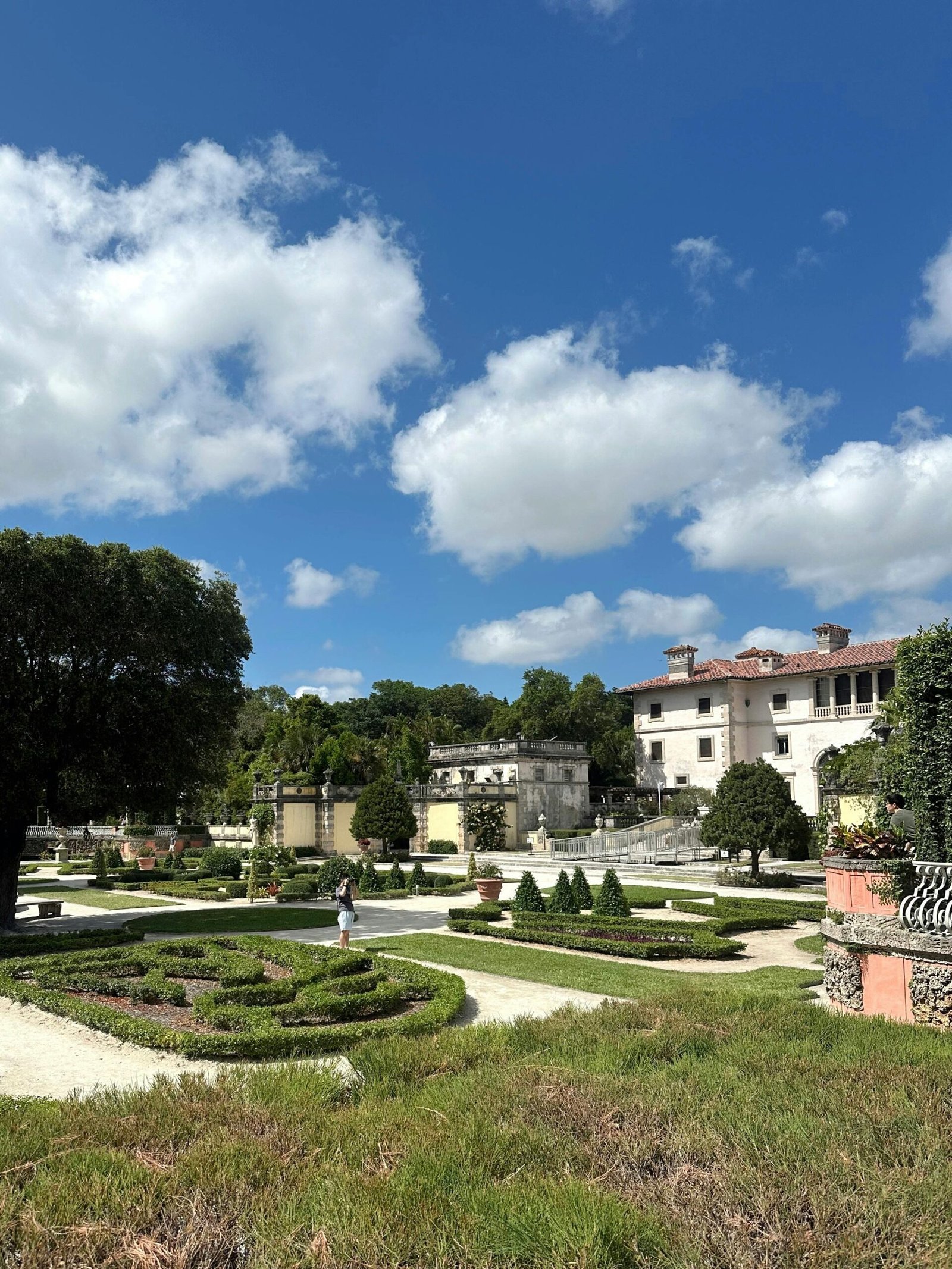
The gardens are not an afterthought; they are a principal character in Vizcaya’s story. The landscape is organized as a series of outdoor rooms and terraces that step down toward Biscayne Bay, creating a procession that changes scale and mood as you descend.
The design principles behind the gardens
The designer used axes, terraces, pools, and statuary to create a sequence of experiences: formal geometry close to the house, more relaxed plantings farther out, and the bay as the final scene. This theatrical progression makes you more aware of each step because each level asks you to do something different — linger, look, or continue.
Garden sections and their character
The gardens contain formal terraces, shaded groves, water features, and smaller hidden spaces that feel private even when you are not alone. If you let yourself be led by curiosity rather than the main path, you will discover small corners where the plantings are dense, the light is mottled, and the air holds the scent of jasmine or citrus.
Garden area | Key features |
|---|---|
Formal terraces | Symmetry, stonework, reflecting pools, statuary. |
Shady groves | Palms and oaks, cooler microclimates, places to sit. |
Water features | Fountains and basins that capture reflections and the sound of water. |
Bayfront & boat basin | The final visual stage; boats, seawall, distant horizon. |
The collections: what the objects tell you
You encounter European decorative arts drawn from several centuries. The furnishings, paintings, sculptures, and smaller objects were chosen less for strict historical narrative and more for the way they contributed to an atmosphere: objects that looked like they had been collected by a well-traveled person with a particular eye.
How to read the collection like a person’s shelf
You can imagine a collector arranging pieces in relation to one another, thinking in terms of mood rather than chronology. So you’ll see a 17th-century chest adjacent to a 19th-century mirror, not because they belong to the same era but because they speak the same visual language in the space. This method tells you more about taste than about art history alone.
What to look for in the artifacts
Pay attention to wear, patina, and the small restorations. These are clues to how objects were used and moved. A repaired table leg, a darkened place on a rug where feet have rested — these human traces are the kind of secrets that make rooms feel inhabited rather than staged.
Hidden corners and small secrets to notice
If you move slowly and attentively, you will find quiet surprises. These are rarely dramatic; they are the small human touches that survive the publicity: a tucked-away bench, a service corridor, a view that only becomes apparent when you duck your head through a vine-covered opening. Much of Vizcaya’s charm lies in these marginal spaces.
The quieter places that reward patient visitors
Look for the service areas and former staff quarters. They tell a parallel story about the work that kept the estate functioning. You’ll see simple fixtures and narrower staircases, a reminder that the grandeur you see was supported by daily labor that had its own rhythms and routines.
Stories the landscape keeps to itself
Gardens change with seasons, and those changes hold secrets: paths that vanish in high growth, stone surfaces softened by lichen, a sculpture half-hidden by a vine. These shifts mean the place gives different things at different times, and part of the secret is how mutable the estate is.
This image is property of images.pexels.com.
Practicalities: planning your visit
Knowing a few practical things will make your visit smoother and let you settle into the sort of observation that Vizcaya rewards. You will want comfortable shoes, a flexible timetable, and the readiness to slow down.
Getting there and moving around
Vizcaya sits on the edge of Biscayne Bay, near neighborhoods you might already know. A nearby transit stop puts you within walking distance if you prefer not to drive. Once you arrive, plan at least two to three hours; if you love gardens and interiors, a longer, unhurried visit pays off.
Practical point | Tip |
|---|---|
Transportation | Consider public transit if you prefer avoiding parking. |
Time to allocate | 2–3 hours minimum; half a day for slow wandering and photography. |
Clothing | Comfortable shoes and a hat for garden paths; layers for indoor rooms with different climates. |
Tickets | Check the museum’s official site for current ticketing, tour options, and special exhibitions. |
Tickets, tours, and what to expect
The museum commonly offers general admission plus guided tours or special-program tours. Guided options can illuminate provenance, restoration, and odd historical footnotes you wouldn’t notice alone. You might prefer an audio guide or a docent tour depending on how much context you want while you walk.
Photography, etiquette, and preservation concerns
You’re likely to want to photograph everything. That impulse is understandable, but there are rules and responsibilities. The institution balances public enjoyment with preservation, and you should be aware of where photography is allowed and what equipment is restricted.
How to make images without disturbing the place
Natural light is a major part of Vizcaya’s atmosphere, so you’ll often get better images by using that light rather than flash. Inside, flash and tripods may be restricted. Outside, be mindful of other visitors and the integrity of plantings when you position yourself for a shot.
Being a considerate visitor
The simplest secret to enjoying Vizcaya is to be mindful: don’t touch artifacts, stay on paths, and keep voices conversational. The experience is communal, and other visitors want the same slow attention you do. Small acts of consideration preserve both the object and the mood.
Events, rentals, and the estate as a public place
Vizcaya is not only a museum; it’s an event venue, a film location, and a cultural anchor. That public life is part of its secret: the estate works in two modes, private memory and public pageant, sometimes both in the same afternoon.
Attending or hosting events
If you come for an event, you’ll see how the place shifts. Formal lawns become stages, terraces become reception rooms. The energy changes, but the underlying intimacy remains because the architecture and gardens were always designed to support both private uses and public display.
What events reveal about the site
Events can reveal how flexible and resilient the estate is. A wedding under a fountain or a small chamber concert in a salon shows how the original design continues to serve contemporary human needs — the way an old house keeps on receiving guests.

This image is property of images.pexels.com.
Conservation, restoration, and the labor of care
A museum is also a workshop: conservators and gardeners are constantly stabilizing, repairing, and rethinking. If you notice scaffolding or closed areas, you are seeing the work that preserves the place for future visitors. Conservation is an ongoing story here.
Why preservation is never finished
Florida’s climate, saline air, storms, and intense sunlight present continuous challenges. Conservators use conservation science and traditional craft techniques to protect objects and stonework, while gardeners adapt plantings for heat, humidity, and changing water availability.
How you can be part of preservation
You can support the estate by following rules, donating to conservation programs, joining membership efforts, or simply reporting damage you spot. Small actions by many visitors make a cumulative difference.
Programming for families, students, and scholars
Vizcaya serves multiple audiences thoughtfully. For families, there are often hands-on programs that introduce young people to gardens and design. For students and scholars, there are research services and archives that provide deeper dives into the estate’s history.
Family-friendly offerings
Look for activity guides, family-oriented tours, and seasonal workshops. These are designed to make complex histories feel immediate and fun, often using objects or sections of the gardens as starting points for curiosity.
Research and archives
If you are a student or researcher, the museum’s archives and library may be a rich resource. You’ll find documentation on the construction, conservation records, and curated collections material. Contact the museum in advance to arrange access and to learn what permissions you’ll need.
Self-guided routes to make the most of your visit
You might come with fifteen minutes or a whole afternoon. Here are flexible routes that respect your time and your desire for discovery.
Route | Duration | Focus |
|---|---|---|
Quick glance | 30–45 minutes | Entry courtyard, main salon, one terrace, bay view. |
House-first | 2 hours | Full interior tour with highlights, then a short garden walk. |
Garden-first | 2 hours | Walk terraces, groves, and shoreline, finishing with house interiors. |
Slow artistic | Half day | Photograph, sketch, sit, and return to favorite corners. |
How to follow a route without losing the point
Give yourself permission to deviate. The routes are scaffolds, not strict plans. The best discoveries at Vizcaya happen when you step off the main path and commit to the quiet moment that a bench or a shaded niche offers.
Accessibility and visitor services
You’ll find the museum attentive to different kinds of needs. Ramps, designated routes, and seating areas are part of making the estate approachable without diminishing the historic fabric. Contact the museum ahead of time for specific accessibility questions and accommodations.
Family and mobility considerations
If you are visiting with a stroller or mobility device, check which parts of the estate are most easily navigable. Some terraces and paths are historic stonework and can be uneven; museum staff can help you plan to minimize discomfort.
Local connections and nearby neighborhoods
Vizcaya sits near lively neighborhoods where you can extend your visit into afternoon coffee, a waterfront walk, or a neighborhood meal. That proximity makes it easy to combine visual pleasure with casual urban life.
How to round out your day
After the museum, consider a stroll through nearby streets, a stop at a local café, or a boat-ride vantage point to see the bay from the water. These small neighborhood moments can complement the formal experience of the estate.
Myths, rumors, and the stories people whisper
Every place like this accumulates rumors: about lost paintings, about ghostly residents, about parties that stopped the town. These tales tell you less about historical fact than about communal affection. When you hear them, listen to what they reveal about the affection people have for the estate.
Enjoy them as conversation pieces. They add color to the house’s personality, but remember that the real secrets are quieter: the light on a certain stair, the way a corridor muffles sound, the small marks of use on a dining room chair.
How to make your visit linger afterward
You’ll want to carry the experience forward instead of letting it evaporate. Keep a small notebook, photograph details (respecting rules), or sketch a fountain. You’ll notice that the estate rewards continued attention; the things you remember are rarely the big claims but the small senses: the weight of a wooden door, the musk of an old rug, the tiny pond that catches the afternoon light.
Suggestions for keeping the visit alive
Write a paragraph about your favorite corner before you leave. Share a quiet photograph with a note about what it made you feel. If you live nearby, return seasonally to see how the gardens and light change.
Final reflections — what Vizcaya asks of you
Vizcaya doesn’t require you to be an expert. It asks you to slow, observe, and hold small contradictions: that artifice can feel intimate, that a staged interior can be deeply human, that a formal garden can be a place for private thought. If you come with patience, you will leave with a handful of small revelations. Those are the museum’s true secrets, not kept from you but offered, if you will, in return for your attention.
A last, useful checklist
Bring comfortable shoes and layered clothing.
Allow at least two to three hours; longer if you want to photograph or sketch.
Check the museum’s official website for tickets and current policies.
Be gentle with the place: no touching, stay on paths, and respect conservation rules.
Plan for a post-visit pause — a coffee or a bench by the water to let your impressions settle.
If you accept the invitation to slow down, to notice the small kinds of making and mending that keep such a place alive, you’ll find Vizcaya is less a museum of things than a living conversation between architecture, landscape, and the people who cared enough to make it. The secrets it yields are small and generous, and they persist long after you have left the grounds. Get more creative knowledge build books and resources for happy minds at: https://booksforminds.com/