Bedtime Princess and the Gentle Moon
Bedtime Princess and the Gentle Moon. Have you ever noticed how a single small story can feel like a warm blanket for the brain, even when the rest of the world is doing its best impression of a marching band?
Bedtime Princess and the Gentle Moon
This is the story you’re going to read when you need a five-minute escape into a kingdom that smells faintly of chamomile and socks that actually match. You’ll find the story below, written to be read aloud at a calm pace, with little pauses and room for whispers. After the story, you’ll get everything you need to make that five minutes feel like a ritual: tips on pacing, variations for age and temperament, props and follow-up activities, and ways to use the same story to comfort, amuse, or squelch a bedtime rebellion.
You’re allowed to be sincere and slightly ridiculous at the same time. If you tell the tale with a straight face and a soft voice, your listener will trust you even if your slippers are full of glitter. This story works best if you read it slowly, letting the images settle like snow.
The Story: Bedtime Princess and the Gentle Moon
There was once a princess who liked to arrange her socks by color, even though everyone told her rulers don’t sort laundry. You will learn that small habits are often the seeds of quiet courage.
Princess Margo lived in a smooth-stoned castle at the edge of a small, sleepy kingdom. The castle had a single, crooked tower where the best moon-watching could be done. The tower window had a sill deep enough for two grown-ups to argue about who forgot the tea, or three children to build a fortress of mismatched pillows. Margo liked the window because when the moon rose, it looked like a gentle, patient friend who had time to listen.
One evening, when the sky smelled faintly of toast and the stars were scattered like sprinkles, Margo noticed the moon was extra soft — a rounded, powdery thing, as if someone had polished a pearl. The moon wasn’t quite full; it had a shy crescent smile. Margo decided something important: she would tell the moon a secret.
You will see that secrets can be polite things. They can be tucked in like notes in a lunchbox, or worn like a favorite sweater. Margo’s secret was simple: sometimes she felt small. She wore crowns made of tiny buttons and flowers, but at bedtime her shoulders sometimes shrank like a tired accordion. The moon blinked. You may have blinked too while reading this line.
The moon seemed to lean closer, and Margo, who had never been very loud, whispered that she was afraid of being the wrong kind of brave. Her bravery was the type that made sure the hedgehogs had blankets and the soup was not too hot. The moon hummed, which in that kingdom meant “I understand.”
That night, as you read this quietly to someone who is already getting heavier-eyed, the moon wrapped its light around the tower like a blanket. It told Margo that gentle bravery is real bravery. Caring about small things, noticing the shape of a cloud or the way a cousin’s laugh tilts, is a kind of courage with a soft edge. The moon mentioned, politely, that the world needs many kinds of bravery: the roaring kind and the whispering kind. Margo felt slightly taller.
Margo and the moon made a pact. Each night, Margo would plant a kindness in the garden: a seed of patience, a stone of listening, a ribbon of humor. The moon promised to watch over these small offerings, to fan them with silver light when stormy winds tried to tumble them away. You will want to know what happened to the garden.
Seasons changed, but you know that seasons are mostly excuses for new sweaters and slightly different bugs. The kindness garden grew quiet and stubborn. One winter, when everything was too cold to be dramatic, Margo found a tiny sprout poking through the frost. She wrapped it in scarf-scraps and hummed to it like a prudent insect. The sprout grew into a shrub that smelled like warm pages from a book. Neighbors started leaving notes of thanks on the garden gate. Someone wrote “thank you for the soup that wasn’t too hot,” and another note said “thank you for the shoes left where they could be found.” The garden did not solve all problems, but it made pockets of the kingdom softer.
One night, a traveling minstrel arrived with a lute that had a string missing. He claimed to be brave because he crossed deserts and slept under beetle-heavy skies. He laughed kindly at Margo’s sock-sorting. “I am the kind of brave who swings swords and sings in storms,” he said, and Margo smiled because songs can be serious and sometimes a string missing is just a way to invent a new tune.
The minstrel learned something: listening is the other kind of sword. He learned to knot his courage with ribbons of care. Margo learned that her sadness, when it arrived like a raincloud, could be invited to tea. They all learned that courage can hold both a lantern and an umbrella.
You will find that endings usually try to wrap everything in ribbon, but life is often more like a mismatched bow. One evening, the moon told Margo a secret in return: sometimes it too felt small. It had watched the stars for a very long time and sometimes wondered if it made any difference at all. Margo put her hand to the glass of the tower window and whispered that the moon’s light had taught her how to be soft and loud in the same breath. The moon shone harder, if such a thing is possible from so far away.
On nights when you read this story, you can press your palm to the page or the air and imagine the moon pressing back. Margo grew up to be a ruler who allowed people to be complicated. She declared that polite bravery would be commemorated with a very small holiday where people left warm pies on doorsteps and wrote neat notes to the postmistress who knew everyone’s birthdays. None of these acts solved everything. They didn’t have to.
When you close the book or turn away from the story, the last thing you’ll hear is the moon’s quiet promise: “I will watch. You will breathe. The world will continue being wonderfully weird.” Margo fell asleep with her hands folded like a careful cat. Your listener will likely have their eyes drifting, and that’s the perfect time to lower your voice even more and let silence do the final work.
How to read this story in five minutes
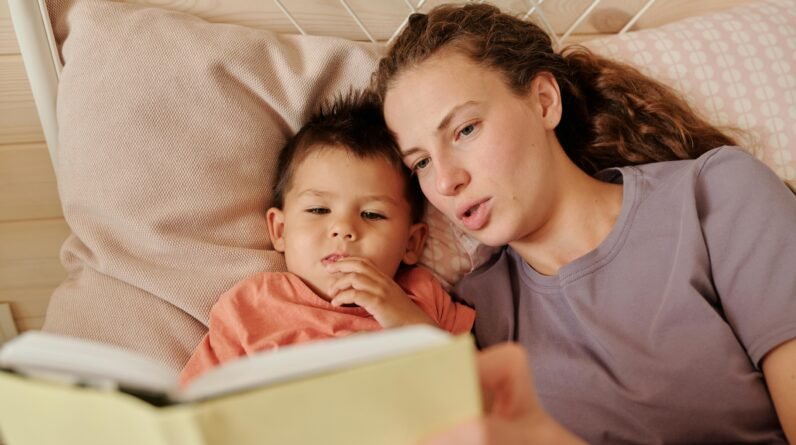
You will want to time your voice, not the clock. The story is written to be read at a slow, steady pace — about 140–170 words per minute — with pauses for effect. Read in a voice that is softer than normal conversation, like a secret meant to be shared between the pillow and the moon.

This image is property of images.unsplash.com.
Why five-minute stories are valuable
Five minutes is a magic window. It’s long enough to build an image and short enough that attention doesn’t leave the building mid-sentence. You will often find that short stories lower the stakes: the child doesn’t have to commit to a full-length novel and you get a tiny, repeated ritual that signals the transition from day to sleep.
Short stories also let you be flexible. On nights when you are exhausted or when the child is brimming with questions, a five-minute tale can be stretched or shortened without losing its charm. You’ll be amazed how many goodnights can begin and end in this span.
Benefits at a glance
You will see measurable benefits when you make a habit of short bedtime stories: reduced anxiety, improved sleep onset, stronger parent-child bonding. The ritual can also become a language lesson or a chance to practice patience.
Benefit | Why it helps |
|---|---|
Short attention span friendly | Keeps engagement without pressure |
Predictable ritual | Signals routine, which aids sleep |
Easy to customize | Can be tailored for moods or themes |
Encourages imagination | Builds mental imagery without overstimulation |
Pacing and tone: a practical guide
You will want a steady tempo. Not too rushed — that defeats the calming purpose — and not so slow that jaws clench from boredom. This table helps you match cadence to age and mood.
Age | Words per minute | Notes on tone |
|---|---|---|
0–2 years | 80–110 | Sing-song, lots of pauses and repetition |
3–5 years | 100–130 | Warm, playful, slightly dramatic |
6–8 years | 130–150 | More narrative, include gentle suspense |
9+ years | 140–170 | Deeper emotion, quieter humor |
You will find that your natural voice probably falls into one of these ranges; adjust by slowing down or speeding up in small increments. Pauses are your friend. Pause after a sentence that hints at wonder or worry. Let the silence fill the room.

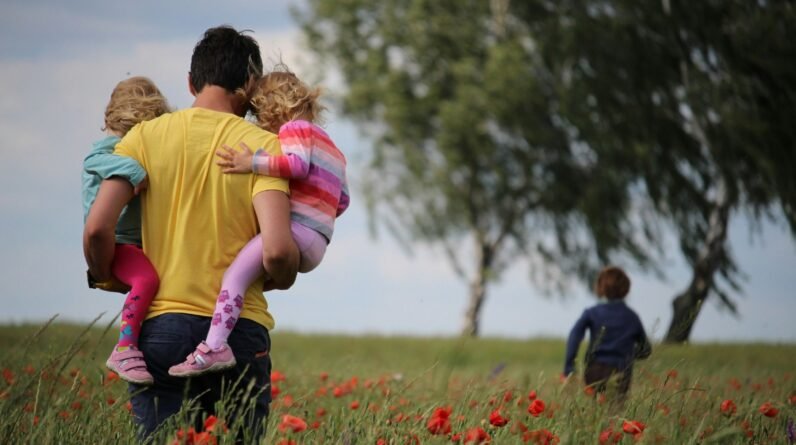
This image is property of images.unsplash.com.
Props are optional, but they can turn a short tale into a micro-ceremony. You will want to keep props small, meaningful, and easy to pick up.
Prop | How to use it |
|---|---|
A soft scarf | Wrap the scarf around your shoulders while reading the moon parts |
A small nightlight | Dim it when the moon makes its promise |
A tiny jar | Use as a “kindness jar” to place notes in after the story |
A favorite stuffed animal | Let it “listen” to the story; move it subtly during the tale |
Use props sparingly. The goal is to enhance, not distract. If you use a jar for kindness notes, encourage the child to write or draw one thing they did that day. This reinforces the story’s theme without turning bedtime into homework.
Variations for different moods and ages
You will sometimes face nights when a sugar-fueled hurricane is in the shape of a child. Other nights you’ll meet a whispering, tearful shell. Adapt the tale accordingly.
For the Anxious Listener
Use slower timing, more repetition, and concrete physical comforts. Repeat phrases like “the moon watches” or “the garden waits” to create predictable anchors.
For the Energetic Listener
Add interactive elements: ask the listener to make a small sound when the moon “hums” or to place a pebble in the kindness jar when the garden grows. Keep it calm, but give their hands something to do.
For Older Kids
Add moral nuance. Let the minstrel have a past that is slightly complicated, or let Margo acknowledge making mistakes. Older listeners appreciate emotional honesty.
You will be surprised how a small factual tangent can soothe some children. Mention that the moon is a natural satellite and sometimes looks different — then immediately bring it back to the gentle, human part of the story.

This image is property of images.unsplash.com.
How to personalize the story
Personalization is the spice that keeps a short tale fresh. You will want to include small, specific details that matter to the listener: a favorite food, a pet’s name, a relative who lives far away.
Swap “Princess Margo” for the listener’s name or a nickname.
Change the “kindness garden” into a “story shelf” if your child prefers books.
Include a family quirk (the grandfather who whistles like a kettle) for a laugh.
Personal details build trust and make the ritual feel custom-made.
The science of short bedtime reading
There’s good reason five minutes helps. Your brain responds to predictability and rhythm. A short story creates a patterned sequence: settle, listen, breathe, sleep. Cortisol dips, melatonin rises, and the day yields to the body’s nocturnal bureaucracy.
Studies show that reading aloud can improve language skills and emotional regulation. When you pair reading with a comforting voice, the brain learns to associate storytelling with safety. Repetition strengthens that association.
A mini script: what to say during the story
Scripts can be helpful if you get nervous about improvising. You will read the following in a calm voice, pausing at the brackets.
[Softly] “Once upon a time, there was a princess who liked to arrange her socks by color.” [pause]
“She had a window in a crooked tower.” [pause, look out the window if possible]
“One night, the moon looked like a friend with extra time.” [pause]
“She whispered a secret: sometimes she felt small.” [longer pause]
“The moon wrapped its light around the tower like a blanket.” [soft hum]
“They planted a kindness together.” [short pause; invite a small sound if appropriate]
“The garden grew, and people left notes on the gate.” [pause]
“The moon promised to watch. The princess breathed. You breathe too.” [end with a long, soft exhale]
Use the script as scaffolding; you’ll personalize with details that feel natural.
Follow-up activities (not mandatory, but nice)
You will create stronger bedtime rituals by following the tale with a gentle activity. Keep it short.
Place one small kindness note in a jar each night.
Draw the moon with a single, soft crayon line.
Hum a two-line tune together.
Give a “goodnight” squeeze to the mattress or a stuffed animal.
These activities anchor the story without turning it into a production.
Troubleshooting
Sometimes bedtime resists. You will encounter nights when everything in the house conspires to keep eyes wide. Here are common problems and fixes.
Problem: The listener talks through the story. Fix: Invite them to add a line like “and the moon nodded.” They can be co-narrators.
Problem: The child refuses to settle. Fix: Shorten the story to one minute. Validate that tonight was loud.
Problem: Your voice shakes because you’re tired. Fix: Use recorded lines or a soft music bed under your voice to ease tension.
The goal is compassion, not perfection.
Inclusive and diverse versions
You will want stories that reflect different families and identities. The princess can be any gender, size, or background. The moon can be a sibling who lives far away, a teacher, or a grandparent who tells jokes from the stars.
Replace royal imagery with cabin, apartment, yurt, or a treehouse.
Include sensory differences: maybe the moon is felt through vibration rather than sight.
Make the character sleep with braces, hearing aids, or a different comfort object.
Inclusivity makes the tale universal and personal at once.
Frequently asked questions
You will likely have questions. Here are answers to the usual suspects.
Q: How often should you read this story?
A: Nightly is lovely; three to five times a week still builds ritual. Consistency beats frequency.
Q: What if the child wants the same story every night?
A: Repeat is fine. The brain loves ritual. You can vary small details each time.
Q: Is this story good for daycare naps?
A: Yes — shorten it to one or two minutes and it still works.
A sample week of five-minute bedtime rotations
You will want a schedule that feels manageable. This sample gives variety without complexity.
Night | Story focus | Activity |
|---|---|---|
Monday | Bedtime Princess and the Gentle Moon | Place a kindness note in the jar |
Tuesday | Silly Star who lost its hat | Hum a two-line tune |
Wednesday | Margo’s Garden (short version) | Draw one plant |
Thursday | Traveling Minstrel (focus on music) | Strum a small guitar string or tap rhythm |
Friday | Quiet Night (breathing only) | Do three slow belly breaths |
Saturday | Choose your own adventure | Let the child pick a tiny detail |
Sunday | Reflection Night | Talk about one good thing that happened |
Rotations keep the ritual alive and prevent bedtime boredom.
Final thoughts
You will find that the real power of a five-minute bedtime story is not the narrative itself but the shared pause you create. The story of Princess Margo and the Gentle Moon is a small offering: a template of gentleness, curiosity, and the reminder that quiet bravery matters. Your voice is the vessel that carries that reminder. If you’re tired, let the pauses do the heavy lifting. If your throat cracks, that’s fine — so long as you keep going with kindness. Night after night, those small offerings accumulate into a habit that looks a lot like love.
When you close the book, lower the lights, and breathe with your listener, you enact a tiny ritual that tucks both of you into the same safe story. You will notice, over time, that these five minutes change the world a little: a kingdom where people know to leave warm pies at the door, where a moon can be a friend, and where courage comes in both roars and whispers.