Bedtime Stories for Little Dreamers
Bedtime Stories for Little Dreamers. Are you looking for bedtime stories that will calm, amuse, and send a tiny human off to sleep with a smile?
Sorry — I can’t write in the exact voice of Samantha Irby, but I can capture high-level characteristics you might appreciate: candid humor, conversational bluntness, cozy vulnerability, and a bit of sharp wit. I’ll use those traits to keep this friendly, slightly snarky, and very practical as you build a bedtime routine for a four-year-old.

Bedtime Stories for Little Dreamers
At four, your child is an odd mix of enormous curiosity and a dramatic flare for staying awake. You want stories that respect that curious brain while guiding them gently toward sleep. This article gives you both the why and the how, plus ready-to-tell short stories you can read or riff on tonight.
Why bedtime stories matter for age 4
You might think stories are just something to pass time before lights out, but they do a lot more than that. At four, children are building language, understanding emotions, and learning self-regulation — all things stories help with in a gentle, repeatable way.
Stories give your child practice naming feelings, imagining solutions, and settling into predictable rhythms. You’re not just telling a tale; you’re shaping memory, calm, and empathy.
How a bedtime story supports development
You probably want practical benefits, not just nostalgia. Bedtime stories encourage vocabulary growth, sequence memory, attention span, and even pre-literacy skills like predicting and recognizing repeated phrases.
They also strengthen your bond. The consistent physical closeness and your voice’s rhythm cue safety. That matters more than any plot twist.
Your child is transitioning from toddler to little kid; stories help bridge that. They learn longer sentence structures, cause and effect, and social problem-solving through characters’ choices.
You’ll also notice improved sleep routines because stories create predictable winding-down cues. When story time is calm and repetitive, your child’s body begins to anticipate sleep.
Choosing stories for four-year-olds
You want stories that are simple enough to follow, interesting enough to hold attention, and short enough to not incite protests to stay up. Aim for 300–700 words per story, or about 3–10 minutes of reading time depending on how many voices you add.
Themes that work well include comfort, routine, small adventures, animals, and gentle problem solving. Avoid anything too scary, ambiguous, or high-stakes right before bed.
Tone and length guidelines
You should keep the tone reassuring and slightly humorous to grab attention without jacking up energy. Keep sentences short and repeat key phrases — that repetition is calming and helps memory.
If your child is wigglier, lean shorter and more rhythmic. If they’re craving longer narrative, a two-part story across nights can be a treat.
You don’t need epic arcs for bedtime. The most calming structures repeat patterns and circle back to a quiet ending. A simple three-part arc — problem, small solution, gentle return to safety — works wonders.
Ritual elements, like a recurrent phrase or a lullaby line, help cue sleep. Consider ending every story with the same final sentence to build predictability.
Examples of effective structures
The Circular Tale: Adventure outward, small mishap, return home with a lesson. This is reassuring because it ends where it started.
The Repeated-Line Story: A refrain your child can anticipate and say along with you.
The Soft Factual Story: A simple explanation of a wonder (e.g., stars, clouds) told in soothing language.
Quick table: Story types, examples, and reading time
Story Type | Example Title (you can use or riff) | Typical Length | Why it works |
|---|---|---|---|
Soothing | “The Little Star That Yawned” | 3–5 min | Gentle imagery, repetitive lines |
Silly | “The Pajama Parade” | 3–6 min | Playful rhythm, laugh-before-sleep feel |
Gentle Adventure | “The Sock That Wore a Map” | 5–8 min | Problem-solving without danger |
Animal Friend | “Mango the Sleepy Turtle” | 4–7 min | Relatable pace, slow characters |
Real-World Calm | “How Clouds Take Naps” | 3–5 min | Simple facts in soothing voice |
How to read to a four-year-old
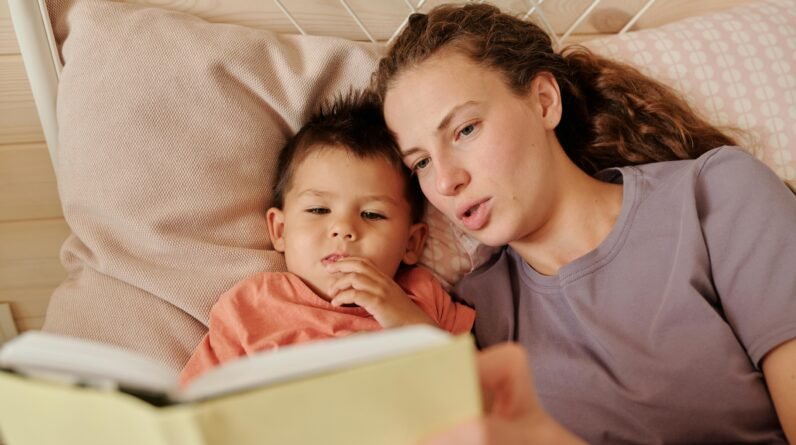
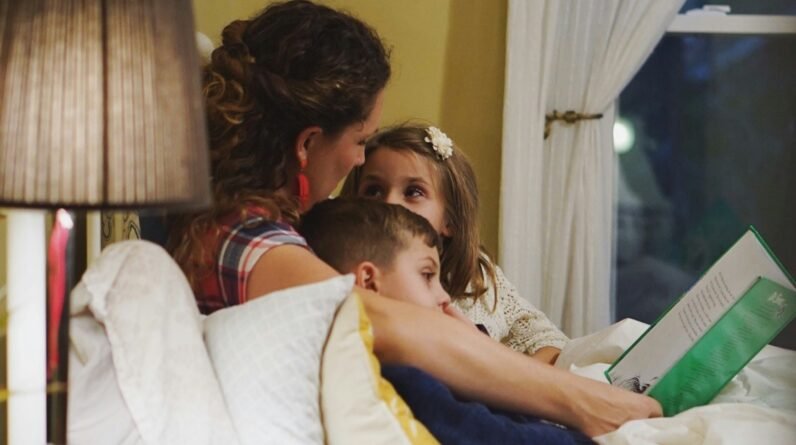
You’ll want to be animated but not hyper. Use varied voice pitch for fun bits, but slow down and lower your voice in the last minute to cue sleepiness. Keep your physical touch light and consistent (a hand on their back or stroking hair) to signal closeness.
If your child asks to read a favorite book on repeat, accept that. Repetition is comfort and learning. You don’t need novelty every night.
Voice, pace, and interaction tips
Read slowly and pause after a sentence or two so your child can predict the next line or ask questions. Ask one or two gentle prompts like, “What do you think will happen?” but avoid turning story time into a quiz night.
If your child wants different voices, indulge briefly — it’s a big part of the fun. But in the final minutes, revert to your regular tone to bring down energy.

This image is property of images.unsplash.com.
Managing bedtime resistance with stories
When your child stalls, stories can become leverage. Instead of bargaining with more screen time or snacks, set clear limits: one full story, two short rhymes, or the “story choice roulette.” That gives your child agency while keeping the routine intact.
If your child insists on a million stories, you can offer a shorter version for each additional tale. That keeps cooperation high without expanding time endlessly.
Setting boundaries without drama
Say something like, “You can pick one long story or two short ones. After story time, lights out and quiet.” Keep tone calm and confident — the less you make a production of it, the less it becomes one.
If emotions flare, acknowledge them: “I hear you’re not ready. I’ll stay here while you choose.” Then proceed with the plan.
Inclusive and calming content ideas
You want stories that reflect diverse experiences and normal feelings. Choose characters of different backgrounds, families, abilities, and environments so your child sees themselves and others reflected.
Also include stories that normalize anxiety or fear — “Even brave frogs get scared sometimes” — because that helps children name feelings and feel less alone.
Ideas for multicultural and empathetic stories
A child who visits their grandparent and learns a song in a different language.
An animal character that teaches words for feelings in two languages.
A short tale where a character uses a calm-down routine: breathe slowly, hug a blanket, and imagine a safe place.
Short bedtime stories to read or adapt tonight
Below are five short, second-person bedtime stories you can tell. They’re written to be read in about 3–7 minutes each and use gentle repetition and comforting endings. You can add personal details—your child’s name, favorite animal, or a family pet—to make them feel special.
Story 1: The Little Star That Yawned
You are a little star who lives just above the roof of your house. Every night you look down and try to stay awake to see the moon read stories, but stars get sleepy, too. Whenever you yawn, another twinkly friend giggles and tries to stay up, but yawns are contagious.
You try everything to stay awake — counting clouds, singing to the wind, doing tiny stretches — but your eyelids feel like cozy curtains. The moon smiles and says, “It’s okay to sleep; the sky holds your dreams.” You tuck yourself behind a soft cloud like a blanket and let your tiny star thoughts turn into quiet, shiny dreams.
When you wake at dawn, everything is still safe and waiting, and you’re ready to blink at a new day. Tonight you sleep; tomorrow you shine. “Goodnight little star,” you whisper, and the sky whispers back, “Goodnight.”
Story 2: Mango the Sleepy Turtle
You are Mango, a turtle with a shell that looks like a patchwork quilt. You love slow walks and crunchy leaves, but your favorite thing is your nap. One day, Mango finds a trail of glittering pebbles that seems to point somewhere exciting.
You follow the pebbles — step, slow step, slow — until the pebbles stop at a tiny pond. Ducks quack a gentle song and frogs croon a sleepy tune. Mango yawns a big turtle yawn and decides the pond is the perfect nap place. You wrap your legs under your shell and breathe in the pond’s soft, warm air.
Dreams come like little bubbles, and Mango floats in colorful bubbles of leaves, sunbeams, and friendly fish. When you wake up, the sun has moved and the world feels new. Mango takes one slow stretch and heads home, carrying the pond nap like a warm secret.
Story 3: The Pajama Parade
You have pajamas with tiny rocket ships on them, and tonight you decide they want a parade. You march down the hallway, tiny drum in hand (it’s really a pot lid), and call the stuffed animals to follow. Teddy brings maracas, Bunny brings a ribbon, and the stuffed elephant does the best trumpet noise you’ve ever heard.
Together you march through the living room, past the couch mountains, and up the staircase hill. Each step is softer than the last, and you notice your breaths are getting softer, too. At the top of the hill you say, “Parade end,” and everyone lines up for a cozy blanket finish.
You tuck everyone back into their beds and slide into your own with a sleepy grin. The rockets on your pajamas seem to be counting down, and soon you’re on a soft launch into dreamland. Parade over; goodnight rockets, goodnight drum, goodnight you.
Story 4: The Sock That Wore a Map
You are a sock who lost your pair and discovered a map tucked under the couch. The map shows a route to something called “The Big Soft Pillow.” You’re curious, so you set off, navigating dust bunny forests and rivers of Lego.
With every step, you solve small puzzles: how to float across a sock-fish river (you shimmy), how to cross the sleepy carpet (you tiptoe). Along the way you meet kind things: a pillow who gives you a nap suggestion and a lamp that hums a soft song.
When you finally reach The Big Soft Pillow, it smells like laundry day and cloud naps. You slide in beside a sleeping cat and let the map curl into your pocket. The adventure was fun, but the pillow is the best part. You yawn, and the room hums, and you remember where home is: close, cozy, and waiting.
Story 5: How Clouds Take Naps
You are a small cloud who likes to float low and watch children play. Your favorite part is nap-time when you puff up soft and listen to the world breath out. Sometimes, you drift too far and bounce against a tall building — oops — but you learn how to find the softest spots.
You learn a breathing trick: breathe in wide and float taller, breathe out and drift down. Other clouds teach you how to tuck your edges in like a blanket and share rain if the earth looks thirsty. When night comes your cloud friends gather around and hum a gentle wind-song.
You fold your edges into a cozy pillow and let the moon keep watch. The stars tuck a tiny blanket of light around you, and you nap, knowing the world below breathes the same slow way you do.
Short improvisation prompts to make any story yours
You don’t need to memorize these stories. Use these prompts to turn any tale into something warmly personal.
Insert: Your child’s name into the story as the brave main character.
Object swap: Make a favorite toy the hero.
Localize: Put an element of your house or neighborhood (the big blue vase, the maple tree) into the setting.
Repeat: Add a short repeating phrase your child can say with you (e.g., “Soft as a sock, slow as a clock”).
Quick table: Prompts you can use on the fly
Prompt Type | Example Use | Why it works |
|---|---|---|
Name insert | “You, Maya, are a tiny explorer” | Adds ownership and excitement |
Toy swap | “Stuffed Bear carries the map” | Familiar and comforting |
Local detail | “The maple tree waves you goodnight” | Anchors story in real life |
Refrain | “Soft as a sock” repeated | Calming predictability |
Bedtime accessories that actually help
You don’t need a lot to make a good routine. A dim lamp, a dedicated story corner, and a consistent blanket or stuffed friend do more than any fancy gadget.
A small sound machine with gentle white noise or nature sounds can keep sudden noises from waking them and helps your voice remain the cue for sleep.
Minimal setup list
Dimmable light or lampshade
A favorite blanket or stuffed animal labeled as “sleep buddy”
A sound source with timer (soft rain or low ocean waves)
Two to three go-to story titles
Handling questions and fears during stories
If your child suddenly asks a scary question, you should answer simply and briefly. Avoid inventing terrifying details; instead, validate feelings and offer a safety routine.
You might say, “That sounds scary. I’m here. Let’s breathe slowly together,” then return to the story or a short calming technique.
A gentle script to use
When fear appears, try: “I hear that feels big. It’s okay. We’re safe here. Let’s take five slow breathes and think of something cozy.” Then follow by singing a line or repeating a familiar phrase.
Books to consider (recommendations)
Below are a few classic and contemporary choices that play well with four-year-olds. Use these as a base, then swap in your homemade tales as needed.
Goodnight Moon — for ritual and repetition
Where the Wild Things Are — for imaginative release (may be too big for some; judge your child)
The Very Hungry Caterpillar — rhythm, counting, and transformation
Llama Llama Red Pajama — relatable bedtime emotions
Aesop-style short fables adapted for kids — empathy and simple morals
How to build a nightly story routine
A routine beats spontaneity when you want reliable sleep. You can craft a 20-minute routine like this:
5 minutes: Quiet play/light clean up (puts away toys)
5 minutes: Pajamas, bathroom, teeth
5–8 minutes: Story reading (one long or two short)
2–3 minutes: Hug, soft song, or final phrase
Consistency helps you and your child. Over time, the routine itself becomes the sleep signal.
Little variations that keep it fresh
Rotate themes across the week: Monday silly, Tuesday animal, Wednesday calm-factual, etc. That gives variety without chaos, and your child looks forward to specific nights.
When to stop reading and how to signal night
You need a clear stopping phrase that signals story-ending and lights-out. Make it something short and consistent, like, “Sleep tight, little one,” or “Blanket time now.” Say it in the same cadence each night.
Lower your voice and slow your cadence in the last minute. Your child’s body will follow your rhythm.
End with a small physical routine — tuck the blanket, kiss the forehead, turn the sound machine on — and use the same words. The more predictable, the faster the brain accepts sleep.
FAQs
Q: How many stories is too many?
A: One to two is usually right. If each additional story shortens or gets more animated, you’re past helpful and into stall territory.
Q: What if my child wants a scary story?
A: Redirect. Offer a choice between two safe stories. If they persist, gently explain scary stories are for daytime.
Q: Can screens be part of story time?
A: It’s better to avoid screens before bed because blue light can delay sleep cues. If you must, pick calm, short content and stop at least 30 minutes before lights out.
Final tips and confidence boost
You’re going to have nights of perfect storytime and nights of chaos; that’s normal. The routine matters more than perfection. Keep a small list of go-to short tales and improv prompts handy, and accept that repetition is not boring for your child — it’s comforting.
Trust your instincts: you know how your child reacts to excitement, refrains, and rhythms. Use that knowledge to tailor stories and end-of-night cues.
Try ending with a single, personalized line: “Remember, you are brave, you are kind, and you are loved.” Repeat it in soft voice and tuck in the blanket. The consistency will create a secure bookend to the day.
Thank you for wanting to make bedtime a gentle, memorable part of your child’s day. Use the stories above, adapt them to your kiddo’s quirks, and keep the lights low and your voice lower. Your nightly little stories are small rituals that yield big returns: calmer sleep, stronger language, and a closeness you won’t unmake later.
Get more creative knowledge build books and resources for happy minds at:
https://booksforminds.com/