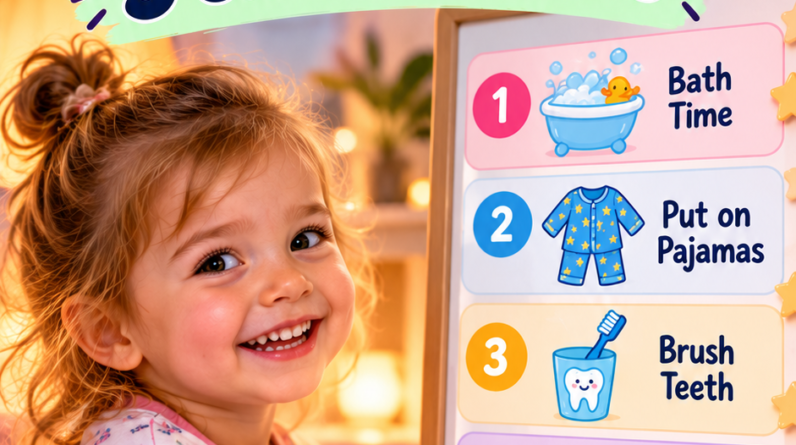
Why School Age Kids Resist Bedtime: Practical Tips for Calmer Evenings
School-age kids often resist bedtime because they want more independence, feel mentally busy, use screens late, worry about the next day, or have routines that change too much from night to night.
Children in this age group are more able to negotiate than toddlers. They may ask for extra time, another snack, another question, or one more activity. Bedtime resistance does not automatically mean they are being difficult. It can reflect growing independence, worry, overstimulation, schedule mismatch, or a need for clearer expectations.
The most useful approach is usually a calm, predictable routine that gives your child some appropriate choice while keeping the overall bedtime structure clear.
Key Takeaways
- School-age children may resist bedtime because of independence, screens, worries, inconsistent routines, or because they are not yet ready to settle.
- Offer choices inside the bedtime routine rather than allowing bedtime itself to become negotiable.
- Keep the wind-down simple and repeatable.
- Create a clear stopping point for screens before bedtime.
- Make space for worries and connection before lights out.
- Use short, calm responses rather than long bedtime debates.
- Track patterns if resistance happens frequently.
- Seek medical advice for symptoms such as loud snoring, breathing pauses, severe daytime sleepiness, or persistent sleep difficulties.
Why School Age Kids Resist Bedtime
School-age bedtime resistance is often a combination of growing independence and difficulty transitioning from an active day into a quieter night.
A child may want more control over what happens, dislike stopping a favourite activity, feel worried about school or friendships, want extra connection, or simply not feel sleepy yet.
Understanding why school age kids resist bedtime can help parents create a smoother transition to sleep.
Rather than treating every delay as misbehaviour, look for the pattern behind it. The best solution depends on the cause.
Watch: Why School-Age Kids Resist Bedtime
What Does Bedtime Resistance Look Like in School-Age Kids?
Bedtime resistance can include repeated behaviours that delay the end of the evening.
Common examples include:
- asking repeated questions,
- requesting more water or another snack,
- wanting one more story or one more hug,
- using the bathroom repeatedly,
- saying “I’m not tired,”
- arguing about screen time,
- getting out of bed,
- raising worries after lights out, and
- trying to negotiate a later bedtime.
Occasional resistance is normal. It becomes more disruptive when it happens frequently, regularly turns into conflict, or significantly interferes with sleep and daytime functioning.

Common Reasons School-Age Kids Resist Bedtime
1. They Want More Independence
Children become increasingly interested in making their own decisions as they grow. Bedtime can feel frustrating because it brings the day to a close at a time chosen largely by adults.
Offer small choices inside the routine:
- “Do you want to read before or after brushing your teeth?”
- “Would you like the moon story or the kindness story?”
- “Would you rather read quietly or listen to calm music?”
The child has meaningful choice while the bedtime structure remains intact.
2. Screens Make It Hard to Stop the Evening
Games, videos, messaging, and television can make transitions difficult, especially when there is no clear stopping point.
Instead of arguing about screens every night, decide in advance when they finish and what happens next.
Reading, drawing, puzzles, calm conversation, or audio stories can provide a gentler transition.
3. Worries Become Louder at Night
Children may begin thinking about school, friendships, homework, tests, family changes, or things they have seen online when the house becomes quiet.
Give worries a place earlier in the evening.
You might try:
- writing the worry down,
- deciding whether anything needs to happen tomorrow,
- closing the notebook, and
- returning to the normal bedtime sequence.
If fear is a major part of bedtime, see
How to Make Bedtime Feel Safe
.
4. The Daily Schedule Is Inconsistent
Very different wake-up times, changing evening schedules, late naps, and shifting weekend routines can make bedtime harder to predict.
If this is the main issue, read
How to Fix Inconsistent Bedtime Routines
.
5. The Routine Is Too Long
A routine with too many steps, choices, conversations, and activities creates more opportunities for delay.
Aim for a simple structure with:
- a clear beginning,
- a small number of practical steps,
- one connection moment,
- a defined reading period, and
- a clear goodnight point.
6. Your Child May Not Feel Ready for Sleep
A child who consistently lies awake calmly for a long time may not simply be “stalling.” Review wake time, daytime activity, nap patterns if relevant, and the timing of the bedtime routine.
Individual sleep needs vary, so the goal should be an appropriate routine rather than forcing a specific clock time.
Understanding Sleep Needs in School-Age Children
Sleep needs vary from one child to another and can also change as children grow.
Instead of relying on one universal bedtime, look at the full picture:
- What time does your child need to wake?
- Do they appear rested in the morning?
- Are they unusually sleepy during the day?
- Do they regularly fall asleep in the car or during quiet activities?
- Do they seem consistently alert long after bedtime?
If you are unsure whether your child is getting enough sleep, discuss the pattern with an appropriate healthcare professional.
A 7-Step Bedtime Plan for School-Age Kids
Step 1: Choose a Reasonably Consistent Wake-Up Window
A predictable morning can help stabilize the rest of the day. Keep wake-up time reasonably similar where school and family schedules allow.
Step 2: Create a Clear Screen Stopping Point
Decide when devices finish before bedtime and communicate the rule before the evening gets late.
Step 3: Begin a Short Wind-Down
Use quieter activities such as:
- reading,
- drawing,
- quiet puzzles,
- calm audio, or
- conversation.
Step 4: Lower Evening Stimulation
Quieter voices, comfortable lighting, and fewer competing activities can make the transition clearer.
Step 5: Include a Brief Connection Moment
Connection does not have to be long. It might be one story, a few minutes of talking, or one question about the day.
Step 6: Use a Familiar Closing Phrase
For example:
“The bedtime routine is finished. You can rest quietly now. I love you. Goodnight.”
Step 7: Track Patterns Before Making Major Changes
If bedtime remains difficult, observe what happens for several nights before redesigning the routine again.
A Flexible Bedtime Routine for School-Age Kids
This example is intentionally based on sequence rather than exact clock times. Adjust it to your child’s age, school schedule, and family needs.
| Stage | Possible Activity |
|---|---|
| End active evening activities | Finish games, screens, or energetic play |
| Prepare for tomorrow | Pack school bag or lay out clothes if helpful |
| Practical bedtime tasks | Pyjamas, teeth, bathroom |
| Quiet connection | Reading, journaling, calm audio, or brief conversation |
| Final transition | Goodnight phrase and quiet rest |
If stories are part of your routine, keep the reading period defined so it provides connection without becoming another open-ended delay.
See
Soothing Stories to Build a Bedtime Routine
for ideas on making stories a repeatable part of the evening.

Calm Scripts for School-Age Bedtime Resistance
Short scripts can reduce repeated debate because the message stays clear.
“I’m Not Tired”
“You don’t have to make yourself fall asleep. This is quiet rest time now.”
“Can I Have More Water?”
“You can have a drink, then we’re returning to bedtime.”
“I Have One More Question”
“Tell me the important question now. Anything else can wait until tomorrow.”
“Can I Read Longer?”
“Reading time is finished for tonight. You can continue tomorrow.”
Getting Out of Bed
“It’s bedtime. Let’s go back to bed.”
“I’m Worried”
“I hear that you’re worried. Let’s write it down so we remember it tomorrow. You’re not alone with it.”
Reassurance is important. If worries are persistent or intense, treat them as a genuine emotional concern rather than simply as stalling.
Can a Reward Chart Help With School-Age Bedtime?
Some children respond well to simple positive reinforcement. If you use a chart, reward behaviours the child can control rather than the outcome of falling asleep.
| Goal | Possible Recognition |
|---|---|
| Started the bedtime routine when prompted | Sticker or point |
| Finished practical bedtime steps | Sticker or point |
| Put the device away at the agreed time | Sticker or point |
| Used a worry notebook rather than beginning a long discussion after lights out | Praise or point |
| Returned to bed calmly after a reminder | Praise for the successful return |
Possible rewards can include choosing the next bedtime story, selecting breakfast music, extra daytime reading together, or choosing a family activity.
If a reward system creates more pressure or negotiation, simplify it or stop using it.
How to Reduce Screen Battles Before Bed
Screen conflicts are easier to manage when the stopping point is decided before your child is deeply engaged in a game or video.
Practical Screen Boundaries
- Choose a predictable stopping point before the bedtime routine.
- Give a reminder before screen time finishes.
- Turn off autoplay.
- Charge devices outside the bedroom if they are repeatedly used after bedtime.
- Use parental controls or device downtime if they help maintain the agreement.
- Offer a clear next activity such as reading, drawing, or quiet music.
You might say:
“Screens are finished for tonight. You can choose reading, drawing, or quiet music now.”
Create a Bedroom Environment That Supports Bedtime
The bedroom does not need to be perfectly silent or dark, but the final environment should ideally feel different from the active part of the evening.
- Use comfortable, lower lighting during the wind-down.
- Reduce sudden noise where practical.
- Keep the room comfortable for the child.
- Keep schoolwork and stimulating devices away from the bed when possible.
- Reduce obvious clutter around the sleeping area if it is distracting.
- Use familiar comfort items when appropriate and safe.
Special Situations: ADHD, Anxiety, Sensory Needs, and Siblings
Children With ADHD
Some children with ADHD may find lengthy routines, multiple instructions, or frequent transitions particularly difficult.
Depending on the child, useful supports may include:
- a short visual checklist,
- one instruction at a time,
- a predictable order of bedtime tasks,
- advance notice before transitions, and
- fewer unnecessary choices late in the evening.
Persistent sleep difficulties should be discussed with a qualified healthcare professional who understands your child’s individual needs.
Anxiety
A school-age child may postpone bedtime because worries become harder to ignore once the day is quiet.
Consider creating a short worry period earlier in the evening.
“Let’s write that down so we remember it. We’ll come back to it tomorrow.”
If anxiety is severe, persistent, or affecting school, friendships, family life, or daily functioning, seek support from an appropriate healthcare or mental health professional.
Sensory Needs
Some children are particularly sensitive to clothing, sound, lighting, or bedding.
Helpful adjustments may include:
- comfortable pyjamas,
- removing irritating tags or textures,
- keeping lighting predictable,
- reducing sudden sounds, and
- using familiar bedding or comfort items.
Sensory preferences vary greatly, so use your child’s response rather than a universal checklist.
Siblings With Different Bedtimes
Different age groups may need different evening schedules.
You might:
- start the younger child’s routine first,
- give older siblings a quiet activity,
- create a household quiet period, and
- reduce hallway or shared-room noise where practical.

Simple School-Age Sleep and Bedtime Log
If resistance happens frequently, a short log can help reveal patterns before you make more changes.
| Day | Routine Started | Bedtime | Wake Time | Main Resistance | Screens / Worries / Other Notes |
|---|---|---|---|---|---|
| 1 | |||||
| 2 | |||||
| 3 | |||||
| 4 | |||||
| 5 | |||||
| 6 | |||||
| 7 |
Look for repeated patterns:
- Does resistance happen more often after screen-heavy evenings?
- Are weekends noticeably different?
- Do worries consistently begin after lights out?
- Does bedtime seem too early or too late for the child’s actual sleep pattern?
- Does sibling activity make settling harder?
You can continue logging for another week if more information would be useful. The goal is observation, not reaching a particular result within a fixed number of days.
Common Mistakes That Can Make Bedtime Resistance Harder
- Changing the plan constantly:
Children may find it harder to understand the boundary when the routine changes every night. - Debating after every request:
A brief response is often more helpful once a reasonable need has already been met. - Treating every delay as defiance:
Consider worry, discomfort, genuine hunger, bathroom needs, sensory issues, and schedule mismatch. - Making the routine too long:
More steps create more opportunities for delay. - Giving no room for independence:
Appropriate choices can reduce unnecessary power struggles. - Ignoring recurring worries:
Emotional concerns deserve attention even when they appear at an inconvenient time.
When to Seek Professional Help
Bedtime resistance can often improve with routine adjustments, but not every sleep concern is behavioural.
Consider speaking with an appropriate healthcare professional if you notice:
- frequent loud snoring,
- gasping, choking, or pauses in breathing during sleep,
- significant daytime sleepiness,
- persistent sleep difficulties that are affecting daily life,
- severe or worsening bedtime anxiety,
- frequent intense night wakings, or
- substantial changes in school functioning, mood, or behaviour associated with poor sleep.
Bringing a short sleep and bedtime log to an appointment may help you explain the pattern clearly.
Frequently Asked Questions About School-Age Bedtime Resistance
Why does my school-age child resist bedtime every night?
Common reasons include wanting more independence, difficulty stopping screens or activities, worries, inconsistent routines, seeking more connection, or not feeling ready to sleep at the expected time. Look for the pattern rather than assuming every delay has the same cause.
Should I argue with my child when they say they are not tired?
Usually not. You can acknowledge that they do not feel sleepy while still keeping the bedtime boundary: “You don’t have to feel asleep yet, but it is quiet rest time now.”
Should school-age kids have screens before bed?
Families may benefit from setting a clear stopping point before bedtime, especially if devices make transitions difficult or repeatedly delay the routine. Replace the final screen activity with something quieter when helpful.
How can I stop repeated bedtime questions?
Give your child a brief chance to ask an important question before the routine ends, then use a consistent response for additional non-urgent questions: “We’ll talk about that tomorrow.”
Can bedtime stories help school-age kids settle?
Yes, if the child enjoys them. Shared or independent reading can provide a quieter transition and a predictable connection point. Keep the reading period defined so it does not become another endless delay.
Should I use a reward chart?
A simple reward chart can help some children when it focuses on behaviours they can control, such as starting the routine, putting devices away, or completing bedtime steps. It is optional and should not become another source of pressure.
Can naps cause bedtime resistance in school-age children?
Nap needs vary. If your child regularly naps late in the day and then struggles to settle at night, note the pattern and consider discussing the overall sleep schedule with a healthcare professional if you are unsure what is appropriate.
What should I do if bedtime resistance is caused by anxiety?
Give worries attention earlier in the evening, provide reassurance, and keep the bedtime routine predictable. Seek professional help if anxiety is severe, persistent, or affecting your child’s daily life.
Is melatonin the answer for bedtime resistance?
Do not start melatonin or another sleep product for a child without discussing it with an appropriate healthcare professional. Bedtime resistance can have many causes, including schedule, worry, routine, environment, and medical factors.
When should I be concerned about my child’s sleep?
Seek professional advice if you notice concerns such as frequent loud snoring, breathing pauses, significant daytime sleepiness, severe anxiety, persistent sleep problems, or changes in functioning that may be related to poor sleep.
Final Thoughts
Understanding why school-age kids resist bedtime is more useful than simply trying to stop the behaviour.
One child may be asking for more independence. Another may be worried about school. Another may be struggling to stop a game or video. Another may genuinely not be ready to sleep at the expected time.
A calm bedtime routine gives children both structure and room to grow: a small amount of choice, a clear sequence, a predictable end point, and time for connection before goodnight.
When resistance continues, look for the repeated pattern and adjust the cause rather than escalating the conflict. That approach is more likely to make evenings feel manageable for both children and parents.