How Gentle Stories Support Big Feelings
How Gentle Stories Support Big Feelings. This article unpacks how calm, emotionally rich stories (like The Millie Mouse Tales) help children name, understand, and process feelings. It offers reading tips, story pairings, and printable emotion cards.
What Are “Big Feelings”?
Big feelings are those overwhelming emotional waves that toddlers and young children experience but don’t always have the words for:
- Frustration when a toy breaks
- Sadness when a friend leaves
- Fear during a thunderstorm
- Joy that bubbles over
Every child experiences big emotions, but not every child has the words to explain them. A small disappointment can feel enormous, and a moment of worry can linger long after the event has passed. Gentle stories provide children with something incredibly powerful: a safe place to explore feelings, discover healthy ways to cope, and realise they are never alone in what they experience.

Children often show these feelings through:
- Tantrums
- Withdrawal
- Tears or shouting
But what they really need is language and connection.
Why Gentle Stories Work
Calm, reflective stories like The Millie Mouse Tales:
- Slow down the moment
- Validate emotions
- Offer safe resolution
Why Bedtime Stories Are Powerful Tools for Emotional Regulation
Bedtime is often when children finally begin processing everything they experienced during the day. Gentle bedtime stories help slow busy minds, encourage emotional reflection, and create a peaceful transition into sleep. Familiar characters and reassuring endings give children safe emotional models they can return to night after night.
When storytelling becomes part of a consistent bedtime routine, children gradually learn to recognise emotions, practise calming strategies, and build confidence in handling difficult feelings.
This builds emotional vocabulary and co-regulation — two things that help children process instead of suppress.
The Power of Repetition
Children need to hear the same message many times. Re-reading stories where characters:
- Feel nervous
- Make a mistake
- Get comforted
…helps children build emotional memory through gentle storytelling. You can explore more bedtime stories for kids that encourage emotional growth.
Millie Mouse as Emotional Mirror
Each Millie book reflects common childhood feelings:
- Windy Day = fear of the unknown
- Box of Treasures = sentimental grief + joy
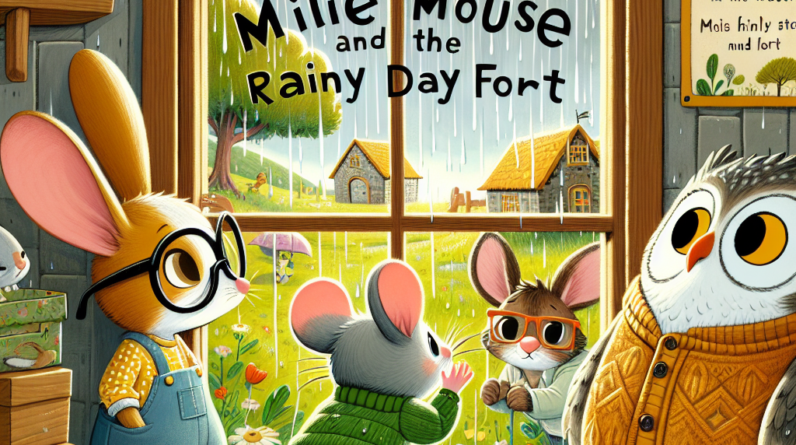
- Rainy Day Fort = frustration turned into creativity
Millie doesn’t always “fix” things. She learns to feel them — with help.

Tips for Reading to Support Emotional Growth
- Use your tone: Use your tone:
Read gently.
Pause for reactions.
If your child enjoys calm storytelling, explore our collection of
bedtime stories for kids
.. - Name the feeling: “Millie looks disappointed here.”
- Ask soft questions: “What do you think she needs right now?”
- Connect to real life: “Have you ever felt like that?”
- Validate afterward: “It’s okay to feel sad sometimes. Millie did too.”
Matching Books to Feelings
| Emotion | Millie Tale | Read-Aloud Tip |
| Anxiety | Millie Mouse and the Windy Day | Use soft voice, pause before surprises |
| Sadness | Box of Treasures | Let your voice slow down on reflective parts |
| Frustration | Rainy Day Fort | Emphasize problem-solving with warmth |
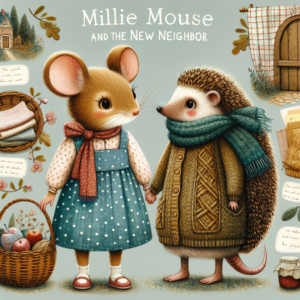
| Loneliness | Millie Mouse and the New Neighbor | Reflect on connection and empathy |
| Shyness | Forest Picnic | Pause and point to help relate |
The Role of the Adult
Your voice, your lap, your steady presence — they are the anchors.
You don’t need to solve every emotion for your child. Simply listening, reading together, and creating a calm bedtime routine is often enough. You may also enjoy our
bedtime routines
guide.
Printable: Millie’s Feeling Cards Cut out and use these cards to talk about feelings:
Millie feels… 🌀 Nervous
💧 Sad
🌟 Brave
🌈 Happy
🍂 Curious
🌧️ Frustrated

Use them with the stories or during real-life moments.
Emotional storytelling nurtures emotional understanding and connection
I tell stories because I have witnessed their small magic up close, like a therapist with a cape made of picture books. I believe emotional storytelling does more than entertain — it scaffolds feelings, builds bridges between hearts, and occasionally solves the mystery of where the missing sock of calm went.
Why stories matter for children’s emotions
I use stories to help children understand and name feelings that otherwise squirm out as tears, tantrums, or dramatic exits from the sandbox. I’ve noticed that when a child hears a character feel and handle something similar, their own emotion often becomes less volcanic and more manageable.
Stories create empathy and strengthen problem-solving
I watch empathy grow like a slow, stubborn flower when children repeatedly witness characters feeling complex emotions and responding kindly. I also see problem-solving skills improve, because stories offer models of trying, failing, asking for help, and trying again without the real-world stakes.
Stories improve emotional regulation
I create and share narratives that show breathing, reframing, and small rituals as tools characters use to calm down, which gives children practical scripts to borrow. I’ve found that this consistent exposure to regulated characters makes it easier for kids to mimic those calming strategies.
The neuroscience behind storytelling
I nerd out about how the brain lights up when a story is told, and no, I won’t apologize for sounding like a walking TED Talk. I like to think of storytelling as a soft, warm beam that nudges multiple brain regions into cooperative work.
Storytelling activates emotional and memory centers. Gentle bedtime reading also helps children regulate emotions before sleep. Learn more in our guide on
storytelling tips to calm anxiety before sleep
.
I explain to adults that when I tell a story, the amygdala and hippocampus are RSVP-ing to the party, helping the child experience and store the emotional content. I note that this makes the feelings in the story easier to recall and use later — like a little emotional toolkit.
Storytelling creates neural coupling between teller and listener
I enjoy the idea that my brain and a child’s brain can sync up during storytelling, a phenomenon researchers call “neural coupling.” I find it satisfying that this synchrony explains why a well-timed pause or an expressive whisper can make a child hang on each sentence like it’s the last cookie.
Stories as mirrors and windows
I often tell parents that stories function like mirrors and windows — everyone loves metaphors, and this one sticks. I use this image to remind myself that narratives help children both see themselves and understand others.
Mirrors: seeing themselves in stories
I craft or select tales where children recognize their own feelings and behaviors in characters, which helps them feel normal and less alone. I’m convinced that when kids see themselves reflected, anxiety diminishes because the problem becomes shared with a fictional but trustworthy companion.
Windows: understanding others’ perspectives
I also choose stories that open windows onto how someone else might feel or think, and I watch compassion grow incrementally with each peek. I like to point out to kids that seeing through another person’s window helps reduce quick judgments and increases kindness.
🌙 Free Calming Bedtime Stories
If you’re helping your child understand big emotions, our free collection of calming bedtime stories provides gentle read-aloud stories designed to encourage emotional regulation, connection, and peaceful sleep.
Download our FREE Calming 5-Minute Bedtime Stories for Peaceful Sleep.
- ✓ Gentle bedtime stories
- ✓ Calm bedtime routines
- ✓ Emotional regulation support
- ✓ Parenting guidance
📚 Continue Supporting Emotional Growth
Our Cozy Bedtime Stories Collection contains 30 calming bedtime stories, printable story collections, bedtime routine guides, and bonus parenting resources designed to help children understand emotions while creating peaceful bedtime habits.
- ✓ 30 calming bedtime stories
- ✓ Printable story collection
- ✓ Bedtime routine guide
- ✓ Bonus parenting resources
📚 Explore the Cozy Bedtime Stories Collection
📚 Continue Supporting Emotional Growth
Our Cozy Bedtime Stories Collection contains 30 calming bedtime stories, printable story collections, bedtime routine guides, and bonus parenting resources designed to help children understand emotions while creating peaceful bedtime habits.
Explore the Cozy Bedtime Stories Collection

Building emotional vocabulary through narratives becomes even easier when bedtime is calm and predictable. Our guide to
making bedtime feel safe
offers additional practical ideas.
I admit that sounding like a walking feelings dictionary is part of my job, and I embrace it happily. I intentionally sprinkle specific feeling words into stories so children can learn labels for subtle emotions beyond “happy,” “sad,” and “mad.”
Naming and recognizing feelings
I practice naming emotions within a narrative and pause to let children identify what a character might be feeling, which helps build their internal emotional radar. I’ve learned that once a child can name an emotion, they can start to regulate it more effectively.
Picture books and illustrations support recognition
I rely on picture books and expressive illustrations because facial expressions and body language are visual cheat codes for emotional literacy. I often exaggerate an eyebrow raise or a mouth shape when reading, because the theatrical version helps the learning version stick.
Example stories and how they work
I like to keep a mental shelf of go-to stories that address specific feelings, because being prepared feels like emotional first aid. I’ll walk through a few archetypal examples and explain the mechanisms I love about them.
“The Worried Little Bear” — coping with anxiety
I describe this fictional story as one where a little bear feels his stomach knot like headphone wires, and learns a calming metaphor like “tight balloon” that gradually deflates with breathing. I use it to model a coping strategy and to normalize worry as a common feeling that can be managed.
Children who enjoy stories about emotions often benefit from
slow bedtime stories for sensitive kids
which use gentle pacing and reassuring endings.
I picture a colorful tale that assigns colors to emotions — blue for sorrow, yellow for joy, green for calm, and so on — because it gives children an immediate, concrete way to map inner experiences. I enjoy asking kids which color they’re feeling; it’s playful and reduces the pressure of perfect words.
“The Friendship Bridge” — cooperation and conflict resolution
I imagine a story where characters build a bridge together, encounter a problem, and use empathy and negotiation to fix it, which subtly teaches social problem-solving. I use metaphors like “building” to make abstract skills feel like a tangible project children can replicate.
Table: Quick reference for these story examples
I include this table so parents and educators can glance and decide which story to use when their tiny human is having a moment. I promise tables are my secret weapon for organizing emotion-based chaos.
| Story title | Primary emotion(s) addressed | Key technique | Suggested age |
|---|---|---|---|
| The Worried Little Bear | Anxiety, worry | Calming metaphor + breathing | 3–7 years |
| The Rainbow of Feelings | Mood fluctuations | Color mapping + normalization | 2–8 years |
| The Friendship Bridge | Conflict, empathy | Cooperative problem-solving metaphor | 4–10 years |
Creating stories from your child’s real experiences
I prefer stories that borrow from real life because they’re tailor-made and impossible to argue with. I often take a child’s event and turn it into a short, structured narrative that makes sense of messy feelings.
Listen, validate, and retell
I begin by listening to the child’s version without interruption, which is like gold for trust and dramatically underrated as a parenting trick. I then validate the emotion (“That sounds really hard”) and retell the event in a simple sequence so the child can see cause, feeling, and response clearly.
Use simple sequence to make sense of emotions
I frame events in three acts: what happened, how the child felt, and what happened next or could happen next, which gives a sense of coherence. I enjoy turning chaotic episodes into tidy narratives because children often find calm in predictable structure.
Making storytelling interactive
I prefer stories that are not lecturing but interactive, because when children participate, the learning attaches more firmly. I use questions, voices, and props to keep the process playful and memorable.
Ask open-ended questions
I ask questions like “What do you think happened next?” or “Why do you think she felt that way?” because they help children practice perspective-taking. I avoid yes/no traps and lean into curiosity-stoking prompts that invite multiple answers.
Use voices, gestures, props, and drawing
I employ silly voices and dramatic gestures to make the emotions physically visible and easy to copy, which helps children experiment with expression. I sometimes add props or quick drawings — a crumpled paper “thought” or a drawn weather map — to make the emotional content tactile.
Using characters slightly removed from the child’s real situation
I’ve learned that a slight layer of fiction makes it safer for children to process sensitive issues without feeling exposed. I often change names, species, or settings so the main idea is preserved but the sting is reduced.
Why slight distance helps processing
I explain that when a problem is framed through a character, the child can examine it with less shame and more curiosity. I’ve seen kids engage with hard topics they would otherwise refuse to talk about when the content is a few steps removed from their lives.
Keeping relevance while maintaining distance
I make sure the metaphor or character mirrors the child’s emotional landscape in key ways — same emotion, similar triggers — while avoiding one-to-one mapping that might feel too revealing. I find this balance allows children to experiment with solutions without the intense pressure of personal judgment.
Best times to tell emotional stories
I prefer certain moments because they naturally invite reflection and connection, and because timing matters more than I used to admit. I pick moments that align with the child’s rhythm and readiness.
Bedtime and quiet moments
I often reserve bedtime for emotional stories because the low light and calm feel like a natural environment for inward thinking. I’ve noticed that the end-of-day reflective state helps children process feelings accumulated during the day.
After school, during transitions, or when feelings run high
I use storytelling after school or during transitions to help kids name what happened and decompress before moving on to the next activity. I also break out stories when a child shows strong feelings, turning the moment into an opportunity to learn rather than just soothe.
Age-appropriate storytelling: tailoring content and technique
I tailor my storytelling to a child’s developmental level because what works for a toddler does not always work for a preteen. I adjust language complexity, plot depth, and the kinds of emotional tools I model.
Toddlers and preschoolers (2–5 years)
I use simple plots, vivid images, and repetitive phrases with young children, because repetition builds familiarity and security. I emphasize basic emotion words and use playful, sensory-rich language they can latch onto.
Early elementary (5–8 years)
I introduce more nuanced feelings and short problem-solving steps for this group, and I expect they can follow longer arcs with multiple emotional beats. I encourage them to offer solutions for characters and to try role-playing simple coping strategies.
Older children (9–12 years)
I engage older kids with layered plots, moral ambiguity, and collaborative story creation that invites critical thinking about motives and consequences. I allow more discourse about complex emotions like shame, guilt, and anticipatory anxiety, encouraging reflection and insight.
Table: Age-appropriate techniques at a glance
I use this quick table as my shorthand for choosing the right tools for each age range; feel free to borrow it and pretend you made it. I find clarity helps reduce the “what do I say?” paralysis.
| Age range | Plot complexity | Key techniques | Typical goals |
|---|---|---|---|
| 2–5 years | Simple, repetitive | Sensory language, repetition, puppets | Name feelings, basic regulation |
| 5–8 years | Short arcs, clear resolution | Role-play, open questions, coping scripts | Problem-solving, empathy |
| 9–12 years | Multi-layered, morally complex | Collaborative storytelling, reflection prompts | Insight, perspective-taking |
Practical storytelling tips I use daily
I keep a mental toolkit of practical tips that I rely on when improvising emotional stories, because spontaneity works better with structure. I’ll share these as if I’m admitting my favorite parenting cheat codes.
Be age-appropriate and use expressive voice
I modulate complexity and dramatic flair depending on the child’s age, because there is nothing sadder than a five-year-old forced into a Shakespearean soliloquy. My voice is my Swiss Army knife: dramatic, soothing, silly, or sinister depending on what the story needs.
Validate emotions and pause for reactions
I pause after emotional beats to see how the child reacts, which invites them to process and respond rather than passively absorb. I always validate feelings with phrases like “That would make me feel upset too,” because validation is like emotional oxygen.
Use sensory detail and end with hope
I include smells, sounds, textures, and tastes in my stories to make emotions vivid and accessible, and I generally close with a constructive, hopeful line so children leave the story with possibilities. I’ve found endings that offer hope turn learning into confidence rather than worry.
Interactive prompts and sample phrases I use
I keep a stash of open-ended prompts and simple phrases to help children process their emotions during or after a story, as if emotional literacy were a game we both win. I’ll share a list that you can steal, meme-style.
Prompts to use while telling or after finishing a story
I ask things like: “How do you think the character’s belly felt?” and “What one small thing could help them feel better?” I encourage kids to choose actions for characters, which helps them rehearse responses.
Validation phrases I say frequently
I say things such as “That sounds really hard” and “I’m glad you told me how you felt,” because I believe the simplest language is often the most healing. I avoid lecturing and opt for curiosity and support.
Regular emotional storytelling strengthens long-term resilience
I’ve seen that when storytelling is a regular habit, children gradually accumulate emotional tools like coins in a piggy bank. I take pride in watching kids access those tools independently over time.
Building a consistent habit
I try to make storytelling a predictable part of routine, like brushing teeth but with more metaphors and fewer cavities. I find that consistency turns stories from a one-off fix into a steady curriculum for emotional growth.
Strengthening the parent-child bond
I’ve noticed that these shared stories create private languages, inside jokes, and emotional memories that strengthen our bond in subtle and lasting ways. I think these connections are the real currency of childhood, more valuable than stickers or screen time.
Troubleshooting common storytelling challenges
I know storytelling doesn’t always land perfectly, and I have strategies for when children tune out, resist, or react strongly. I keep a flexible mindset and a bag of alternative tactics.
When a child resists or shuts down
I sometimes switch to a drawing or a puppet if a child refuses to listen, because kids often hide feelings behind “I don’t want to.” I also give space and offer a future storytelling plan so the child knows the option remains open.
When emotions escalate during storytelling
I step out of my role as narrator and into empathic co-regulator if feelings escalate, naming sensations and offering simple grounding techniques. I might pause the story and say, “Let’s take three breaths together and come back,” then continue when calm returns.
Examples of short scripts I’ve used
I share sample lines and structural templates I use to build quick, effective emotional tales that parents can adapt on the fly. I like scripts because they reduce the stress of improvisation.
Short script: calming after anxiety
I start: “Once there was a little bird whose tummy felt like a buzzy drum. The bird learned to sit on a soft branch and breathe out the drumbeat slowly.” I then pause and invite the child to practice breathing, making the metaphor their tool.
Short script: naming a complicated feeling
I begin: “A fox woke up with a mix of sunny and storm-cloud feelings; the fox called the sunny part Joy and the storm-cloud part Worry.” I ask the child to name their own two parts, which encourages integration.
Monitoring progress and knowing when to seek more help
I monitor whether storytelling is helping by watching for increased labeling of emotions, more settled reactions, and improved problem-solving. I also know when a story is not enough and professional guidance might be helpful.
Signs storytelling is working
I see progress when a child uses words from our stories during moments of stress or suggests coping steps they learned from a character. I celebrate these tiny victories loudly and perhaps with a sticker.
When to involve professionals
I recommend seeking professional help if strong emotional reactions persist, intensify, or begin to interfere with daily functioning despite repeated storytelling and supportive strategies. I support families in this step because some problems need a therapist’s toolkit, not just my theatrical voice.
Final practical checklist I use before telling a story
I keep a checklist in my head: know the child’s age, identify the feeling to address, prepare a simple plot, choose a physical metaphor, and plan a hopeful ending. I use this checklist to turn spontaneous moments into meaningful learning without the stress.
The checklist in action
I quickly run through the items: Is this age-appropriate? What’s the main feeling? How will I show regulation? I then tell the story, watch the reaction, and be ready to pause or adapt based on the child’s cues.
Related Bedtime Resources
Helping children understand emotions works best when storytelling is combined with calm bedtime routines. These additional resources may also help:
- Storytelling Tips to Calm Anxiety Before Sleep
- Slow Bedtime Stories for Sensitive Kids
- How Overstimulation Affects Bedtime
- How to Make Bedtime Feel Safe
- Bedtime Routines for Kids
- Bedtime Stories for Kids
Closing thoughts: why I keep telling stories
I keep telling emotional stories because I believe they are one of the kindest, most effective ways to teach feelings without turning the child into a lab rat of therapy. I love the small, cumulative changes: a new word for a feeling, a shared laugh at an absurd metaphor, and the time when a child tells me a coping strategy I taught them and I get to inwardly high-five myself.
Children who enjoy stories about emotions often benefit from
slow bedtime stories for sensitive kids
which use gentle pacing and reassuring endings.
Parting encouragement
I encourage anyone who spends time with children to try storytelling as a gentle method for emotional teaching and bonding, because it’s effective and often deeply fun. I promise that your first attempts will be imperfect and your second attempts will be better, and that both attempts will show your child that their feelings matter enough to be told about and tended to.
Visit us again for more great books reading and recommendations at: https://booksforminds.com/