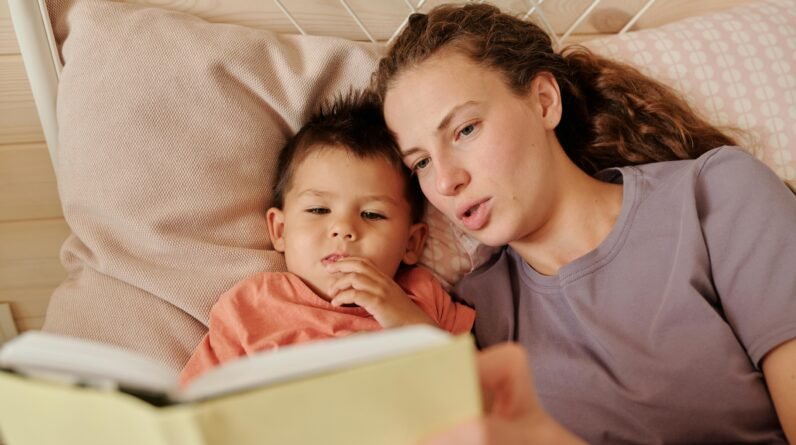
The Cozy Bedtime Book for Gentle Dreams
The Cozy Bedtime Book for Gentle Dreams. Do you ever wish bedtime felt less like negotiating with a tiny dictator and more like a slow exhale?
The Cozy Bedtime Book for Gentle Dreams
You are holding a small but radical truth: books can be lullabies in paper form. This book — whether purchased, borrowed, or handcrafted — is not just a story. It’s a ritual tool that calms your child’s nervous system, gives their brain a gentle anchor, and makes the transition from busy day to sleepy night feel intentional. You’re not just reading; you’re building a bridge to rest.
Why a Bedtime Book Matters
A consistent, calming bedtime book anchors your routine and signals to your child that it’s time to settle. When reading becomes predictable and soothing, your child learns that sleep follows the story, reducing power struggles and anxiety around bedtime.
Beyond behavioral benefits, the bedtime book fosters language, imagination, and attachment. You’re creating a space where words hold comfort, and your voice becomes part of the sleep-associated environment.
What Makes a “Cozy” Bedtime Book
Not every book is bedtime-friendly. The cozy ones usually have a slow rhythm, comforting themes, and a tone that soothes rather than excites. You want content that lowers arousal and builds a sense of safety.
You can judge a bedtime book by a few core attributes: gentle language, steady pacing, reassuring resolution, and visuals that use soft colors or simple shapes. Too much action, high stakes, or abrupt cliffhangers will make the relaxation work harder than it needs to.
Language and Tone
The words you choose (or the books you pick) matter as much as the way you read them. Soft, descriptive language that emphasizes sensations, cozy objects, and calm actions helps the brain shift into rest mode. Avoid loud verbs or sudden surprises in the narrative arc.
You should aim for predictability with some lyrical variation. Repetition comforts the child’s brain and helps with mastery of new language.
Short and steady wins. A bedtime book should be long enough to signal a wind-down but not so long that the child becomes alert again due to boredom, agitation, or the sheer length of human attention spans (including yours).
If your child falls asleep halfway through, that’s a win. If they are still turbocharged after the last page, cut back — less is more.
Illustrations and Visual Calm
Illustrations act like ambient lighting for the brain. Muted palettes, simple shapes, and cozy scenes feel like an embrace. Bright, contrast-heavy images can be stimulating. A soothing visual rhythm — pictures that invite resting your eyes rather than darting around — promotes calm.
You might prefer photo-based images for older children or more textured artwork for toddlers. The key is consistency.
Refrains, repeated lines, and predictable page turns are anchors. Your child knows what’s coming, which lowers anxiety. They can anticipate the cadence, the punchline, or the reassuring “goodnight,” and that predictability helps release control-based resistance.
Age Considerations: What Works at Each Stage
Different ages need different features. Tailor your selection or your homemade story to the developmental stage.
Age Range | Typical Attention / Needs | Book Characteristics to Look For |
|---|---|---|
0–2 years (Infants & Young Toddlers) | Short attention, sensory focus, bonding | High-contrast or simple images, rhythmic language, tactile elements, very short length |
2–4 years (Toddlers & Preschoolers) | Increased language, beginning imagination, routine needs | Repetition, simple plots, predictable endings, bedtime-themed content |
4–7 years (Preschool to Early School Age) | Narrative comprehension grows, fears may emerge | Gentle plots, reassuring resolutions, emotionally validating themes |
7–10 years (Middle Childhood) | More complex emotions and curiosity | Slightly longer stories, calming chapter books or short chapters with consistent rituals |
10+ years | Developing autonomy, possibly resistant | Short calming passages, poetry, short chapter reads, teen-friendly topics with soothing tone |
You’ll notice that as children age, their need for predictable rituals does not disappear — it just evolves. Keep the ritual, adapt the content.

Benefits for Sleep and Emotional Regulation
Reading a calming book isn’t fluff; it really helps. Your voice and the story provide cues that trigger parasympathetic nervous system activation — the rest-and-digest mode. Ritualized reading lowers cortisol, offers a sense of control through predictability, and reduces bedtime anxiety.
Emotionally, bedtime books validate feelings and model coping. Gentle plots can teach breathing, naming feelings, and tolerant problem-solving. You’re giving language to feelings and a container to let them exist without spiraling.
How to Build a Bedtime Routine Around the Book
A book works best inside a wider routine. Routines signal the body that something is consistent and safe. You’ll want to create cues that lead up to the story and cues that follow it.
Example bedtime routine (adjust times to your household):
20–30 minutes before bed: Start winding activities down (dim lights, low energy play)
15 minutes: Quiet bath or calming hygiene (optional)
10 minutes: Pajamas and teeth — in calm voices
5–10 minutes: Cozy reading time with the bedtime book
After reading: Short quiet ritual (hug, song, or affirmation), lights out
This is flexible and forgiving. You want rhythm, not rigidity.
Sample Routine Table
Time Before Bed | Activity | Purpose |
|---|---|---|
30 min | Low-energy play / dim lights | Decrease stimulation |
15–20 min | Bath / teeth / pajamas | Transition and predictability |
10 min | Book reading | Anchor and calming cue |
5 min | Quiet ritual (song, hug, breathing) | Final sleep association |
0 min | Lights out | Sleep phase begins |
If your child is resistant, you can shorten the steps or offer a choice (two books, two songs), which gives them a sense of agency without dismantling the routine.
Reading Strategies to Promote Gentle Dreams
Your delivery matters. You can read the same text in a way that lights a spark or invites sleep. Use your voice as an instrument of calm: slower tempo, softer volume, and gentle inflections. Pause more than you think, and let silence be part of the story.
Touch is another strategy. A hand on the child’s back, your thumb rubbing their palm, or a slow foot rub under the covers are subtle cues that comfort and co-regulate.
Use predictable voices if you do characters — not high or shrill voices on repeat. Save theatrics for morning storytime.
Voice, Pace, and Presence
Lower the pitch of your voice slightly to add warmth.
Slow down — children take time to process and absorb tone.
Use longer pauses after sentences that mention sleepiness or calm sensations.
Breathe in long, calm breaths so they can feel your rhythm.
When Kids Resist: Tactics That Work
Resistance is rarely about the book. It’s often about control, tiredness, or fear. You can acknowledge feelings and offer choices. Saying, “You don’t want to go to bed yet; you can pick the book or I can read it quietly while you snuggle” offers agency without chaos.
If the child repeatedly refuses to stay in bed, use graduated options: a short read-now promise, the “two more pages” rule, or structured delay choices (choose between two short books). You can also incorporate a calm-down corner earlier in the evening for emotional regulation.
Avoid escalating bargaining. Keep the options finite and predictable.

Creating Your Own Cozy Bedtime Book
Making a homemade bedtime book is powerful — it’s customizable and becomes a literal artifact of comfort. You don’t need fancy materials. Plain paper, markers, and staple-binding work fine. Focus on rhythm, predictability, and imagery tied to your child’s world.
Structure template for a homemade bedtime book:
Opening refrain (a calming line that repeats each night)
A small, comforting journey (from room to dream place)
Sensory descriptors (soft, warm, slow)
Reassuring resolution (home, safety, sleep)
Closing refrain (same as opening, slightly shorter)
You can write and illustrate it together with the child for extra ownership. If the child dictates a silly line, include it — it will become beloved.
Sample Page Script
Page 1: “This is the little house. Inside, everything is quiet now.”
Page 2: “The lamp breathes warmth. The blanket smells like home.”
Page 3: “You tuck your toes like a tiny bird. The moon watches, gentle and steady.”
Page 4: “We breathe in evening. We breathe out the busy. Sleep tips its hat and waits.”
Closing: “Good night, small star. I’ll see you in the morning.”
Keep it plain, repetitive, and emotionally validating.
Themes and Prompts for Gentle Dreams
Themes help you keep books focused. You can rotate themes or curate a personal set that reliably calms your child.
Cozy Home: Familiar objects, rituals, and safe spaces.
Nature at Night: Trees swaying, moonlight, gentle animals.
Small Adventures: Minor journeys that end at home.
Gratitude & Comfort: Noticing good things, soft endings.
Sensory Stories: Focus on textures, sounds, and warmth.
Emotional Check-ins: Naming feelings and showing comfort.
Writing prompts for your own pages:
Describe a favorite blanket as if it’s a character.
Tell the story of a bedtime routine from the perspective of the moon.
Catalog five small things that make the child feel safe.
Write a micro-adventure that starts and ends at the child’s bed.
Using Sensory Cues and Sleep Associations
Your book can be part of a multi-sensory ritual. Use consistent cues: dim lights, a soft blanket, a particular scent (mild lavender if tolerated), or a quiet white-noise machine. These cues become conditioned signals that predict sleep.
Be cautious with scents — introduce them slowly and avoid anything that could be irritating. White noise should be consistent and soft.
If you use an essential oil, dilute it heavily and keep it out of direct contact with the child’s skin.
Screen Time, Audiobooks, and Alternatives
Screens before sleep are generally stimulating thanks to blue light and fast edits. If you use a screen for night-time reading, set it to warm colors and keep brightness low. Audiobooks and narration apps can be excellent alternatives if you need to be hands-free, but make sure the narrator’s tone is soothing.
Consistency matters more than the medium. Whether you read aloud or play an audiobook, keep the ritual intact.

Diversity and Representation in Bedtime Books
You want your child to see themselves and to learn empathy through stories. Choose bedtime books that reflect your household’s culture, family structure, and everyday moments. Representation matters for building identity and safety.
Diversify the stories you read across different families, abilities, and cultures. Look for books where the child protagonist solves small fears and ends in comfort.
Recommended Book Features Checklist
Use this checklist when buying or making bedtime books. You can print it out or keep it in your head.
Feature | Why It Helps |
|---|---|
Short length | Prevents re-energizing the child |
Gentle, descriptive language | Encourages relaxation |
Repetition or refrain | Builds predictability |
Soft or muted illustrations | Visual calm |
Reassuring resolution | Reduces bedtime anxiety |
Simple, linear plot | Easy to follow without stimulation |
Sensory details | Anchors the body to calm |
Affirming ending | Emotional safety and closure |
If a book checks most of these boxes, it’s probably bedtime-friendly.
Troubleshooting Common Problems
Bedtime issues are rarely fixed by reading one book. Here are common problems and how to address them.
The child falls asleep before you finish: Reduce book length, accept the win.
The child gets hyper during reading: Switch to slower books, reduce animated voices, keep lighting dim.
Night wakings after falling asleep: Add a short reassurance ritual — a soft phrase or a check-in — that you can repeat without turning on bright lights.
Bedtime fears and nightmares: Use books that include naming the fear and coping strategies. Consider a “bravery book” where the hero uses deep breaths and helpers to resolve fear.
Resistance and bargaining: Offer two finite choices, then follow through. Predictability reduces bargaining.
Sample Short Bedtime Script You Can Use Tonight
You can adapt this script to read from a book or say as a micro-story. It’s designed to be simple and calming.
“Let’s make the room very small and quiet. We press the busy day into a little pocket and tuck it away.” Pause.
“The lamp breathes soft light; your blanket is a warm boat. You tuck your toes in like a tiny bird.” Pause.
“Tonight, the moon watches over the world with a sleepy smile. You are safe. You are seen. You can rest.” Pause.
“Breathe in for four. Breathe out for six. Good night, small star.” End with a soft kiss or hand on the back.
The script is short enough to be repeatable and familiar; familiarity is the key to comfort.
Including Words for Big Feelings
If your child expresses anger, sadness, or worry around bedtime, use your bedtime book to name and normalize feelings. A single line inserted into your ritual can help: “I heard you were sad today. That feeling can sit with us for a minute, and then we’ll let it go like a leaf.” Naming a feeling reduces its intensity.
You can keep a feelings drawer — one or two sentences on slips of paper — that the child can pick from and talk about before the book. This gives a finite window for processing without derailing sleep.
Nightmares and Night Wakings
When nightmares happen, your response matters more than the story itself. Validate their fear, provide a consistent soothing ritual, and avoid long rehashing. A firm, warm reassurance and a quick re-establishment of the bedtime ritual works best.
If nightmares are frequent, consider reducing daytime stimulation before bed, checking for sources of anxiety, and introducing calming content that reframes the frightening elements (gentle humor, safety narratives).
When the Book Is Your Own Nervous System
Remember: your presence is a major factor. If you’re tense, rushed, or distracted, that energy will travel through your voice. You can’t fake calm forever, but you can borrow it. Take a slow breath before you begin reading and allow the rhythm of your lungs to set the tempo.
If you need a break, consider recorded readings of your own voice — these are oddly comforting because the child recognizes you but you get a reprieve.
Practical Tips for Making Reading Easier for You
Keep a small stash of go-to books within arm’s reach of the bed.
Rotate a small set of favorites to maintain novelty without overwhelming choice.
Use a standing lamp with a low-watt bulb or a soft nightlight to keep visuals calming.
Keep reading short on busy nights; consistency matters more than completeness.
If you share reading duties, communicate the ritual so it doesn’t change tone when someone else reads.
FAQs
Q: How many books should I read?
A: One to three short books or one short chapter. The goal is a predictable ritual, not a marathon.
Q: What if my child prefers active stories?
A: You can save those for daytime and have a separate set of “sleep stories.” Offer choices between two calming options at bedtime.
Q: Can I use music instead?
A: Yes. Music and stories can be combined, but keep music slow, simple, and consistent in volume and tone.
Q: My child gets very emotional at bedtime. What then?
A: Validate, offer a finite processing window, then return to the ritual. Consider adding a feelings check-in earlier in the evening.
Q: How long until the routine works?
A: Habits take time — anywhere from a week to several weeks. Consistency, patience, and small adjustments will pay off.
Book Lists and Resources (How to Choose Examples Without Overwhelm)
You don’t need a library. One reliable stack is better than a bookshelf of chaos. Pick three books that meet the checklist: one for sensory calm, one for emotional reassurance, and one for light, poetic language. Rotate them.
If you want to include a table of example types to seek, here’s a simplified guide.
| Type | Example Traits |
|---|---|
| Sensory calm | Descriptions of touch, sound, warmth |
| Emotional reassurance | Characters who feel and resolve small worries |
| Nature-based | Moon, trees, animals behaving calmly |
| Quiet humor | Gentle laughs without high energy |
Avoid pages that dramatize danger, have fast plot twists, or include intense imagery.
Final Tips and a Small Ritual to Try Tonight
You get to choose how rigid or loose the ritual is. The goal is to create a small island of predictability in a world that often feels loud. Try this micro-ritual tonight: dim lights, pick one cozy book, read in a low voice, place one hand on the child’s chest for two breaths, and end with a repeated two-line refrain you both say together. Keep it short and repeatable.
You will not get it right every night. You will miss pages, fall asleep on the couch, or be interrupted by life. That’s okay. The power of a bedtime book grows through repetition, compassion, and your honest, imperfect presence. You are teaching your child that rest is a ritual worth leaning into, and that lesson is quietly revolutionary.
If you want, later you can make a small homemade book together — a ritual object the two of you own — and then you’ll have created a bedtime tool that is uniquely cozy, uniquely yours, and almost impossible to argue with.
Get more creative knowledge build books and resources for happy minds at: https://booksforminds.com/