Non-Scary Bedtime Stories for Kids
Finding the right non-scary bedtime stories for kids can make bedtime calmer, more reassuring and much easier for sensitive children. While exciting adventures have their place during the day, many children settle more comfortably after gentle stories filled with kindness, familiar routines and peaceful endings.
A child who is worried about darkness, separation, unfamiliar sounds or bad dreams may remain alert when a story contains villains, danger or unresolved suspense. A warm, predictable tale can offer a softer emotional landing and help the child finish the day feeling safe and connected.
In this guide, you will learn how to choose gentle bedtime stories, which themes work well for different ages, how to read in a calming way and how to respond when a child becomes frightened. You will also find six original non-scary bedtime stories ready to share tonight.
Key Takeaways
- Non-scary bedtime stories avoid intense danger, frightening imagery, cliffhangers and unresolved problems.
- Gentle stories can still be imaginative, funny and magical without creating fear.
- Calm pacing, repetition and reassuring endings are especially helpful for sensitive children.
- Offering two suitable story choices gives children control without delaying bedtime.
- If a story causes fear, stop, reassure the child and change the story rather than insisting on finishing it.
Why Choose Non-Scary Bedtime Stories?
Emotional Safety Matters at Bedtime
Stories can shape the emotional tone children carry into sleep. A frightening image, unresolved danger or threatening character may stay in a child’s imagination after the book closes.
Gentle stories create a different experience. Small challenges are resolved, caring adults or friends remain available and the ending returns the character to comfort and safety.
Children Can Enjoy Imagination Without Fear
A story does not need villains or danger to be interesting. Children can explore moonlit gardens, friendly clouds, helpful animals, sleepy libraries, talking socks and magical lights without feeling threatened.
The aim is not to remove all curiosity or excitement. It is to keep the emotional intensity low enough that the story supports rest rather than alertness.
Predictability Can Reduce Night-Time Worries
Repeated phrases, familiar characters and complete endings help children know what to expect. A predictable story may be particularly reassuring after a busy day, a change in routine or a period of increased worry.
Gentle Stories Support Connection
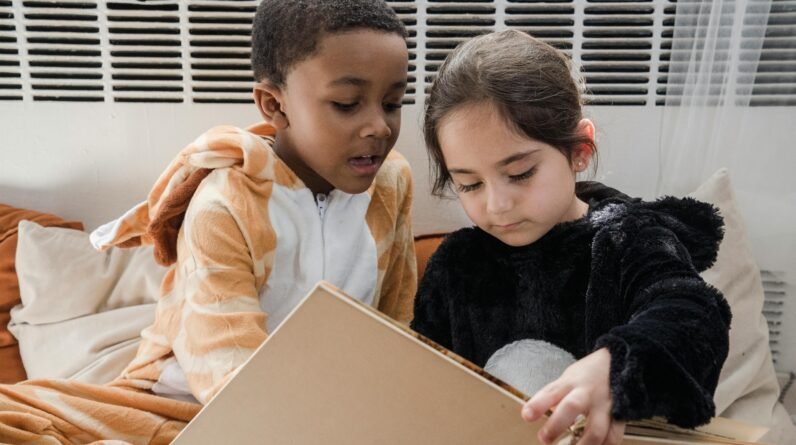
Reading together creates a quiet opportunity for closeness. The parent’s voice, physical presence and calm attention may be as comforting as the story itself.
Parent Tip
Children do not need completely uneventful stories. Gentle stories can include curiosity, humour and small challenges as long as the characters remain safe and the ending restores calm.
How to Choose Non-Scary Bedtime Stories for Kids
Look beyond the book cover or title. A story may appear child-friendly but still contain intense separation, threatening characters or unresolved suspense.
Check the Ending First
Before reading a new story at bedtime, look at the final pages. A suitable ending should clearly show that:
- The main problem has been resolved.
- The character is safe.
- Support or comfort is available.
- No new adventure is beginning.
- The final image is calm and complete.
Choose Small, Solvable Problems
Good bedtime problems are manageable rather than threatening. Examples include:
- A rabbit cannot find its favourite blanket.
- A lamp is glowing too brightly.
- A cloud needs somewhere to rest.
- A sleepy animal has forgotten its goodnight song.
- A mitten is separated from its matching pair.
Consider Your Child’s Sensitivities
Children respond differently to the same themes. One child may enjoy a friendly dragon, while another may find any dragon frightening. A child may also be sensitive to:
- Dark forests.
- Characters becoming lost.
- Parents leaving.
- Storms or loud noises.
- Animals being injured.
- Transformation or magic.
- Dream sequences that are difficult to understand.
Choose according to the individual child rather than relying only on age recommendations.
Match Story Length to Age and Mood
| Age range | Suggested length | Helpful features | Themes to approach carefully |
|---|---|---|---|
| 0–3 years | 2–7 minutes | Repetition, familiar objects, animals and routines | Separation, loud surprises and unfamiliar creatures |
| 3–5 years | 5–12 minutes | Simple problems, kindness, calm humour and safe magic | Villains, darkness and unresolved mysteries |
| 6–8 years | 10–20 minutes | Friendship, cooperation, mild wonder and emotional learning | Threatening suspense and intense loss |
| 9 years and older | 15–30 minutes | Reflective themes, richer language and gentle adventure | Cliffhangers and disturbing imagery near the ending |
For a broader collection, explore our main guide to bedtime stories for kids.
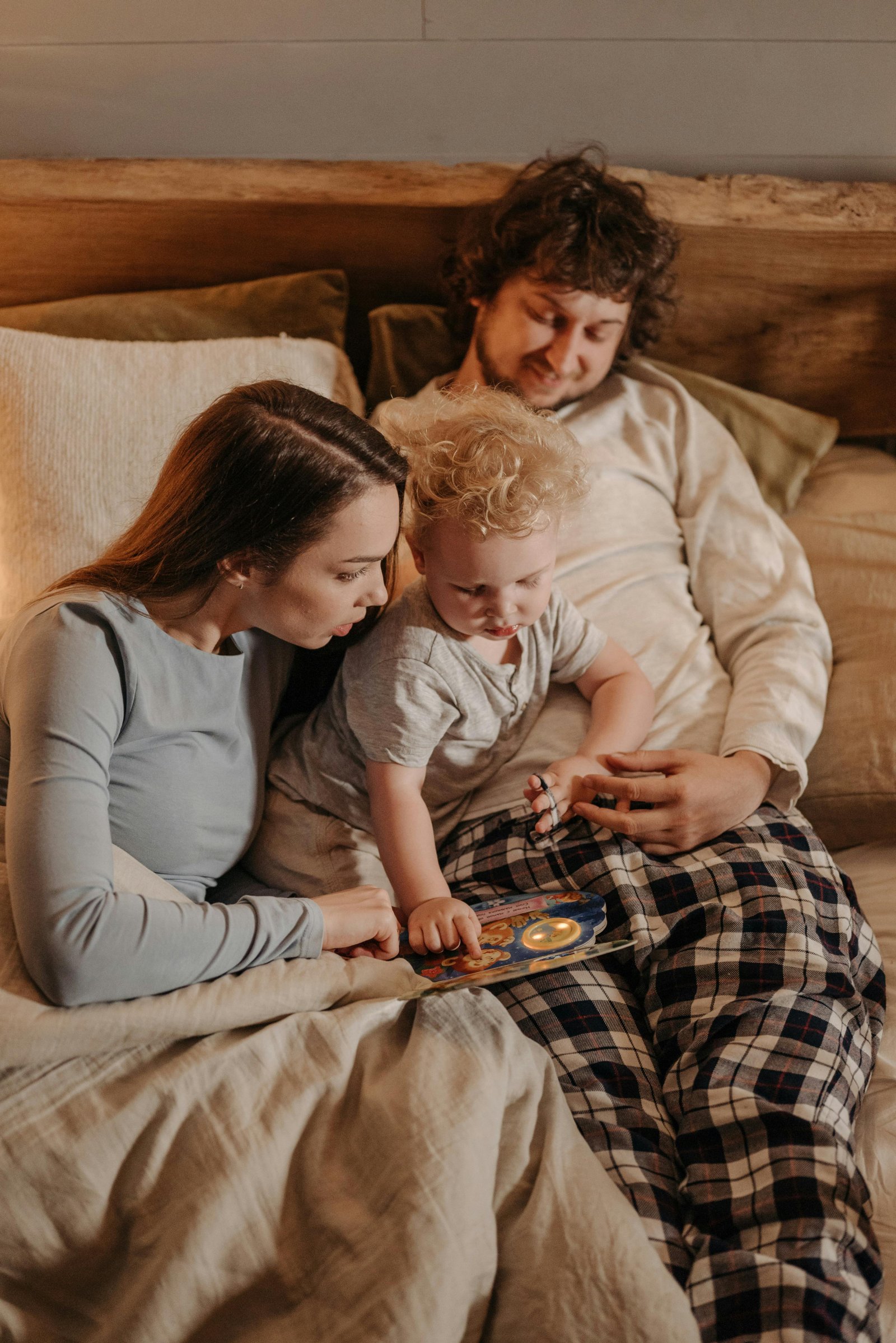
Types of Non-Scary Bedtime Stories
Rotating several gentle story styles can keep bedtime interesting without introducing fear or high stimulation.
| Story type | Best suited to | Typical tone | Suggested length | Example idea |
|---|---|---|---|---|
| Cosy animal tale | Ages 0–6 | Warm and familiar | 2–7 minutes | A rabbit tucks its family safely into bed. |
| Everyday magic | Ages 3–8 | Gentle wonder | 5–12 minutes | A spoon finds its way back to the kitchen drawer. |
| Lullaby story | Ages 0–4 | Rhythmic and repetitive | 1–5 minutes | The moon rocks the trees with a soft refrain. |
| Soft silly story | Ages 2–7 | Warm, quiet humour | 3–10 minutes | A pancake looks for the right-sized bath. |
| Gentle adventure | Ages 4–9 | Curious and low-stakes | 8–15 minutes | A child searches the village for the softest blanket. |
| Cooperative problem-solving | Ages 3–9 | Calm and reassuring | 5–12 minutes | Neighbours help a sleepy scarecrow find its hat. |
Cosy Animal Stories
Friendly animals allow children to explore emotions at a comfortable distance. Suitable plots include finding a bed, sharing a blanket, helping a friend or preparing for winter.
Stories About Familiar Routines
Brushing teeth, putting on pyjamas, tidying toys and choosing a bedtime book can become the events of a gentle story. Familiar routines reinforce predictability.
Everyday Magic
Magic can remain calm when it appears in ordinary settings. A moonbeam may become a ribbon, a cloud may deliver a pillow or a lamp may learn to glow softly.
Kindness and Friendship Stories
Small acts of cooperation provide emotional warmth without requiring conflict. Characters may share, listen, apologise or help one another settle.
Nature and Night Stories
Quiet rain, closing flowers, slow rivers, stars and sleeping animals naturally support bedtime imagery.
For children who prefer an especially slow pace, explore our slow bedtime stories for sensitive kids.
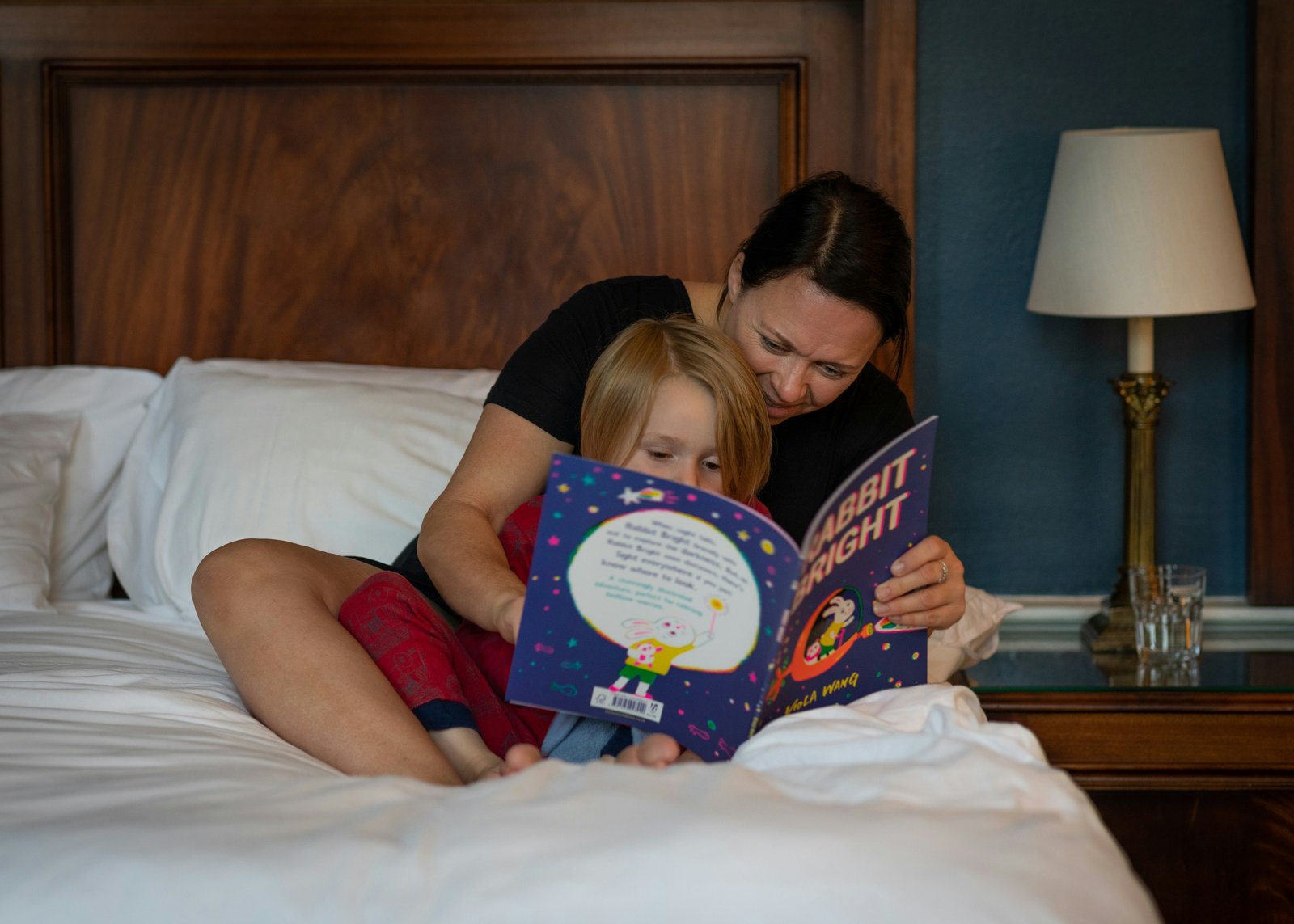
How to Tell Non-Scary Bedtime Stories Calmly
The way a story is read can influence whether it feels soothing or stimulating. A gentle story delivered with loud voices and dramatic pauses may still increase alertness.
Slow Your Pace
Read slightly more slowly than you would during daytime story time. Allow short pauses after calming images and repeated phrases.
Use a Warm, Steady Voice
Keep your voice low but clearly audible. Avoid sudden changes in volume, exaggerated gasps or dramatic character voices.
Repeat Reassuring Phrases
A repeated line creates familiarity and gives the child something predictable to anticipate.
Examples include:
- “Everything was safe.”
- “The night held them gently.”
- “Home was warm and waiting.”
- “One more yawn, then rest.”
Use Gentle Sensory Details
Choose soft, comforting images:
- The weight of a blanket.
- The quiet sound of rain.
- The warm glow of a lamp.
- The scent of clean pyjamas.
- The softness of a favourite toy.
Keep Questions Limited
Too many questions can turn reading into a conversation or activity. One gentle question is enough:
“Which part of the story felt the most peaceful?”
If your child is already sleepy, skip questions and move directly to the closing ritual.
Use Your Child’s Name Lightly
Adding the child’s name once or twice can create familiarity. Avoid placing the child directly into intense or uncertain situations.
A Simple Routine Around Story Time
A non-scary story works best when it appears in the same part of the bedtime sequence each night.
| Stage | Action | Purpose |
|---|---|---|
| Preparation | Bathroom, teeth and pyjamas | Complete active tasks before reading begins. |
| Environment | Dim lights and put screens away | Reduce visual and mental stimulation. |
| Choice | Offer two gentle stories | Provide limited control without delaying bedtime. |
| Connection | Read one story slowly | Create a period of calm shared attention. |
| Closure | Use one cuddle and a repeated phrase | Signal clearly that the routine is finished. |
Set the Story Limit Before Reading
Decide whether you will read one story, two short stories or one story followed by a brief rhyme. Explain the boundary before beginning.
“Tonight we will read one story. When it finishes, we will have our cuddle and say goodnight.”
Use a Consistent Closing Phrase
Choose one calm sentence to repeat each evening:
“The story is finished, the room is safe, and now it is time to rest.”
For more help creating emotional security at night, read How to Make Bedtime Feel Safe.
Six Non-Scary Bedtime Stories to Read Tonight
Each original story below uses a calm setting, a small event and a reassuring ending. Read slowly and soften your voice during the final paragraphs.
1. The Moon’s Pyjama Party
Best for: Children who enjoy gentle silliness and moon stories.
Reading note: Pause after each outfit and become quieter as the moon settles.
The moon had a wardrobe filled with soft silver pyjamas.
Some had long sleeves that floated like clouds. Some had tiny pockets for holding stars. One pair was covered in little lavender dots.
Tonight, the moon wanted to find the most comfortable pair of all.
First, it tried a stripy nightshirt.
The stars looked carefully.
“Very smart,” they whispered, “but perhaps a little too bright.”
The moon changed into a nightgown with tiny buttons.
A passing owl blinked sleepily.
“Very elegant,” said the owl, “but the buttons may tickle when you roll over.”
The moon thanked the owl and tried again.
It put on a soft cardigan with three deep pockets.
One pocket held a yawn.
One held a quiet song.
The third held a small scarf for anyone who felt cold.
A gentle breeze borrowed the scarf and carried it towards the river. The fish used it as a silver sail for their tiny evening boat.
At last, the moon found a simple fleece set that smelled faintly of lavender.
It felt warm without being heavy.
It felt soft without being tickly.
It felt like holding hands.
The moon settled into the sky as comfortably as if the whole night were a hammock.
The stars tucked themselves beneath their blankets.
The owl closed its eyes.
The breeze became still.
“Sleep well,” the moon whispered.
The whole earth answered with one long, peaceful dream.
2. Mango the Tiny Cloud
Best for: Children who enjoy clouds, windows and small acts of kindness.
Reading note: Use a light voice at first, then slow down when Mango and the sock rest.
Mango was a cloud no bigger than a teacup.
He did not make thunderstorms or race across the sea. Mango preferred to float near warm windows and listen to families reading stories.
Every morning, he borrowed a little sunlight and turned himself the colour of a peach.
Every evening, he drifted between balconies to see whether anyone needed quiet company.
One night, Mango found a small sock lying alone on a balcony chair.
The sock’s matching partner was somewhere inside the house.
“Are you lonely?” Mango asked.
“Only a little,” said the sock.
Mango puffed himself into a soft round cushion.
“You may rest here until morning.”
The sock curled on top of Mango and listened to distant footsteps, a quiet clock and the gentle hum of the city.
Neither of them needed to speak.
When morning arrived, the sun warmed the balcony.
A child opened the door and found the missing sock.
“There you are,” the child said happily.
The sock waved goodbye as it returned to its matching partner.
Mango floated upwards and changed into the shape of a little boat.
He was small, helpful and always nearby when someone needed a quiet place to rest.
By evening, Mango was once again floating beside the windows, wearing his soft peach-coloured smile.
3. The Helpful Sock
Best for: Children who enjoy familiar household objects and quiet humour.
Reading note: Keep the humour gentle and lower your voice during the reunion.
There was once a sock who lived in a drawer beside a folded map and a small jar of hair clips.
Its matching partner had disappeared beneath the sofa.
The sock missed its partner, but it decided to use the waiting time to practise being helpful.
First, it folded itself into a hat for a wooden rabbit.
The rabbit looked very official.
Next, the sock stood beside Teddy’s bed and held a tiny playtime lantern while Teddy dreamed.
Then it sat on the bedside table and kept a lonely bookmark company.
Each evening, the sock looked at the map and whispered:
“We will find you, partner.”
One warm afternoon, a hand reached beneath the sofa.
Out came the missing sock, covered in one small piece of fluff.
The two socks were so happy that they danced quietly across the laundry line.
The setting sun coloured them gold.
That evening, they returned to the drawer together.
The map rested beside them.
The hair clips became still.
The wooden rabbit wore its usual ears again.
The socks did not need applause.
They were simply happy to be together, warm and safely folded until morning.
4. The Sleepy Library
Best for: Children who love books, cats and quiet places.
Reading note: Pause after each part of the library becomes sleepy.
There was a library that yawned twice every afternoon.
The librarian was a cat with soft velvet paws. She always knew when the shelves were becoming tired.
Each evening, the librarian cat opened one book and read a single gentle page.
As she read, the maps relaxed their winding lines.
The recipe books closed their pictures of cakes and soups.
The picture books arranged their colours into quiet little piles.
The shelves hummed as softly as a contented cat.
One evening, a child entered the library with messy hair and many questions.
The librarian cat offered the child a bookmark that smelled faintly of chamomile.
She also brought a pillow made from several folded napkins.
The child rested in a reading corner while the librarian opened a story.
The words unfolded like a warm blanket.
The desk lamp blinked once.
Then twice.
The books began whispering lullabies to one another in soft alphabetical tunes.
The librarian cat curled around a small globe and purred.
The library exhaled in a sound like pages turning very slowly.
The child closed their eyes.
The silence did not feel empty.
It felt friendly, warm and full of stories resting until tomorrow.
5. The Garden That Whistled
Best for: Children who enjoy gardens, music and gentle nature stories.
Reading note: Hum quietly during the final paragraph.
Behind a small house stood a garden that loved making music.
The leaves rustled in slow rhythms.
The tulips whistled whenever moonlight touched their petals.
A shy beetle tapped a gentle beat with its tiny feet.
A sleepy robin added an echo that sounded like a question.
Every evening, the gardener came outside wearing her spectacles on a silver chain.
She listened carefully and clapped once when the garden finished practising.
One night, the stars dropped a small sprinkle of silver light.
The plants decided that this called for a slow dance.
They swayed gently from side to side.
A little dandelion puffed itself into the shape of a hat because it believed every dance needed one.
The beetle tapped.
The robin echoed.
The tulips whistled their softest tune.
By the time the moon moved across the roof, the garden had created a lullaby.
The gardener carried the tune indoors and hummed it beneath her blanket.
Outside, the plants folded their leaves like hands.
The beetle tucked in its feet.
The robin rested its head beneath one wing.
The whole garden slept and dreamed of tomorrow’s song.
6. The Little Lighthouse Who Wanted to Nap
Best for: Children who enjoy the sea, counting and slow repetition.
Reading note: Count the lighthouse flashes slowly and make each one quieter.
There was a little lighthouse that blinked politely for ships.
It liked helping sailors find their way, but it also enjoyed resting between flashes.
The lighthouse keeper wore warm boots and understood that even helpful lights need quiet moments.
Together, they created a new signal.
Three gentle flashes meant hello.
One long glow meant the lighthouse was resting.
Flash one.
Flash two.
Flash three.
Then one slow, golden glow.
The ships learned the pattern and sailed safely across the calm water.
On windy nights, the lighthouse hummed a tune that sounded like knitting needles in a rocking chair.
On quiet nights, it counted clouds with the seals resting near the rocks.
One small fishing boat came close to shore.
The lighthouse blinked its gentle pattern.
One.
Two.
Three.
Then one warm, steady glow.
The boat turned safely and floated back towards the harbour.
When morning arrived, the lighthouse stretched its beam across the sea.
It felt proud, useful and well rested.
If you ever see a lighthouse glowing especially softly, it may be taking a peaceful little nap between the waves.
How to Adapt Gentle Bedtime Stories for Different Ages
For Toddlers
- Keep the story short and repetitive.
- Use familiar objects and animals.
- Repeat the reassuring line two or three times.
- Use physical reassurance such as a cuddle or hand on the back.
- Remove unnecessary characters and details.
For Preschoolers
- Add one small choice, such as a colour or animal.
- Use a simple problem with a quick solution.
- Include gentle humour.
- Keep the ending predictable.
For Early School-Age Children
- Add a little more description and emotional meaning.
- Use cooperation to resolve small problems.
- Include a mild mystery only when it is resolved clearly.
- Allow one brief reflection after the story.
For Older Children
- Use richer vocabulary and more reflective themes.
- Include friendship, confidence, belonging or kindness.
- Avoid ending with suspense.
- Close with emotional reassurance and stillness.
For more detailed age guidance, visit our guide to choosing bedtime stories by age.
How to Write Your Own Non-Scary Bedtime Story
A homemade story can include your child’s name, favourite animal, bedroom objects or family routines. Keep the structure simple so the story remains calm.
Begin With a Comforting Setting
Choose one safe place:
- A warm bedroom.
- A moonlit garden.
- A quiet library.
- A cosy animal home.
- A gentle beach at sunset.
Add One Small Want
Give the character one manageable goal:
- Finding a pillow.
- Helping a friend.
- Learning a goodnight song.
- Returning a lost object.
- Choosing a sleeping place.
Use Cooperation Instead of Conflict
Let another character offer support. The problem can be solved through sharing, listening, breathing, waiting or asking for help.
Repeat One Calming Action
The character might:
- Count three stars.
- Fold three blankets.
- Say goodnight to three objects.
- Take three slow breaths.
- Dim three small lights.
End With a Restful Image
Suitable final images include:
- A flower closing.
- A lamp dimming.
- A blanket settling.
- A sleeping animal.
- Quiet stars above a safe home.
Fill-in-the-Blank Story Formula
Once, in a quiet [place], there lived a gentle [character]. One evening, the character wanted [small wish]. With help from [friendly helper], they slowly [calming action]. Soon everything was safe again. The [restful image] became still, and the whole world whispered, “Goodnight.”
Troubleshooting Common Bedtime Story Problems
My Child Becomes Frightened During the Story
Pause immediately and acknowledge the feeling.
“That part felt scary. We can change it.”
Turn the frightening detail into something harmless, such as a shadow becoming a coat, a strange sound becoming a sleepy animal or a dark shape becoming a cloud.
There is no need to finish a story that is increasing fear.
My Child Asks for Too Many Stories
Set a clear limit before reading begins. Offer one story followed by one short rhyme or one favourite closing sentence.
My Child Becomes Overstimulated
Reduce stimulation immediately:
- Lower the lights.
- Stop using character voices.
- Shorten the story.
- Repeat one calming phrase.
- Move directly to the closing ritual.
My Child Wants the Same Story Every Night
Repetition can be reassuring. Keep the familiar story available and introduce variety slowly by changing only one story in the rotation.
My Voice Is Too Tired
Use a short audio story, familiar poem or three-minute tale you know from memory. The connection and routine matter more than a perfect performance.
The Story Causes Worries After Lights Out
Revisit the ending briefly:
“The character is safe, the problem is finished, and everyone is resting now.”
Then return to the usual goodnight phrase rather than beginning a long discussion.
For more support, explore our storytelling tips to calm anxiety before sleep.
Signs Gentle Bedtime Stories May Be Helping
- Your child settles more calmly after story time.
- Night-time worries become less frequent.
- Bedtime resistance gradually decreases.
- Your child begins requesting familiar calming stories.
- The transition to lights out becomes more predictable.
- Story time feels more enjoyable for the family.
Progress is not always consistent. Illness, travel, developmental changes and emotionally difficult days may temporarily affect bedtime. Look at the overall pattern rather than expecting every evening to be identical.
Quick Non-Scary Bedtime Story Checklist
- The main character is kind or supported by someone kind.
- The problem is small and quickly resolved.
- There are no villains, threats or frightening surprises.
- The story does not end with suspense.
- The reading pace is slow and steady.
- The lights are dim and screens are away.
- The final image is warm, safe and restful.
- The same reassuring phrase is used at the end.
Frequently Asked Questions About Non-Scary Bedtime Stories
What makes a bedtime story non-scary?
A non-scary bedtime story avoids threatening characters, intense danger, frightening imagery, cliffhangers and unresolved problems. It uses a warm tone, manageable events and a clear return to safety.
Are non-scary bedtime stories helpful for anxious children?
Gentle stories can support a calmer and more predictable bedtime experience. Choose low-stakes plots, familiar settings and reassuring endings. Persistent or severe anxiety may also require appropriate professional guidance.
How long should a non-scary bedtime story be?
Toddlers often respond well to stories lasting two to seven minutes. Preschoolers may enjoy five to twelve minutes, while older children may prefer ten to twenty minutes when the pacing remains calm.
Can I read the same gentle story every night?
Yes. Repetition often provides emotional security. Familiar language and predictable endings can become part of the child’s bedtime cue.
What should I avoid to reduce the risk of nightmares?
Avoid graphic descriptions, unresolved danger, threatening villains, creepy sounds, frightening transformations and suspense near the ending. Finish with safety, comfort and stillness.
How should I respond when my child becomes scared?
Stop, lower your voice and offer reassurance. Acknowledge that the detail felt frightening, change it into something harmless and guide the story back towards safety.
Can gentle stories still include magic?
Yes. Magic can remain calming when it creates wonder rather than danger. Friendly stars, moonlit gardens, helpful clouds and gentle talking animals are suitable examples.
Should children choose their own bedtime story?
Offer a choice between two suitable stories. This gives children some control without creating a long search or allowing an unsuitable story to disrupt bedtime.
Are non-scary stories only for young children?
No. Children of all ages may prefer reassuring stories, especially when they are sensitive, worried or experiencing a change in routine. Older children can enjoy richer language and deeper themes without intense suspense.
Can non-scary stories become part of a healthy bedtime routine?
Yes. Reading a gentle story at the same stage of the evening can create a familiar transition from activity to rest, particularly when paired with dim lights and a repeated closing phrase.
Related Bedtime Resources
Final Thoughts
Non-scary bedtime stories help children end the day feeling safe, calm and connected. A story does not need villains, danger or suspense to hold a child’s attention. Kind characters, gentle wonder and peaceful endings can create an imaginative experience without leaving the child alert or worried.
Choose stories that match your child’s individual sensitivities. Read slowly, accept repetition and change any detail that feels frightening. The goal is not to finish every page exactly as written. The goal is to create a reassuring transition towards sleep.
Over time, a few familiar stories may become part of the emotional structure of bedtime—quiet reminders that the day is finished, the room is safe and someone caring is nearby.