Reading Stories for Kindergarten: Easy Stories for Early Readers
Reading stories for kindergarten work best when they feel achievable, enjoyable, and appropriate for a child’s current reading stage. Short sentences, repeated language, familiar words, supportive illustrations, and simple phonics patterns can all make early reading feel less overwhelming.
Kindergarten children are still developing letter-sound knowledge, decoding skills, vocabulary, listening comprehension, and confidence with books. That means the goal is not to make every story difficult. It is to give children enough support to experience success and want to keep reading.
This guide includes easy kindergarten story examples, simple decodable texts, 25 early-reader story ideas, a printable story framework, a one-week practice plan, comprehension questions, classroom ideas, and ways to keep reading gentle at bedtime.
If you are specifically looking for bedtime stories rather than reading-practice material, start with our
Bedtime Stories for Kids
library.
Key Takeaways
- Choose stories that match the child’s current skills rather than age alone.
- Short, repeated sentence patterns can help early readers participate successfully.
- Decodable stories are most useful when the text matches phonics patterns the child has already learned.
- Rereading familiar stories can support smoother reading and confidence.
- At bedtime, keep reading relaxed and avoid turning the story into a test.
- One or two simple comprehension questions are usually enough for a short reading session.
- If a story consistently feels frustrating, move to an easier text and build success first.
Watch: Reading Stories for Kindergarten and Early Readers
This video can complement the reading ideas below. Parents and teachers can preview it first and decide whether it fits the child’s current reading stage.
Why Simple Reading Stories Matter for Kindergarten
Beginning readers are learning several skills at once. They may be remembering letter sounds, blending sounds into words, recognizing familiar words, following a sentence, and trying to understand what the story means.
A simple text can reduce the number of things the child has to manage at the same time.
Easy kindergarten reading stories can support:
- letter-sound awareness,
- phonics practice,
- recognition of familiar high-frequency words,
- vocabulary development,
- listening comprehension,
- story sequencing,
- confidence with books, and
- enjoyment of shared reading.
The aim is not to keep a child permanently on easy books. It is to provide enough success for new skills to develop without unnecessary frustration.
For broader guidance on choosing stories according to children’s stages, see our
Easy Stories for Kids by Age
guide.
5-Step Checklist for Choosing Easy Stories for Early Readers
- Start with the child’s current skills.
If the child is learning simple consonant-vowel-consonant words such as cat, sat, and mat, choose text that gives them opportunities to use those patterns. - Look for repeated language.
Repeated words and sentence structures can help a child anticipate what comes next. - Use predictable sentence frames.
Examples include “I see the…” or “The cat can…” - Keep the amount of text manageable.
A short story that the child can finish successfully may be more useful than a longer story that becomes frustrating. - Match the tone to the purpose.
For bedtime, choose gentler stories and calmer endings. For daytime practice, more energetic or humorous texts may work perfectly well.
A Very Simple Example
The cat sat on the mat.
The cat saw the moon.
The cat said, “Good night.”
Best Story Types for Kindergarten Readers
Different kinds of stories support different reading experiences. No single format is best for every child.
| Story Type | Useful For | Why It Can Help |
|---|---|---|
| Rhyming stories | Preschool and early kindergarten | Draws attention to sounds and repeated patterns. |
| Predictable-pattern stories | Beginning readers | Encourages participation through familiar sentence structures. |
| Decodable stories | Children receiving phonics instruction | Provides practice with taught sound-spelling patterns. |
| Animal stories | Many age groups | Often use familiar characters and easy-to-imagine situations. |
| Calm bedtime stories | Evening shared reading | Can combine books with a predictable winding-down routine. |
| Simple moral stories | Children ready for discussion | Creates opportunities to talk about characters’ choices and feelings. |
How Long Should Kindergarten Reading Stories Be?
There is no universal ideal story length for every kindergarten child. Reading experience, attention, familiarity with the text, time of day, and the child’s current skills can all matter more than age alone.
A useful approach is to choose a story that is short enough to finish while the child is still engaged.
| Reading Stage | Useful Starting Format | What to Look For |
|---|---|---|
| Pre-reader | Picture-led micro-story | Simple language, repetition, strong picture support. |
| Beginning kindergarten reader | Very short predictable or decodable text | Short sentences and familiar sound patterns. |
| Developing kindergarten reader | Several short sentences or pages | Repeated words with a small amount of new vocabulary. |
| Early independent reader | Longer beginner stories | Increasing sentence variety while remaining manageable. |
| More confident reader | Short chapter-style stories | Longer plots with clear stopping points. |
If your child is reading bedtime stories specifically, you may also find our
Preschool Bedtime Stories
useful for gentle read-aloud options.
How to Read Stories With Kindergarten Children
The way an adult responds during reading can influence whether a child experiences the book as encouragement or pressure.
- Preview the story.
Look at the title, cover, or illustrations before reading. - Notice repeated words.
Point out a pattern when it is helpful rather than interrupting every line. - Give the child time.
A brief pause may give them enough space to attempt the word independently. - Let the child join in.
Repeated phrases are useful places for participation. - Keep questions light.
One simple question may be enough, especially at bedtime.
Example Question
“What did the cat see?”
If the child is tired, skip the question entirely and simply enjoy the story together.
25 Easy Reading Story Ideas for Kindergarten and Early Readers
These ideas can be used as inspiration for short stories, writing prompts, phonics practice, or shared storytelling.
- Moon Bunny — A gentle bunny sees the moon and says good night.
- Sleepy Bear — A little bear finds a warm blanket and rests.
- Dot the Dog — A dog finds a ball, a bed, and a bone.
- Red Bed — A simple short-e story about a cozy red bed.
- The Big Nap — Animals find quiet places to rest.
- Sam Sat — A short story using the -at word family.
- Tim in Bed — A simple short-i story.
- Meg and the Hen — A short-e farm story.
- Mop Hop — A short-o story with playful movement words.
- Bug in the Rug — A short-u rhyming story.
- Cat Can Nap — A calm -ap word-family story.
- The Sun Set — A gentle story about watching the sunset.
- I See the Sky — A predictable “I see…” story.
- Max Packs — A beginner story using simple consonant blends.
- Fish on a Dish — A playful story using a common digraph.
- The Soft Train — A quiet train rolls toward bedtime.
- Owl’s Quiet Walk — An owl explores the forest before sleep.
- The Lost Feather — A gentle story about helping someone.
- Fox Finds a Friend — A simple friendship story.
- The Lantern Path — A peaceful beginner adventure.
- Fairy in the Fern — A soft fantasy idea for more confident readers.
- The Funny Pillow — A light, silly bedtime story.
- The River Map — A simple story with several connected scenes.
- Night Camp Secret — A gentle mystery idea for older readers.
- Star Letter Club — A story prompt for children ready for longer reading.
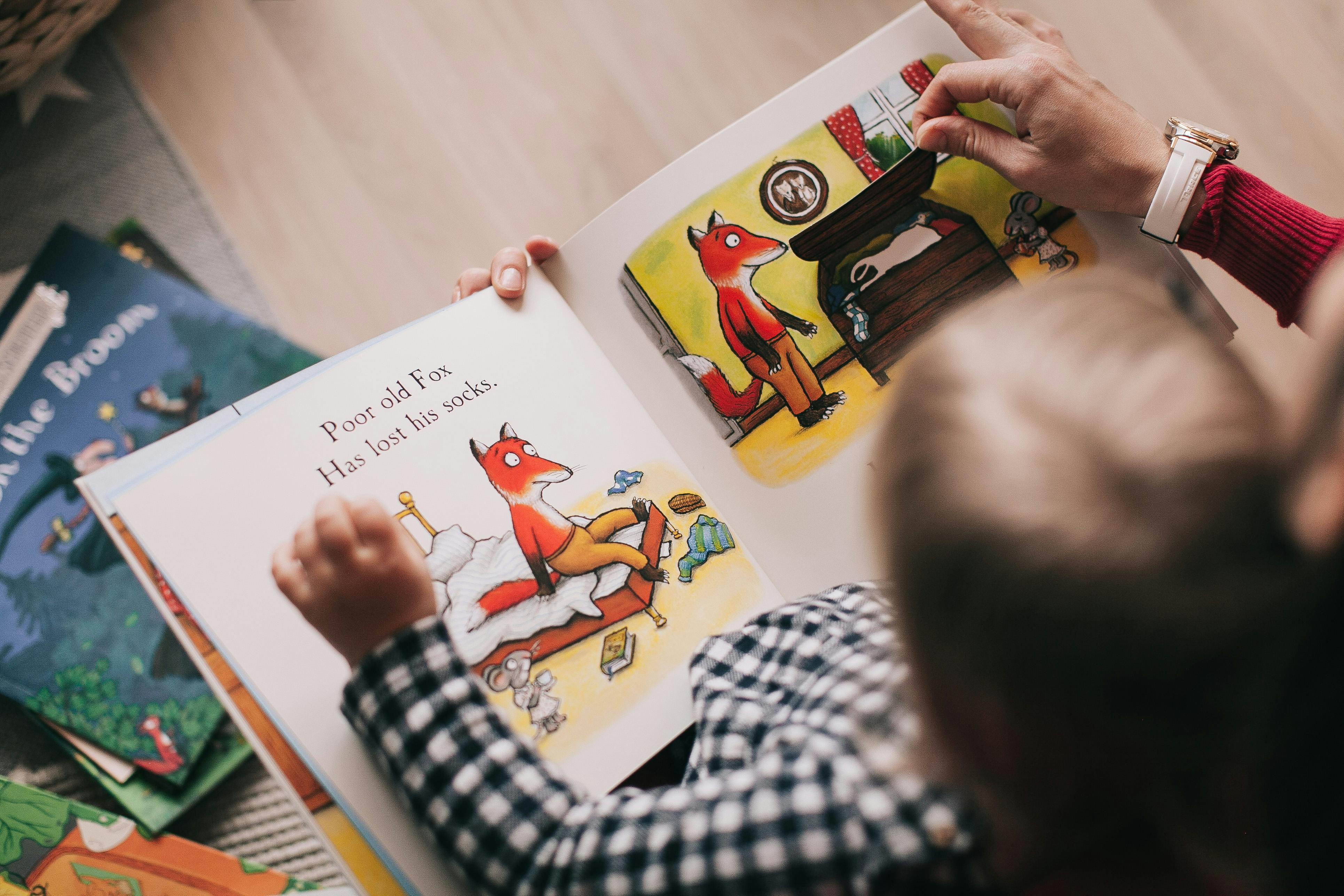
Ready-to-Read Kindergarten Story Examples
These short examples are deliberately simple. Use them only when their sound patterns match what the child is ready to practise.
Story 1: Sam Sat
Phonics focus: -at word family
Sam sat.
Sam sat on a mat.
The cat sat on the mat.
Sam saw the cat.
Sam said, “Good cat.”
Story 2: Cat Can Nap
Phonics focus: -ap word family
The cat can nap.
The cat has a cap.
The cat taps the mat.
The cat gets in bed.
The cat can nap now.
Story 3: I See the Sky
Repeated words: I, see, the
I see the sky.
I see the sun.
I see the moon.
I see one star.
I see my bed.
Good night.
For additional simple story inspiration, visit
5 Simple Bedtime Stories for Preschool Kids
.
Can Kindergarten Reading Practice Be Part of Bedtime?
It can, but bedtime reading should feel different from a formal lesson.
If the child enjoys practising a few familiar words, a very short early-reading activity can happen first. Then move into a story that you read aloud so the child can simply listen and enjoy.
A Simple Bedtime Reading Routine
- Try one short, familiar reading passage.
- Stop before the child becomes frustrated or tired.
- Read a calming story aloud.
- Finish with the same quiet closing phrase.
Example Closing Phrase
“We read, we rest, good night.”
For a broader evening framework, see our
Bedtime Routine That Actually Works
.
If bedtime has become difficult rather than simply busy, our guide to
making evenings calmer before bed
may also help.
10 Calming Story Prompts for Early Readers
These short prompts can be expanded into simple oral stories, drawing activities, or beginner reading texts.
- The moon helps a rabbit find a quiet place to rest.
- A kitten finds the warmest blanket in the house.
- A little boat drifts across a quiet pond.
- A bear counts five stars before bed.
- A fox listens as the leaves settle for the night.
- A child says goodnight to each favourite toy.
- A cloud carries sleepy wishes across the sky.
- An owl blinks slowly from a pine tree.
- A deer walks home beneath lantern light.
- A train rolls softly into a quiet station.
For very short bedtime formats, explore our
Micro Bedtime Stories
.
Printable Decodable Story Template
Parents and teachers can use this basic structure to draft a very short practice story. The phonics focus should reflect patterns the child has already been taught.
| Step | What to Add | Example |
|---|---|---|
| 1 | Choose one familiar phonics pattern | -at |
| 2 | Select a small group of useful words | cat, sat, mat, hat |
| 3 | Add a few familiar high-frequency words | the, is |
| 4 | Repeat a simple sentence pattern | The cat sat. |
| 5 | Give the text a clear ending | The cat can nap. |
Printable Example: The Cat Sat
The cat sat.
The cat sat on the mat.
The cat had a hat.
The cat saw a bat.
The cat sat in bed.
The cat can nap.
Keep in mind that not every word in a home-created story will necessarily be decodable according to a child’s phonics programme. If you are using the text for formal phonics practice, align it with the sequence the child is learning at school.
One-Week Reading Practice Plan
This sample is intentionally flexible. Adjust the activities according to your child’s school programme, attention, and interest.
| Day | Simple Activity |
|---|---|
| Monday | Read one familiar short story together. |
| Tuesday | Notice a small group of familiar words in context. |
| Wednesday | Echo-read three or four short lines. |
| Thursday | Read a repeated sentence pattern together. |
| Friday | Ask one simple comprehension question. |
| Saturday | Return to a familiar short text. |
| Sunday | Let the child choose a favourite story to reread. |
A plan should reduce decision-making, not create pressure. It is fine to skip days or simply read aloud together.
Easy Comprehension Questions for Kindergarten Stories
Comprehension questions can help you see whether a child is following the story, but there is no need to ask every question after every book.
- Who was in the story?
- Where did the story happen?
- What happened first?
- What happened next?
- What did the character want?
- How did the story end?
- How did the character feel?
- What was your favourite part?
At bedtime, choose one question at most if your child wants to talk. Save deeper discussion for daytime reading.
How to Notice Early Reading Progress
At home, reading progress does not need to be reduced to a complicated scorecard.
Instead, look for gradual changes over time.
Signs of Growing Confidence
- The child recognizes more familiar words.
- The child attempts to sound out words rather than immediately giving up.
- Familiar stories become smoother to read.
- The child remembers what happened in the story.
- The child notices repeated patterns independently.
- The child chooses books or asks to read again.
Avoid treating any single home reading session as an assessment. Children can read very differently depending on fatigue, mood, familiarity, and confidence.
If you have concerns about reading development, your child’s teacher or another appropriately qualified education professional can provide guidance based on the child’s wider learning context.
Classroom Uses for Kindergarten Reading Stories
Teachers can reuse simple texts in multiple ways instead of introducing a completely new story for every activity.
Classroom Ideas
- Use a familiar story for echo reading.
- Create simple story sequencing cards.
- Notice repeated words together.
- Invite children to draw one scene.
- Retell the story orally in pairs.
- Change one detail and create a class variation.
- Reuse the same decodable passage across several short sessions.
Predictability can make participation easier for children who are not yet ready to read every line independently.
Common Mistakes to Avoid With Early Reading Stories
Choosing Text That Is Consistently Too Difficult
Challenge has a place in learning, but a child who struggles through nearly every word may have little attention left for meaning or enjoyment.
Assuming Newer Is Always Better
Familiar stories are valuable. Rereading gives children another opportunity to notice words, phrasing, story structure, and meaning.
Turning Bedtime Into a Reading Test
If storytime happens at bedtime, keep the atmosphere different from schoolwork. Support the child when needed and prioritize connection over performance.
Calling Every Simple Story “Decodable”
A genuinely decodable text should align with the sound-spelling relationships the child has already learned. A story with short words is not automatically decodable for every beginner.
Using Age as the Only Measure of Reading Level
Children of the same age can be at very different stages. Choose books according to the individual reader rather than assuming one format fits every kindergarten child.
Making Calm Bedtime Reading Too Interactive
Questions, props, phonics games, and discussion can be useful during the day, but if they make your child more alert at night, simplify the bedtime experience.
Frequently Asked Questions About Reading Stories for Kindergarten
What makes a good reading story for kindergarten?
A useful kindergarten story usually has manageable sentences, familiar language, clear meaning, and a level of difficulty that allows the child to experience success. For phonics practice, choose texts that align with sound patterns the child has already been taught.
Are bedtime stories useful for reading practice?
They can be, but bedtime is usually best kept relaxed. A child might read a short familiar passage and then listen while an adult reads the main bedtime story aloud. Avoid making bedtime feel like a lesson or assessment.
How long should a kindergarten reading story be?
There is no single ideal length. A beginning reader may do best with only a few short sentences, while a more confident kindergarten child may enjoy several pages. Choose a length that lets the child remain engaged and finish successfully.
What are decodable stories?
Decodable stories are written so that a high proportion of the words can be read using sound-spelling patterns the learner has already been taught. What is decodable for one child may not yet be decodable for another if their phonics instruction is at a different stage.
Should kindergarten children reread the same story?
Yes, familiar stories can be useful. Repeated reading gives children opportunities to recognize words more easily, notice sentence patterns, and concentrate more on meaning. There is no required number of repetitions.
What if my child keeps guessing words from the pictures?
Pictures can support understanding, but when the goal is decoding, gently direct attention back to the printed word and the sounds the child knows. Avoid turning every mistake into a correction battle.
Should parents teach phonics differently from school?
It is usually helpful to understand the approach and sequence your child’s school is using rather than introducing conflicting terminology or unfamiliar strategies. If you are unsure, ask the teacher what patterns or sounds the class is currently practising.
What should I do if an early-reader story is too difficult?
Move to an easier text, read more of the story aloud yourself, or take turns. A temporary step back can create a more successful reading experience and does not mean the child has failed.
Are picture books still useful once a child starts reading?
Yes. Picture books can continue to support vocabulary, comprehension, storytelling, discussion, and enjoyment even after children begin decoding words independently.
When should I ask for help with my child’s reading?
If you have ongoing concerns about your child’s reading progress, speak with their teacher or another appropriately qualified education professional. They can consider the child’s progress across classroom instruction, assessment, and other learning activities rather than relying on one home reading session.
Final Thoughts
Reading stories for kindergarten do not need to be complicated to be valuable. A few understandable sentences, familiar sound patterns, supportive pictures, and a story the child actually wants to finish can create a strong early reading experience.
The most useful story is not always the newest or hardest one. Sometimes it is the familiar text a child proudly reads a little more smoothly than yesterday.
Keep the distinction between reading practice and bedtime connection clear. Daytime can hold more phonics practice, questions, and learning activities. Bedtime can stay softer, with the adult taking over the reading whenever that helps the child relax.
A simple starting point is:
- Choose one story that feels manageable.
- Let the child participate where they can.
- Offer help without making every word a test.
- Reread favourites.
- End the experience while reading still feels positive.
One short story at a time can help reading become something a child associates with confidence, connection, and enjoyment.