Cozy Bedtime Stories with Miss Elaine
This is your friendly guide to using short, soothing stories to close the day with comfort and gentle humor. You’ll find practical tips, stage directions, and full Miss Elaine scripts that are made to be read aloud in about five minutes each.
What are “5-minute bedtime stories with Miss Elaine”?
These are short, intentionally paced stories that Miss Elaine — a warm, slightly eccentric narrator — tells to calm, reassure, and amuse. You’ll use them as a nightly ritual: quick enough for busy schedules, long enough to build a gentle narrative arc and help your child settle.
Why choose five-minute stories?
You want something predictable and short that still gives emotional payoff and routine. Five minutes is long enough to create a small world, short enough to avoid bedtime battles and to fit into busy evenings.

Who is Miss Elaine?
Miss Elaine is a character you’ll adopt when you tell these stories: compassionate, a touch quirky, and conversational in the way good aunties are — the ones who bring hot cocoa and tell secrets about the moon. You’ll use her warmth, small jokes, and soft asides to make the ritual feel safe and special.
How to use this collection
You’ll read a Miss Elaine story once per night, or alternate them, or let your child choose from the list. Treat the stories as a template for tone and pacing — you can modify names, small details, and sensory touches to fit your child’s mood or your bedtime routine.
Preparing the space
A cozy reading space makes the words land better. Dim lights, a soft blanket, and a moment of quiet before you start will help your child recognize the transition from playtime to bedtime.
Lighting and sound
Soft, warm lighting signals calm; avoid blue-toned lights that mimic daytime screens. If you like, play a quiet background hum — a fan, a white noise machine, or soft instrumental — to mask sudden household sounds.
Would you like a little quiet, soft-voiced ritual to help your child slip into sleep in about five minutes?
A beloved stuffed animal, a “sleepy spray” (water with a drop of lavender oil if safe), or a tiny flashlight can make the moment magical. You’ll find that even small rituals make the story feel like a ceremony.
Prop | Purpose | How to use |
|---|---|---|
Stuffed animal | Comfort and focus | Have your child hold it while you read; let Miss Elaine “pat” it in the story |
Nightlight | Safety and calm | Use warm light, not bright LEDs |
Sleepy spray | Transition cue | Light mist after story or before you tuck in |
Blanket | Sensory anchor | Wrap around shoulders when the calm part begins |

The Five-Minute Formula
You’ll enjoy a predictable structure that helps you keep pacing right and helps your child anticipate the calm arc.
Beginning: Gentle invitation
Start by noticing one small thing — the way the blanket smells, the hush in the house, the star outside the window. You’ll use detail to anchor attention and to signal that the story is beginning.
Middle: Small conflict, small comfort
You’ll introduce one tiny problem (lost mitten, shy cloud, sleepy kitten) and then solve it with kindness. The middle is where Miss Elaine’s warmth and humor shine, dissolving the worry into something cozy.
Finish with a clear “all is well” image and a phrase you repeat nightly. You’ll use rhythm and repetition here so your child’s nervous system can relax into sleep.
Voice, pacing, and delivery tips
Your delivery is everything. You don’t need to be an actor — you just need to slow down, soften, and let pauses live between sentences.
Voice: warm and conversational
Speak like you’re telling a little secret to someone you love. You’ll be lower, softer, and slightly amused; this combination signals safety.
Pacing: breathe between images
Give your listener time to picture a scene: pause after sensory lines, linger on names, and let silence do some of the storytelling. These pauses are where the magic happens.
Sound effects and silence
Use only a couple of small, deliberate sounds: a soft “shh” for wind, a gentle pat for a footstep, or a whispered name. Remember, silence is a sound too — it helps slow breathing.
When to shorten or lengthen
If your child is very sleepy or anxious, shorten the story to one or two paragraphs of the calming ending. If they’re giggly and resisting sleep, lengthen by adding two small calming details or a repetition of the comforting phrase.

You’ll tweak vocabulary and themes: toddlers prefer repetition and predictable outcomes; older kids like a tiny twist but still crave warmth. Keep the final image simple for all ages.
Age | Story features | Example adjustment |
|---|---|---|
0–3 | Repetition, sensory words | Repeat “soft, soft” and name the stuffed animal |
4–6 | Tiny plot, problem-solution | Introduce a lost mitten that turns into a moon hat |
7–9 | Gentle humor, a small twist | Add a silly but reassuring reason for the moon’s behavior |
Recording and reusing Miss Elaine
If your voice is tired or your child prefers consistency, record a Miss Elaine stories in your own voice and play them at bedtime. You’ll maintain ritual continuity and your child will hear familiar cadence even when you can’t read live.
Use your phone’s voice memo app, read in a small, quiet room, and place the mic slightly off-axis (not directly under your chin) to avoid pops. You’ll keep recordings concise, labeled, and on a simple playlist.
Troubleshooting common issues
Sometimes stories won’t land — your child may be restless, distracted, or in a clingy mood. You’ll find strategies below to handle those nights.
Child is too wired
Shorten the story, lower your voice further, and do five slow breaths together before you begin. You’ll often see breathing alone start the settling.
Child is resistant
Offer a choice: “Do you want Miss Elaine to tell the story about the teacup moon or the sleepy fox?” Small autonomy helps them cooperate.
You’re exhausted
Use your recorded Miss Elaine voice or a very-short mantra like “safe, warm, home” repeated three times. You’ll still provide ritual without effort.
Sample Miss Elaine Ritual Script
You’ll use this simple script to open and close every Miss Elaine story if you want a consistent ritual.
Opening (soft): “This is Miss Elaine. We’re being very quiet because the house is tucking itself in.”
Pause, breathe together twice.
After story: “Miss Elaine folds the day into a pocket and tucks it away. Sleep now, little one.”
Four full five-minute Miss Elaine stories
Below are four stories written for you to read aloud in about five minutes each. You’ll be guided on pacing, and you can shorten them if needed. Each story begins with a two-sentence setup in Miss Elaine’s voice so you’ll know the intention and the central image to linger on.
You’ll paint a night that’s as small and polite as a teacup. This story uses sensory imagery and repetition to invite sleep.
Miss Elaine clear-throats very softly like she’s about to tell a secret, because tonight the moon has a teacup and it must be handled gently. You’ll notice the hush in the house as Miss Elaine speaks, and feel your breathing slow along with hers.
Once upon a very small night, the moon found a teacup on the fencepost. It wasn’t a teacup like the ones with saucers and clinking spoons; it was a moon-teacup, warm from the day’s light and full of a sleepy silver that smelled faintly of oatmeal and socks — the kind of smell that means you are safe at home.
Miss Elaine whispers that the moon set the teacup on a little rock so it wouldn’t roll away, and a friendly breeze came by to ask if it might borrow a twinkle. The breeze was polite and it apologized because its pockets were full of wishes, but it promised to return every wish at dawn. You’ll picture the breeze as a coat with too many buttons, and you’ll imagine it carefully handing back the wishes one by one.
There was a tiny mouse who wanted to peek into the teacup to see what the moon keeps for bedtime. The mouse is a brave sort who wears an imaginary scarf; he climbed up the fencepost and peered in. Inside was nothing big and nothing loud — only a single, patient star that hummed like a lullaby. Miss Elaine hums that tune very softly now, and you can hum it too if your jaw wants to unclench.
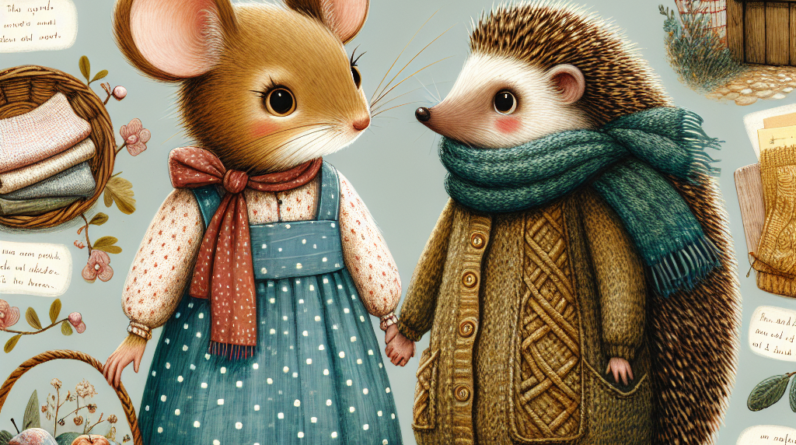
The mouse thought the star might be lonely, so he borrowed the moon’s teacup and brought it to the hedgehog, who had a slipper that squeaked every time she walked. Miss Elaine pauses to let you picture the hedgehog wobbling in slippers, and you might smile even as your eyelids grow heavier.
They sat very close together, the mouse and the hedgehog and the little star in the moon’s teacup, and they took turns telling the star stories until the star learned to yawn. You’ll feel the room unfurl like a sleepy fan, each fold softer than the last.
Finally, the moon came by with a ribbon of cloud, tied the little teacup back on the fencepost, and tucked the star into the pocket of night. Miss Elaine’s voice lowers with the scene: the moon smiles a small smile that doesn’t wake anyone and climbs behind the curtains of the sky.
And so the teacup sat, quiet and very polite, and the house listened as if it could hear stitches being sewn into a blanket. Miss Elaine folds this night into her pocket and places it gently on the bedside table where you can reach it in the dark. Sleep now; the moon is tucking your dreams into that teacup, and everything is okay.
Story 2 — The Little Cloud That Needed a Nap
You’ll use breathing cues and a repetitive phrase to encourage relaxation. This story makes tiredness contagious in the best way.
Miss Elaine speaks as if she’s talking about a small creature that’s both clumsy and lovable, because that’s what this cloud is like. You’ll breathe with her and feel each inhale and exhale become a soft rhythm.
There was once a cloud named Puddle who had a very busy afternoon. Puddle had been to kite practice, to a tea party on a rooftop, and to a game of hide-and-seek behind a chimney. Puddle floated around making soft shadows and leaving tiny cool spots on warm foreheads, but now his edges were fuzzy and his puff felt like a pillow that had been sat on by a sleepy cat.
Miss Elaine describes how Puddle tried to count sheep but kept seeing flying fish instead, because his imagination is a little silly. You’ll picture Puddle closing and opening like a little blue umbrella, and you’ll feel your eyelids matching the motion.
Puddle decided to take a nap on top of a friendly barn. The barn smelled of hay and old radio songs, and it offered a corner with a perfect dip for cloud napping. Miss Elaine pauses for you to breathe in and out slowly as Puddle nestles, and you’ll notice your shoulders drop.
Nearby, a flock of starlings did a soft choreography and whispered that the barn was a very good nap spot — they were experts because they had taken so many naps in airplane wings. One starling tucked a tiny straw blanket over Puddle’s curl, and another hummed the kind of song that sounds like a tea kettle about to sigh. You’ll hum along if you like, and you’ll feel the song smoothing your thoughts.
A little girl named Nora came out to check on the garden and she saw Puddle sleeping. She tiptoed over, careful not to sneeze, and placed her mittens on Puddle’s eyes so that the light would be dimmer. Miss Elaine lowers her voice here like she’s pressing a pillow over a loud thought, and you’ll do the same as the story softens.
Puddle dreamed of walking slowly through a world made of pillows, where everything was soft and no one had to hurry. When he woke, he felt like a cloud made of marshmallows and he floated away with a satisfied little puff that looked almost like a smile. You’ll feel your chest do that small pleasant stretch that means you are letting go.
Miss Elaine closes by saying that sometimes you will be a Puddle, a little cloud who has run out of puffs and needs a nap. She tucks that idea into your hand as if it were a small stone that can warm you when you need rest. Sleep, says the room; the barn will watch over you.
Story 3 — The Fox Who Learned to Whisper
You’ll emphasize a tiny transformation from loud to gentle, mirroring how your child moves from wakefulness to sleep. This one uses humor and a simple moral about quiet.
Miss Elaine grins in her voice because this is partly a silly story and partly a lesson that comes wrapped in a joke. You’ll feel permitted to laugh softly and then to let that laugh settle like a pebble dropped in a pond.
There once was a fox named Finn who loved to sing. Not just sing — Finn loved to belch out ballads on rooftops, to declaim poetry at the fencepost, and to announce himself like a band at breakfast. He sang about the weather, about raindrops, about socks, and sometimes about the names of clouds. The problem was that his singing was rather loud for a creature with pointy ears and a mouth full of moonlight.
Late one evening, Finn practiced a new song right under a window where a little boy was trying to sleep. The boy, who had been counting backward from one hundred and almost reached ninety-eight, felt each note like a small pebble in his pillow. Finn naturally thought he was being helpful.
Miss Elaine leans in to tell you that a wise owl named Myrtle heard Finn and came down to talk. Myrtle didn’t scold; she only offered a scarf and a suggestion. “Try whispering,” Myrtle said, “and see what happens.” Finn tried whispering once, and it sounded like a secret that had just learned to roll its r’s.
When Finn whispered his song, it turned into a story about a ladder of stars, and the ladder was for people to climb when they wanted to keep a small dream safe. The whisper didn’t wake the boy; instead, the boy’s breathing matched the whisper and he floated into a dream about climbing a ladder made of marshmallow steps.
Finn liked whispering because it made the crickets lean in, and the leaves stop rustling to listen for a while. It also made his throat feel softer, like honey melted on a warm biscuit. Miss Elaine lets you breathe through the image of a biscuit because it’s very calming.
On most nights after that, Finn practiced his whispering on purpose, not to be quiet because someone told him, but because he found a kind of magic in small sounds. He learned that loudness is not always the same as meaning; sometimes little sounds carry the biggest heart. You’ll carry that idea like a tiny lamp to your pillow.
Miss Elaine closes the tale by reminding you that if you ever feel like singing loud in the dark, try whispering once and watch what happens. Sometimes it’s enough to listen to your own breath. Sleep like Finn, small and content.
Story 4 — The Little Train That Forgot Its
You’ll guide your listener through a gentle miniature adventure and a satisfying return home. This story echoes the safety of predictable endings.
Miss Elaine starts as if she’s finding a misplaced button, delighted. You’ll listen for small details and enjoy the calm when the wrong thing finds its right place.
Once upon a yard, there was a little toy train named Tilly who loved to chug in patterns. Tilly knew the rhythm of the tracks and could hum the map with her headlights closed. One afternoon, during a game of pretend, Tilly rolled off her tracks and found herself in a puddle of old lace and garden thimbles. She was not upset — she was merely surprised to discover the world off-track looked like a dusty fair.
Tilly asked a beetle for directions and the beetle pointed with his antennae toward the big oak tree, which was where trains tended to remember their routes. The beetle was polite and also fond of acorns, so he shared a small breadcrumb of wisdom: “If you listen to the ground, it will tell you the way.”
So Tilly pressed her tiny head to the cobblestone and listened until she heard the faintest hum — a memory of the rails still singing a lullaby. Miss Elaine exhales here and you might feel your own hum come up from your ribs, tiny and content.
A shadow in the shape of a cat offered to help by carrying Tilly in its mouth like a kitten with a toy. Tilly was nervous about being in a cat’s mouth — who wouldn’t be — but the cat was very aware of trains and knew the route to the box where tracks live. They traveled slowly, step by careful step, and along the way saw lamps that blinked like sleepy owls.
Finally, Tilly was returned to her tracks with a small ceremony: the cat brushed a leaf off Tilly’s roof and the beetle tapped out a rhythm of welcome. Miss Elaine smiles audibly and tells you that being back on track felt like a warm pair of socks.
Tilly chugged one careful lap and then settled into the groove she knew best. The house listened like it had been holding its breath and only now let it out as a sigh. Miss Elaine says that sometimes you will be a Tilly, and that’s okay. You can be temporarily lost and still find your way back to the pattern that feels like home.
Sleep now; the tracks hum like a cradle. Tilly’s whistle is small and content in the hush, and everything is right where it needs to be.
Short prompts and variations you can use
You’ll find these one-sentence prompts useful when you have two minutes or your child needs a little extra reassurance.
The pillow that remembers names.
The sleepy elephant who uses a teacup as a hat.
A garden that grows only midnight flowers.
A lantern that shows you the nicest dreams.
Making Miss Elaine your own
You’ll create a few signature touches that make the ritual recognizable. A phrase, a little tune, or a consistent opening will anchor the routine.
Signature phrase example: “Miss Elaine folds the day into her pocket.” Use it nightly and your child will start to relax as soon as they hear it.
Tiny tune: hum three notes before you begin. You’ll notice your child’s shoulders drop.
FAQs you’ll care about
You’ll probably have a few practical questions about logistics, consistency, and what to do when things go off-script.
What if my child asks for the story again and again?
You’ll sometimes need to say yes and sometimes set a gentle limit: “We’ll read that again tomorrow. Tonight we’ll choose one more story.” You’ll avoid arguments with consistent but kind boundaries.
What if you fall asleep reading?
You’ll allow it. Sometimes you’ll nap mid-story, and that’s part of parenthood. Recordings help when you sense this is going to happen more often.
How often should you change the stories?
You’ll rotate new ones in every few weeks to keep curiosity alive, but keep a couple favorites for predictability. Children love ritual and the same story can become a beloved tool for falling asleep.
Final thoughts and a little permission
You don’t need to be perfect. Your voice, your small quirks, and the way you mispronounce a silly name make Miss Elaine real and precious. You’ll find that it’s not the prose that matters most but the presence you bring.
Miss Elaine will teach you to be kind to bedtime and to yourself. Keep a small list of your favorite lines, record the ones that soothe best, and remember that many nights will be easy and a few will be messy — both kinds matter.
You can start tonight with any one of the stories above or with a three-note hummed introduction. You’ll see how small rituals become anchors, and how five minutes of calm can mean better sleep for everyone. Sleep kind and soft, and let Miss Elaine fold the day into her pocket for you.