


Enchanting Fairy Tales in English for Bedtime
Enchanting fairy tales in English for bedtime. Have you ever wanted a bedtime story that feels like a warm blanket and a small, honest lie promising everything will be all right?
Enchanting fairy tales in english for bedtime
You’re on the hunt for fairy tales in English that actually soothe, charm, and sometimes make you snort-laugh into the dark. This article is for you — whether you’re reading to a kid, a reluctant adult who still likes dragons, or yourself after a long day. You’ll get practical picks, technique tips, content warnings, and even two short bedtime-ready tales you can read tonight.
Why fairy tales still matter at bedtime
Fairy tales are more than nostalgia and sugar. They give you archetypes, repetitive rhythms, moral brevity, and space for imagination to go to work while the body relaxes. When you read one aloud, you’re creating ritual, safety, and a tiny frame for the day to end. Fairy tales simplify complexity: danger becomes a test, help arrives in symbols, and endings — whether neat or bittersweet — let your nervous system wind down.
What “enchanting” actually means here
Enchanting doesn’t mean precious mushrooms and pastel unicorns. It means the sort of story that hooks curiosity, softens the chest, and leaves the listener with a pleasant residue of wonder or quiet amusement. You want voice, rhythm, and small surprises — not trauma masquerading as “classic” moralizing.
Choosing the right fairy tale for bedtime
Picking the correct story saves time and keeps everyone calm. You’ll want to be thoughtful about length, theme, and tone. A wrong choice can produce anxiety and a child who is now wide awake arguing whether a wolf can be redecorated.
Consider the listener’s age and temperament
Age ranges are guidelines, not laws — but they help. Younger children often prefer repetition and clear resolution. Older kids enjoy subtext, playful language, and slightly darker stakes. Sensitive listeners might need gentler themes; some kids process fear through stories, and others are triggered by it.
Think about length and reading time
You’re not building an epic unless everyone is into that. For bedtime, aim for 5–20 minutes. If you have a robust reader and a sleepy audience, longer’s fine. But the ideal bedtime tale is the one that ends when you want the lights off, not the one that demands a sequel.
Match themes to emotional needs
If someone had a rough day, pick stories about resilience and small joys. If someone’s anxious, choose tales that emphasize safety and helpers. If everyone’s overstimulated, a simple, rhythmic story with repetitive lines can be sublimely soporific.
Classic fairy tales to read at bedtime
Classic tales have centuries of testing behind them; some are brutal, but many have been softened or can be chosen for their gentleness. Below are classics that generally work well for bedtime if you use tact.
Gentle classics that tend to soothe
The Tale of Peter Rabbit (Beatrix Potter) — small mischief, mild consequence, and ultimately safety at home.
The Three Little Pigs (traditional) — repetition, triumph of planning, and a clear ending.
The Snow Queen (Hans Christian Andersen), selected scenes — choose short, redemptive passages rather than entire grim episodes.
When to skip the original version
Many originals (Perrault, Grimm) contain cruelty that’s unnecessary at bedtime. You can use adapted, abridged, or retold versions to keep the core motifs without the trauma. Your job isn’t to be puritanical — it’s to protect sleep.

Modern fairy tales and retellings
Contemporary writers rework old motifs with updated values, humor, and accessibility. These are often safer for bedtime because they were written with modern sensibilities.
Why modern retellings are useful
Modern retellings often provide humor, clearer moral framing, and themes of kindness and agency. They give you language that doesn’t require translation from 18th-century social norms.
Recommended contemporary authors and titles
Neil Gaiman (for older listeners) — lyrical and slightly mischievous.
Grace Lin — gentle, culturally rich retellings for younger kids.
Molly Idle — picture-story retellings with playful illustrations and minimal trauma.
Recommended bedtime fairy tales (table)
This table gives you quick picks with age ranges and why they work for bedtime.
Title | Author | Age range | Approx. reading time | Themes | Why it’s good at bedtime |
|---|---|---|---|---|---|
The Tale of Peter Rabbit | Beatrix Potter | 2–6 | 5–8 min | Mischief, home, safety | Simple language, comforting ending |
The Three Little Pigs (retold) | Various | 3–8 | 5–10 min | Planning, resilience | Repetition and clear resolution |
Room on the Broom (abridged) | Julia Donaldson | 2–7 | 5–10 min | Friendship, cooperation | Rhythmic text, gentle peril |
The Paper Bag Princess (retold) | Robert Munsch | 4–9 | 5–10 min | Agency, wit | Subverts tropes, empowering |
The Dark (abridged) | Lemony Snicket | 3–7 | 5–8 min | Fear, bravery | Deals with fear calmly |
The Girl Who Drank the Moon (excerpt) | Kelly Barnhill | 8+ | 15–20 min | Magic, sacrifice | Lyrical prose for older kids |
Classic folktales (softened) | Various | 4–10 | 5–15 min | Morals, archetypes | Familiar structures, adaptable |
How to adapt classic tales for modern bedtime use
You don’t have to read classics verbatim. You can edit for tone, remove gratuitous violence, and emphasize kindness.
Simple editing steps you can do on the fly
Replace graphic verbs with mild ones (e.g., “ate” → “scared away”).
Shorten long descriptive passages to keep momentum.
Add a recurring, reassuring line (“And then they were safe in their big, warm bed.”) to end tense scenes.
Using character voices without overacting
You are not performing Shakespeare. Use distinct voices for characters but keep them natural. A little mimicry is charming, continuous screaming is not. Your voice should be a hammock, not an amusement park ride.

Storytelling techniques that make bedtime better
How you tell is as important as what you tell. Rhythm, pause, and tone are your tools. You can convert a good text into a great bedtime experience.
Use of rhythm and repetition
Repetition helps memory and relaxation. Repeated phrases act like lullabies for the brain. If a story lacks a refrain, invent one: a three-word phrase repeated at key moments will anchor the listener.
Strategic pausing and lowering volume
Pause before the ending and use a softer voice in the final lines. This signals closure and encourages sleep. Think of yourself as an emotional volume control.
Physical cues and props
A small prop (a soft toy, a felt castle) can be used sparingly. Don’t turn the story into a puppet show unless the goal is to keep someone awake. Minimal props can enhance focus and calm.
Creating your own bedtime fairy tales
Making your own stories gives you control over content, length, and tone. You don’t have to be a genius; structure and a few motifs will carry you.
Simple formula to write a bedtime fairy tale
Start with a cozy setting (home, garden, quiet forest clearing).
Introduce a small, relatable problem (lost slipper, a lonely star).
Add one helper (animal, kind stranger, clever object).
Resolve gently, emphasize safety and belonging.
You can improvise this in minutes. The formula gives you comfort and predictability.
Two short original bedtime fairy tales you can read tonight
Below are two original tales written specifically for bedtime. They are short, gentle, and use repetition and soothing closure.
The Moon Who Lost Its Light
Once, the moon forgot how to shine. You might think the moon would panic, but it had a small, steady friend: a lantern named Loma. Loma was a lantern who kept tiny promises. She promised to hang every night on the porch and to hum soft songs when the rain came.
Every evening, the stars looked at the moon and prodded it with starlight. “You used to sparkle like sugar,” one star said. “What happened?” asked another. The moon wobbled and said, “I’ve misplaced my bright.” So Loma lit her wick and blinked three gentle times.
“Come sit on my hook,” Loma said. “We’ll go looking.” So they set off together, the small lantern swaying like a heartbeat. They passed houses where people were finishing supper and heard a child whisper, “Goodnight, fruit tart.” They passed a pond that was practicing polite ripples. They passed a field where the fox was already tucking its tail under its belly.
They asked every creature if they’d seen the moon’s bright. The owl said, “I’ve only seen it hide behind clouds.” The hedgehog said, “I traded mine for a compass once.” The cats laughed and said, “We chase our own reflections.” None of it helped.
At last, they reached the hill where old things were kept safe. There, under a small grey blanket, the moon found its bright curled up and shivering. “You hid?” the moon asked. The bright shake-winked. “I wanted to rest,” it said. “I was tired of being admired.” The moon hugged its bright and told it about the children who needed soft light to count the stitches in their blankets and the tired parent who wanted to read the last page without squinting.
The bright felt the warmth and slipped back on like a ring. The moon sighed and exhaled its silver glow across the sleeping town. Loma hummed a small flame-song and returned to her porch hook, content with the promise she’d kept.
From that night on, when the moon felt sleepy, it winked the tiniest bit and Loma hummed louder. You can tell when the moon is stretching at night because the stars fall quiet and the houses breathe deeper. And if you ever find your own spark feeling tired, you know where to look: under a blanket on a hill, taking a nap, waiting for a friend to say, “Come back.”
Goodnight, not the end but a gentle pause.
The Boy Who Gave the Wind a Name
A boy named Milo had a habit of listening to things most people ignored. He listened to the kettle when it sang and to the socks when they complained. The wind, who loved names, was lonely. It would swirl through doorways and never be invited to tea.
One evening, Milo sat by his window and watched the wind push leaves into new positions like it was trying to fold paper cranes. “What’s your name?” Milo asked, because he believed in naming things. The wind laughed, which sounded like curtains flapping. “I do not have a name. I belong to everyone.”
Milo considered this. “Can I be your friend even if you don’t have a name?” he asked. The wind thought and then agreed, but only if Milo could promise to keep a secret.
“You must promise not to tell your hair,” the wind said, because hair tells on everything. Milo promised. He thought of names: Whisper, Rush, Small Fancy. The wind shook its head every time.
At last, Milo whispered, “I will call you Quiet.” The wind liked that because it claimed a paradox: it was loud when it wanted but honored being called soft. Quiet wrapped around Milo’s room like a scarf and stayed for stories. It learned to slow down and to cool a fevered forehead. Milo learned to listen to when Quiet needed to move — to blow dandelion seeds or to help mail find the right door.
Years went by. Milo grew, but he kept the habit of listening. Quiet went to other windows and sometimes came back with a trimmed corner of a map. When Milo could not sleep, Quiet would press itself gently against his window and tell him about the places it had seen: a harbor that smelled of salt and sugar, a mountain village where people ate their bread warm at dawn, a closet that had been missing a sock for a very long time.
Naming Quiet didn’t mean the wind belonged to Milo. Instead, it gave the wind a friend who respected its travels and returned when invited. So if you ever wake and the curtains are playing quietly, you can tell yourself the wind is visiting — named or not — and you are allowed to hold your breath and listen until it moves on.
Goodnight, the sound of leaves folding like small, careful hands.
Tips for reading aloud: voice, breathing, and stamina
Reading aloud requires pacing, breath control, and occasional patience with yourself. These tips will keep you from sounding like an exhausted audiobook narrator.
Breath work and posture
Sit comfortably and breathe from your diaphragm. Short sentences are easier to share when you’re not gasping. Reading in a steady cadence helps the listener relax, and it helps you keep going without losing your place.
Keeping your voice interesting without exhausting yourself
Switch character voices but choose a palette of two or three tones and reuse them. You don’t need to impersonate a cartoon; small shifts in pitch and tempo are enough. Save your full-throttle dramatics for very special moments.
When to stop for the night
Stop when the story’s comforting resolution lands, not in the middle of a cliffhanger. If you must create a cliffhanger (sometimes it’s irresistible), make it tiny and promise a shorter continuation tomorrow.

Content safety and age-appropriate warnings
Not all fairy tales are bedtime-friendly. Some include violence, scary transformations, or themes children aren’t ready to process.
Common content warnings to watch for
Graphic harm to family members
Abandonment or neglect as a central theme
Violent revenge framed as moral victory
Sexual content unsuitable for children
If you’re unsure, scan a retelling first or choose a modern retelling written for children.
Handling scary bits if they come up
Pause. Reassure. Reframe: replace the scary image with a small, safe image (a brave rabbit, a clever seamstress). Normalize fear by connecting it to common, controllable feelings (“Sometimes stories have big feelings; we can take a deep breath and tuck them away.”)
Multicultural and translated fairy tales
There’s a huge world of fairy tales beyond the Anglo canon. Many cultures have gentle bedtime stories that are perfect for nighttime.
How to choose quality translations
Look for translations by scholars or authors known for respectful retellings. Notes and context can be helpful but save them for daytime reading. For bedtime, choose translations that prioritize rhythm and simplicity.
Why you should diversify your bedtime shelf
Different cultural motifs teach different problem-solving styles and broaden empathy. You’ll also get new images and metaphors that refresh tired routines.
Using images and picture books at bedtime
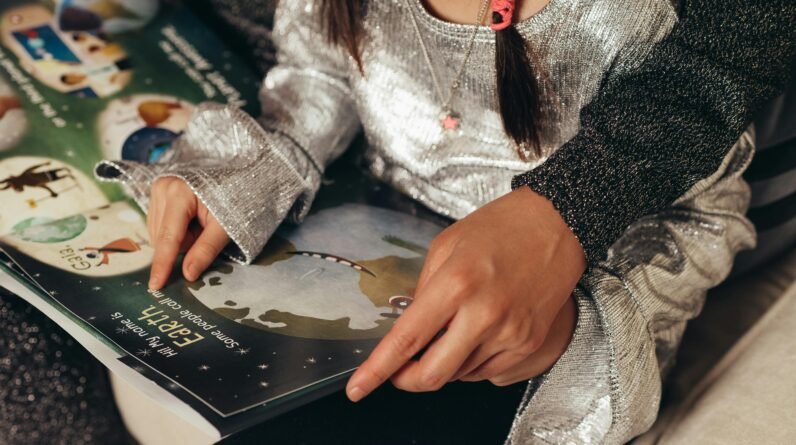
Picture books are powerful tools. They help visual thinkers transition from stimulation to sleep.
How to use illustrations without overstimulating
Show a picture once or twice — you don’t have to narrate every detail. Let the image do quiet work: a sleeping dragon, a calm moon, a tucked-in village. Avoid noisy, busy illustrations right at lights-out.
When to rely on text alone
Older kids or adults benefit from word-only tales which let their own mind paint the scene. Text-only bedtime stories activate imagination in a restful way.
Recording stories and audio options
Sometimes you won’t be there. Making a recording or using a quality audiobook keeps ritual alive.
Quick tips for recording your own stories
Use a simple phone microphone in a quiet room.
Keep recordings tidy: 5–15 minutes is a good length.
End each recording with a soft, consistent cue — a line or a hum — so the listener can drift off.
Pick narrators with mellow voices and avoid super-dramatic performances. Test a chapter before bedtime to ensure pacing is appropriate.
Frequently asked questions
You probably have pragmatic questions; here are answers to the common ones.
How do I stop a child from asking for “one more story”?
Set a limit ahead of time: “We’re doing two stories tonight.” Use a gentle but firm tone and a routine signal — a flashlight off, a song, or a song-like phrase (“storytime is finished”) to close.
Is it ok to use stories with conflict?
Yes, if conflict resolves gently or supports a reassuring arc. Conflict that ends with safety, learning, or kindness is useful; conflict that leaves loose, frightening threads is not.
Can adults benefit from bedtime fairy tales?
Absolutely. Adults often need narratives that don’t demand problem-solving. Low-stakes wonder is a reset for an anxious brain.
Quick-reference tables for storytelling techniques
Use this compact table to remember techniques you can apply immediately.
Technique | What it does | How to use it |
|---|---|---|
Repetition | Builds predictability and comfort | Use a 3-word refrain at major beats |
Softening edits | Removes distressing imagery | Substitute gentle verbs and shorten scenes |
Soft cadence | Signals closure | Lower volume in final paragraphs |
Props, minimal | Directs attention without overstimulation | One soft toy or a simple felt shape |
Name-and-return | Creates ritual | Name something each night and repeat the name |
Final notes: creating ritual, not performance
You are not required to be a performer. Your job is to be consistent, present, and authentic. If you mess up lines, laugh softly and continue. If you fall asleep with the book on your chest, that’s a gift too.
Small rituals that help stories land
A consistent “lights dim” signal (a nightlight, a lamp).
A recurring phrase to start stories: one line that signals storytime begins.
A brief post-story pause: a minute of silence, a soft song, or a hum.
You’ll find your own style. Sometimes you’ll be poetic, sometimes you’ll read like you’re asleep. Both are fine. The goal is comfort, and comfort doesn’t need perfection.
Closing thoughts
Fairy tales at bedtime are a tiny, ancient rebellion against a life that’s too fast and loud. They help you slow down, reframe fear, and exist in a world where problems have beginnings and endings you can handle. Keep a few gentle classics, a couple of modern retellings, and a handful of original short pieces ready. Use your voice like a warm blanket and your imagination like a lantern. And when you read, remember this: your presence is more magical than any dragon or spell.
Goodnight, in the most literal, restorative sense.
Get more creative knowledge build books and resources for happy minds at:
https://booksforminds.com/