


Free Printable to Pair with The Millie Mouse Tales
Free Printable to Pair with The Millie Mouse Tales. Explore the collection of free printable resources designed to enhance The Millie Mouse Tales experience. Includes bookmarks, emotion cards, story maps, and interactive prompts for both parents and educators.
Why printable Work
printable help extend the story beyond the page. They turn a passive read-aloud into:
- A hands-on activity
- A moment for creativity
- A springboard for emotional conversation
Especially for visual and tactile learners, these tools can make Millie’s stories even more impactful.

The Core Printable Collection
These are available for free to download from [insert website or landing page link]:
- Millie Mouse Bookmarks
- Features Millie illustrations and quotes
- Encourages reading pride and book tracking
- Storytime Checklist
- A fun sheet to prep your “Millie corner”
- Great for morning or bedtime routine building
- Millie’s Emotion Cards
- Printable flashcards with facial expressions
- Use during or after stories to name feelings
- Millie’s Weekly Kindness Calendar
- A gentle activity tracker to inspire daily compassion
- Coloring Pages from the Books
- Scene recreations from 4–5 stories
- Helps reinforce memory and detail observation
- Story Map Template
- Draw what happened first, next, last
- Builds sequencing and comprehension
- “Design Your Own Tale” Worksheet
- Prompts kids to write or draw their own Millie story
- Perfect for classrooms or homeschool units
Classroom & Homeschool Use
Each printable comes with an optional companion guide for educators. Sample ideas include:
- How to use the emotion cards for circle time
- Story map as a retelling tool
- Using bookmarks as reading incentives
These printables align with early learning goals in literacy, SEL (social-emotional learning), and fine motor practice.
How Parents Can Use Printables at Home
- Add bookmarks to your child’s reading basket
- Use emotion cards after a tough day
- Display the Kindness Calendar on the fridge
- Set up a Sunday “Design-a-Tale” drawing time
These tools build routine, expression, and joy.
Testimonials
🗨️ “The coloring sheets are my daughter’s favorite part. We read the book, then color the scene right after.”
🗨️ “The kindness calendar helped my 4-year-old remember to say thank you without being reminded.”
🗨️ “I laminated the emotion cards and we use them after school every day to talk about what happened.”
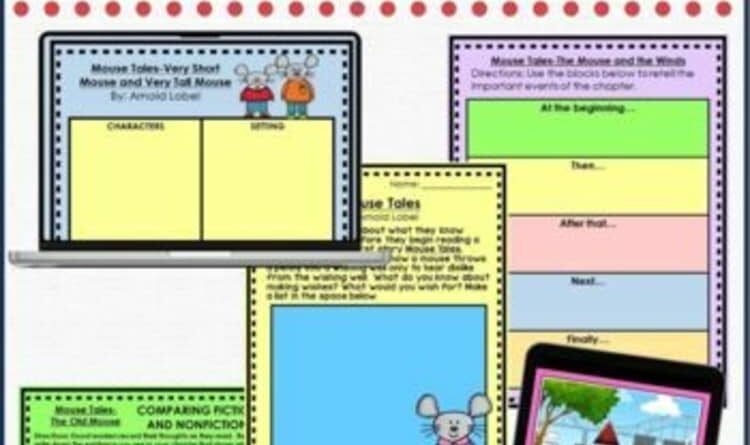
Printable Sample Preview
Final Thought
Printables aren’t about “doing more.” They’re about doing deeper — enhancing the magic of Millie Mouse by making space for creativity, compassion, and connection.
And best of all? They’re free.
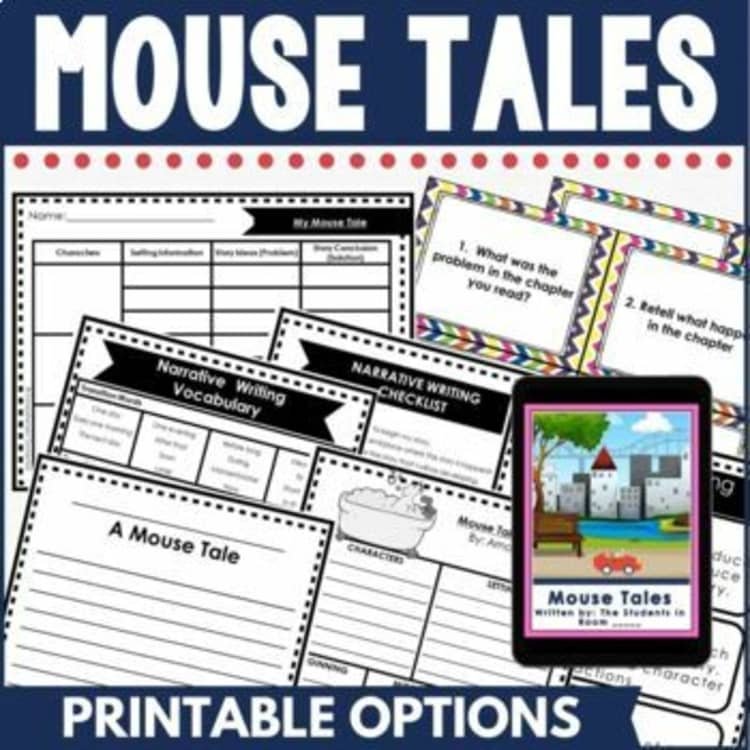
We opened “Mouse Tales” by Arnold Lobel and met a classroom-ready unit that promises to make lesson planning less of a mythical beast and more of a domesticated classroom hamster. This read-aloud, comprehension, and writing unit is designed to pair directly with Arnold Lobel’s classic Mouse Tales, and we appreciate that it’s targeted at early chapter-book readers — specifically grades 1–3. In our experience, that age range is where students are gaining independence but still want the reassurance of well-structured supports, and this unit gives exactly that: scaffolds, task cards, vocabulary supports, and digital slides that don’t require us to be tech wizards.
We’ll keep our comments honest, slightly witty, and very practical. We’ve used similar units in guided reading, centers, and whole-group read-alouds, so we’ll describe how “Mouse Tales” fits into each setting, what’s in the box (or the Google Drive), and how it aligns with standards. We’ll also recommend ways to adapt it, point out small annoyances, and end with a verdict that’s more useful than a gold star.
Quick Snapshot
- Title: Mouse Tales (unit for Arnold Lobel’s book)
- Best for: Grades 1–3
- Pages: 53 total (half B/W for printing + half color for Google Slides)
- Formats: Printable B/W pages and color Google Slides (B/W also included in Slides)
- Focus: Read-aloud, comprehension, narrative writing
- Standards: Aligned to CCSS RL.1.1, RL.1.2, RL.1.3
What’s Included (At-a-Glance)
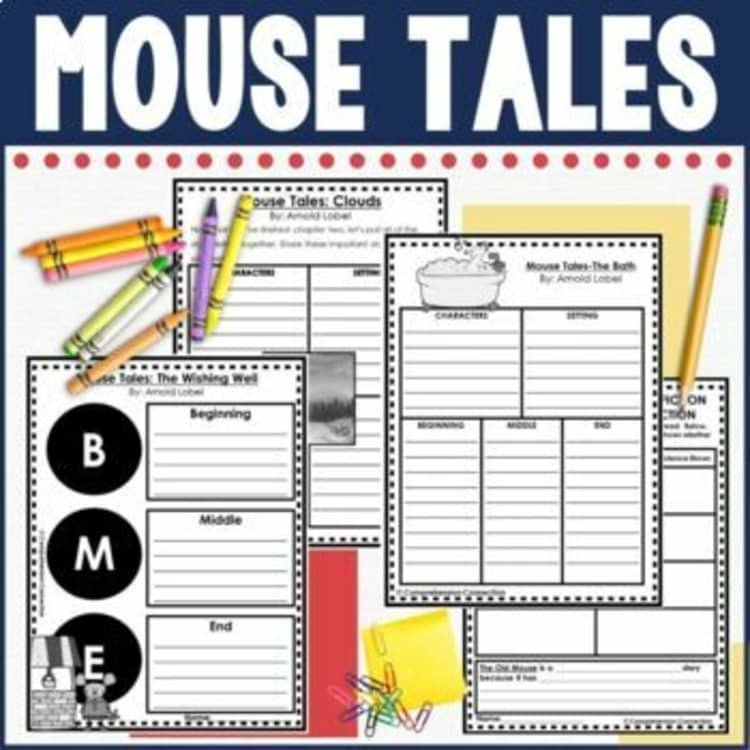
We appreciate a nice inventory because we’re the type to panic if we think something is missing. Below is a compact table that breaks down the main components so we don’t have to scroll through a file and guess.
| Component | Quantity / Details | Format | Classroom Purpose |
|---|---|---|---|
| Total pages | 53 pages | B/W & Color (Google Slides) | Full unit materials |
| Chapter activities | Activities for each of the 7 stories/chapters | B/W + color slides | Comprehension & discussions |
| Narrative writing extension | 8 scaffolded pages | B/W + slides | Step-by-step writing support |
| Discussion task cards | For every chapter + answer form | Printable cards & digital | Small-group prompts, partner talk |
| Vocabulary introduction | Word cards + activities | Printable & slides | Pre-teach and reinforce vocabulary |
| Comprehension question sets | Multiple per chapter | B/W & slides | Formative assessment |
| Graphic organizers | BME summarizer, Four-Square, sequencing chart, etc. | B/W & slides | Writing and thinking scaffolds |
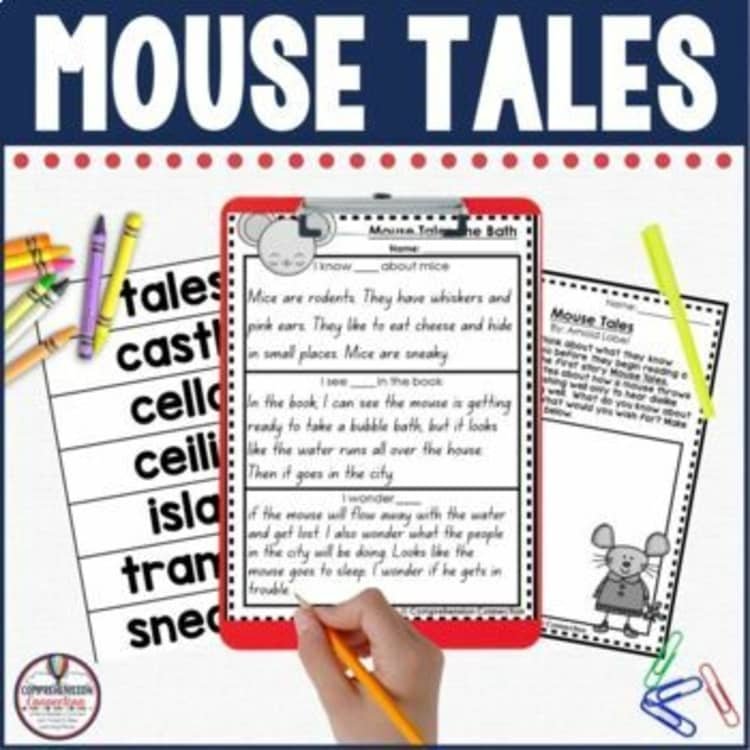
| Misc. supports | “I Know / I See / I Wonder”, idea splash about wishes, fiction vs. nonfiction evidence | B/W & slides | Critical thinking & connections |
Detailed Breakdown: Chapter-by-Chapter Pairing
We like when a unit doesn’t just throw activities at a story like confetti. This one pairs activities to each of the seven stories in Mouse Tales, which is smart because each short story has its own focus and possible mini-lesson.
- Story 1 (e.g., The Mouse): Character traits focus; we use the character-trait activity to tease apart motivations and feelings.
- Story 2 (Very Tall Mouse & Very Short Mouse): Story elements; perfect for comparing characters visually and textually.
- Story 3 (The Bath): Story elements with sequencing opportunities; students love to put events in order—especially if there’s a bath involved.
- Story 4 (The Mouse and the Winds): Sequencing chart; great for temporal language (first, next, finally).
- Story 5 (Journey): Main idea & supporting details; we teach main idea with artifacts the students can hold or draw.
- Story 6 (The Old Mouse): Fiction vs. nonfiction evidence; this is a delightful confusion-buster for young readers.
- Story 7 (Final tale or Journey-related): Making connections & “I Know / I See / I Wonder” activities; these push toward deeper thinking.
We like the progression: character → elements → sequencing → central ideas → text-evidence analysis → personal connections → writing extension. It makes the unit feel like a carefully constructed staircase rather than a scatter of handouts.
Skills Targeted and Standards Alignment
We appreciate it when materials are explicit about standards. This unit lists alignment to CCSS RL.1.1, RL.1.2, and RL.1.3. We find those a comfortable fit for the content and activities provided.
- RL.1.1 (Ask/Answer key details): The comprehension questions and discussion cards are perfectly suited for practicing this, especially in small-group settings.
- RL.1.2 (Retell): BME summarizer and sequencing charts provide multiple entry points for retelling with fidelity.
- RL.1.3 (Describe characters, settings, events): Character traits and story-element activities push students to describe and cite evidence.
Beyond these core standards, the unit unintentionally supports:
- Writing standards for narrative writing (crafting a sequence and details), courtesy of the 8 scaffolded writing pages.
- Language skills through vocabulary word cards and targeted practice.
We feel confident recommending this unit for teachers who want straightforward alignment without extra guesswork.
How We Used It (Implementation Ideas)
We’re not fans of resources that look great in theory but fall apart in real classrooms. We tested this unit in three basic setups, and here’s how it played out in each.
Whole-Group Read-Aloud
- We used the Google Slides to project color pages while reading the story aloud. The slides are bright enough to be visible from the back row without looking like a 1990s PowerPoint nightmare.
- Discussion task cards became think-pair-share prompts. We pulled the cards at natural stopping points. Students were engaged and practiced citing details.
- The B/W printables worked well as group copies. We handed each student a page of the BME summarizer and had them complete it together.
- The narrative writing extension served as a differentiation station for students who needed extra scaffolding. It provided step-by-step support that converted oral retelling into written sentences.
Literacy Centers and Independent Work
- We created a center with a set of vocabulary cards, a sequencing chart, and the relevant comprehension set. Students rotated and completed the tasks in pairs.
- The answer form for discussion cards let students self-check during independent time, which saved us from constant interruptions.
Remote Learning
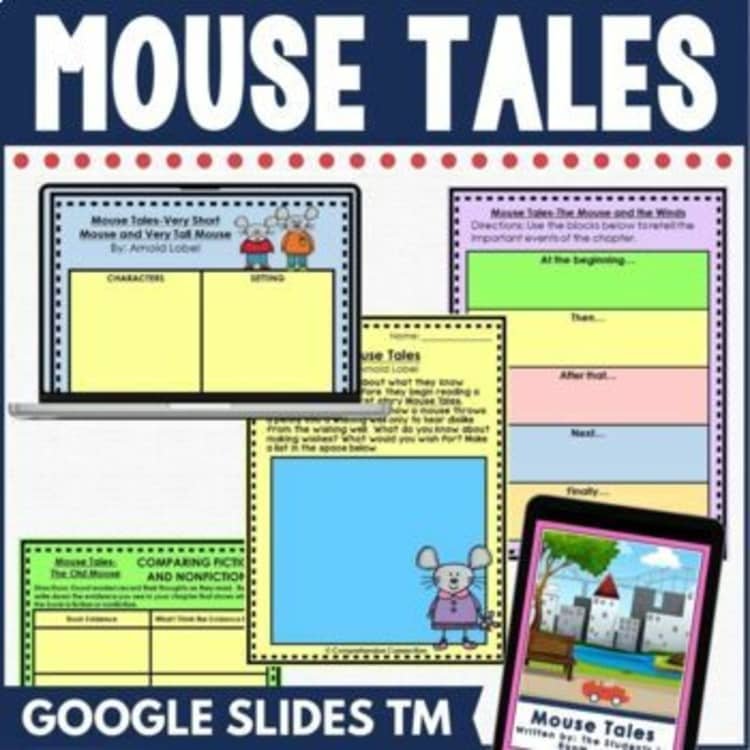
- The Google Slides were easy to share. We used the color slides during live sessions and assigned B/W pages for independent work. Students appreciated the visual cues, and parents found the scaffolds clear.
Narrative Writing Extension: What We Like
The 8 scaffolded pages for narrative writing are the crown jewel for us. They walk students through planning and composing without making the process feel robotic. The step-by-step prompts are structured enough for anxious writers but open enough for creativity. We used the mentor text strategy: students used the original Mouse Tales as a model and then applied the planner to their own short stories.
Highlights:
- The Four-Square organizer builds content before writing begins.
- BME summarizer helps students practice beginning-middle-end sequencing specifically.
- Sentence starters and word banks reduce the “blank page” terror for first graders.
If we were picking one feature for immediate use in a writing unit, it would be these scaffolded pages.
Assessment & Formative Uses
Assessment doesn’t have to be grim; with this unit, we found many informal and formal checkpoints.
Formative options:
- Exit tickets using main idea or sequencing questions.
- Discussion card answers collected in a short answer form to check understanding.
- Quick vocabulary matching games to monitor word retention.
Summative options:
- Use the narrative writing extension as an end-of-unit assessment for narrative writing skills.
- Compile a rubric focusing on retelling accuracy, use of sequence words, character description, and cohesion.
We appreciate the built-in answer forms for teachers who prefer objectivity over gut-feel grading.
Differentiation & Scaffolds
The unit anticipates diverse learners. The presence of both color digital slides and B/W printouts already supports visual and tactile preferences. We supplemented with these ideas:
- For struggling readers: Read-aloud paired with sentence starters and partner support.
- For English learners: Pre-teach vocabulary cards and use visuals with gestures.
- For advanced readers: Encourage creative extensions—write an alternate ending, compare the mouse’s journey to another character from a different book.
We liked that differentiation is easy to implement without modifying materials heavily.
Pros and Cons (Yes, We’re Judgmental)
We’ll be frank—no product is flawless. Here’s what we loved and what made us squint.
Pros
- Comprehensive: 53 pages including both printable and digital formats mean fewer missing pieces.
- Standards-aligned: Clear ties to CCSS for grades 1–3 make planning simpler.
- Scaffolded writing support: The 8-step narrative pages really helped emergent writers.
- Versatile formats: Google Slides + printable B/W gives flexibility for in-person and remote teaching.
- Teacher-tested: Positive reviews from other K–2 teachers suggest classroom viability.
Cons
- Single-classroom license: If our team or district wants to share broadly, purchasing additional licenses is a pain and expense.
- Page count: 53 pages is good, but we wished for a printable teacher guide explaining suggested pacing (we made our own).
- Repetition risk: Some activities overlap slightly; teachers need to choose the strongest tasks to avoid redundancy.
- Design variety: While functional, some B/W pages could use crisper graphics for younger students’ attention spans.
These quibbles are real but not dealbreakers. We weigh the pros far heavier than the cons.
Table: Component-to-Skill Mapping
We love a good crosswalk. Below is a table mapping unit components to the skills they support and recommended grade usage.
| Component | Primary Skill(s) | Secondary Skill(s) | Best for Grades |
|---|---|---|---|
| Discussion task cards | Asking/answering key details (RL.1.1) | Speaking/listening | 1–3 |
| BME summarizer | Retelling & sequencing (RL.1.2) | Story structure | 1–2 |
| Four-Square organizer | Idea development for writing | Paragraph structure | 2–3 |
| Vocabulary cards | Word knowledge | Fluency & comprehension | 1–3 |
| Sequencing chart | Temporal language & ordering | Main idea support | 1–2 |
| Fiction vs. nonfiction activity | Text evidence | Critical thinking | 2–3 |
| Narrative scaffold pages | Narrative writing process | Editing & revising | 1–3 |
| Comprehension question sets | Comprehension accuracy | Evidence citing | 1–3 |
Lesson Pacing Suggestions (We Made a Plan So We Don’t Have To Guess)
We like structure. If we’re teaching this unit over a two-week block with five 30-minute sessions per week, here’s a sample pacing guide we used successfully.
Week 1
- Day 1: Read-aloud Story 1 + discussion cards; introduce vocabulary.
- Day 2: Story 1 character traits activity + BME summarizer.
- Day 3: Read Story 2 & 3; story elements activity; sequencing practice.
- Day 4: Mini-assessment on Stories 1–3 (simple questions); begin writing planner for Story 1 inspired narrative.
- Day 5: Independent or center work: vocabulary games and sequencing chart.
Week 2
- Day 6: Read Stories 4 & 5; main idea & supporting details.
- Day 7: Story 6 (fiction vs. nonfiction) + “I Know / I See / I Wonder.”
- Day 8: Complete narrative scaffold pages; peer revision.
- Day 9: Final writing piece & publishing (display on classroom wall).
- Day 10: Unit assessment (comprehension question sets) + reflection discussion.
This pacing kept students engaged without wearing them out and left room for reteaching.
Print & Tech Tips (Because Reality Is Messy)
We tested both formats. Here’s what worked and what annoyed us.
Printing Tips
- Print the B/W pages double-sided if possible to reduce paper waste.
- Laminate discussion task cards or mount them on colored cardstock for longevity.
- Group B/W pages into packets by chapter to keep students organized.
Google Slides Tips
- Duplicate slides for student annotations in shared Google Slides to allow individual responses without destroying the master copy.
- Use the color slides for whole-class projection and then assign the B/W printable for independent work.
- If connectivity is an issue, export slides as PDF for offline distribution.
We suggest creating a digital folder structure: Master Slides, Printable Packets, Answer Keys, and Student Submissions.
Classroom Management Shortcuts
We’ll admit it: sometimes the lesson is perfect except for the 10 minutes where students become small paper tornadoes. Here are a few tricks we used with this unit.
- Card Quicksort: Shuffle discussion cards and have students sort them into “easy”/”medium”/”hard” boxes. They earn points for finishing boxes correctly.
- Whisper Read: For lower readers, assign a whisper-read round before the whole-class read to boost confidence.
- Mouse Detective: Give students “evidence” (vocabulary cards, character traits) and have them present clues about which story it belongs to.
Small changes like these kept engagement high and transitions smooth.
Adaptations for Diverse Learners
We’re big fans of inclusion, not afterthought accommodations. This unit allows several adaptations out of the box and a few easy add-ons we recommend.
- Visual Supports: Add picture cues to each vocabulary card for emerging ELLs or students with language delays.
- Audio Versions: Record the read-aloud or use text-to-speech options in Google Slides for auditory learners.
- Chunking & Time: Break activities into micro-tasks with timers for students who need shorter work periods.
- Extensions: Create challenge cards for quicker finishers: compare a Mouse Tale to another mentor text, or write a short letter from one mouse to another.
We think a little prep time yields huge inclusion payoff.
Pricing & Licensing Notes
The product offers single-classroom use license. We like transparent licensing, but recall that sharing across multiple teachers or grade levels requires additional purchases. For teams or content specialists, plan on budgeting for additional licenses if we intend to use the unit schoolwide.
We advise checking seller policies for discounts on multiple-license purchases. Some creators offer bundle deals or site licenses if asked—politeness and bulk orders sometimes work magic.
What Could Be Improved (Constructive Nibbling)
We resist nitpicking, but we’re thorough. Here are modest improvements that would take the unit from very good to outstanding.
- Add a teacher pacing guide: A suggested schedule with checkpoints would reduce prep time.
- Include answer keys for all comprehension sets in a single, easy-to-find PDF.
- Add differentiated versions of key activities for lower and higher levels (e.g., simplified BME for emergent readers).
- Crisp up some B/W graphics for younger learners who respond to high-contrast visuals.
These suggestions are small changes compared to the overall quality of the unit.
Frequently Asked Questions (From Our Classroom Trials)
We pretended to be the FAQ person so we could answer the things that inevitably pop up.
Q: Can this be used with small groups at different levels?
- Yes. The unit is flexible. We used the same activities with scaffolded support for lower groups and extension prompts for higher groups.
Q: How long does it take to prepare?
- Minimal prep if we use the Google Slides as-is. Printing and laminating cards is the most time-consuming part, usually an hour for a full set.
Q: Is the unit reusable year-to-year?
- Absolutely. The timelessness of Arnold Lobel’s stories and the sturdy task cards make this a perennial resource.
Q: Are answer keys included?
- The unit includes an answer form for discussion cards. We recommend confirming whether full answer keys for all comprehension sets are provided; if not, create a quick key the first year.
Final Verdict
We’ll be blunt: we love this unit. It’s thoughtfully designed, standards-aligned, and flexible enough to work across teaching formats. The narrative writing scaffolds are especially valuable, and the combination of digital and printable assets saves us planning headaches. Licensing and minor editorial tweaks are the only real gripes.
If we had to summarize in a single sentence that sounds like a teacher whispering to a colleague in the break room, we’d say: Mouse Tales is the sort of unit that makes us look prepared, keeps students engaged, and doesn’t demand a doctorate in slide design to implement.
Quick Recommendations for Purchase
- Buy a single-classroom license if we teach alone or in a single classroom. If we’re part of a team, consider purchasing additional licenses or asking the seller about a multi-user discount.
- Print and laminate the discussion cards; they’ll last and be worth the effort.
- Use the digital slides for whole-class projection and the B/W printables for individual work.
We’ve used many units; this one holds up and makes planning feel less like a midnight scavenger hunt and more like a calm, mouse-sized parade of learning.
Closing Thought (Because We’re Slightly Sentimental)
We like resources that respect both teacher time and student curiosity. “Mouse Tales” does that by being clear, scaffolded, and just the right amount of whimsical—much like the mice in Arnold Lobel’s pages. We’ll keep a copy in our unit folder and reach for it when we want a week of lessons that feel cohesive, manageable, and enjoyable. If we had to assign one classroom mascot to the unit, it would be the industrious little mouse who finds a good plan and sticks with it. Visit us again for more great books reading and recommendations at: https://booksforminds.com