Afraid of the Dark at Bedtime: 7 Gentle Ways to Help Your Child
When a child is afraid of the dark at bedtime, the problem is rarely solved by simply saying, “There is nothing to be afraid of.” For a young child, a familiar bedroom can suddenly feel very different when the lights go out. Shadows become harder to understand, ordinary sounds may seem louder and an active imagination can fill in the gaps.
Night-time fears are common during childhood, and they can look different from one child to another. Some children worry about what might be in the room. Others dislike being alone, become frightened by shadows or sounds, or simply find the transition from a bright, busy day to a dark and quiet bedroom difficult.
The good news is that parents and caregivers can make bedtime feel more predictable and reassuring without turning every night into a long discussion about fear. A calm routine, appropriate reassurance, a comfortable sleep environment and gentle bedtime stories can all become part of a child’s transition toward rest.
In this guide, you will learn what to do when your child is afraid of the dark, how to respond without dismissing the fear, how to make the bedroom feel more reassuring, and how to build a simple bedtime routine that gradually encourages confidence.
Key Takeaways
- Take your child’s fear seriously without making the fear bigger than it needs to be.
- Use short, calm reassurance rather than lengthy explanations at bedtime.
- Check practical issues such as shadows, unfamiliar sounds, room temperature and comfort.
- A predictable bedtime routine can make the transition into darkness easier.
- A small night light may help some children feel more comfortable.
- Gentle bedtime stories can give children calming images to think about before sleep.
- Small choices can help children feel involved without allowing bedtime to become a negotiation.
- Persistent or severe fears that significantly affect sleep or daily life may deserve professional guidance.
Why Can Darkness Feel Scary to Children?
Darkness changes what children can see and understand about their surroundings. During the day, a familiar bedroom may contain obvious objects: a chair, a wardrobe, a pile of toys or a favourite stuffed animal. When the lights go out, those same objects can look unfamiliar.
Children also have active imaginations. A shadow on the wall may become a creature, a coat hanging on a door may look like a person, or a sound from another room may suddenly seem important.
For some children, the fear is also connected to separation. Darkness can make the distance between the child’s bedroom and a parent feel larger, even when nothing has actually changed.
Fear Does Not Mean Your Child Is Being Difficult
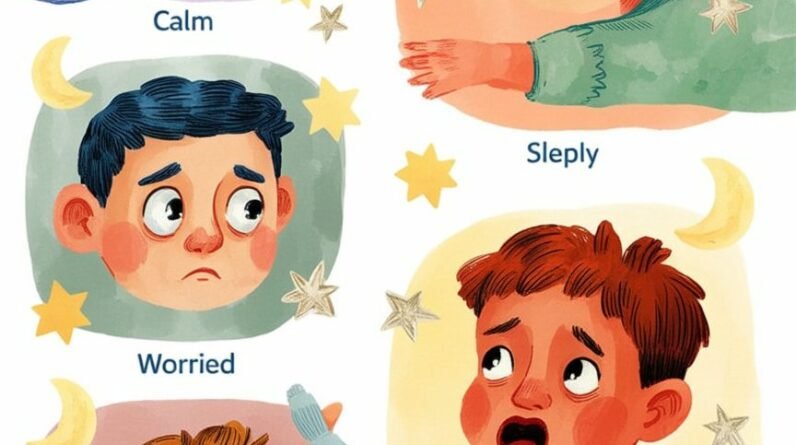
A frightened child may ask repeated questions, call for a parent, refuse to lie down or suddenly need several things after lights out.
It can be tempting to interpret this as deliberate delaying. Sometimes it is. But sometimes the behaviour is simply a child’s way of communicating, “I do not feel comfortable yet.”
Understanding that distinction can help parents respond calmly while still keeping appropriate bedtime boundaries.
Night-Time Imagination Can Be Very Powerful
Children may know during the day that a shadow is only a shadow, yet feel differently about it at night.
You do not need to argue with the fear. Instead, help your child reconnect with familiar reality.
“That shape looks different in the dark, doesn’t it? Let’s have a look together. It is your chair, and everything is okay.”
Start by Listening to the Fear
Before deciding what solution to use, find out what your child is actually afraid of.
You might ask one simple question:
“What feels scary when the lights go out?”
Then listen.
Your child may say:
- “I don’t like the dark.”
- “I think something is in my room.”
- “I don’t like that shadow.”
- “I hear noises.”
- “I don’t want you to leave.”
- “I had a bad dream.”
These answers give you useful information about what kind of reassurance your child needs.
You Do Not Have to Convince Your Child Not to Be Afraid
Trying to prove that there is absolutely nothing to fear can sometimes lead to a long conversation.
Instead, acknowledge the feeling:
“I can see that the dark feels scary right now.”
Then provide reassurance:
“You are safe, I am nearby, and we are going to follow our usual bedtime routine.”
This approach respects the child’s feeling without suggesting that the fear itself means there is danger.
Check the Bedroom for Practical Triggers
Sometimes a child’s fear has a simple environmental trigger.
Before treating the fear as a bigger emotional problem, take a calm look around the bedroom.
Look for Unfamiliar Shadows
Objects near windows, doors or lamps can create large shadows after dark.
Try moving:
- Hanging coats.
- Large toys.
- Objects near a window.
- Furniture that creates unusual shapes.
- Decorations that look different at night.
You can even check the room with your child before lights out.
“Let’s have a quick look around together so you know what everything is.”
Identify Ordinary Sounds
Heating systems, pipes, traffic, neighbours, household appliances and wind can sound different at night when the rest of the house is quiet.
If your child hears something unfamiliar, identify it calmly when possible.
“That sound is the heating. It makes that noise when it comes on.”
Knowing what a sound is can make it less mysterious.
Check Physical Comfort
A child who is too hot, too cold, thirsty or uncomfortable may become more alert and more sensitive to ordinary sounds and shadows.
Before lights out, make sure basic needs have been dealt with so your child is not using fear as a way to communicate another discomfort.
Should You Use a Night Light?
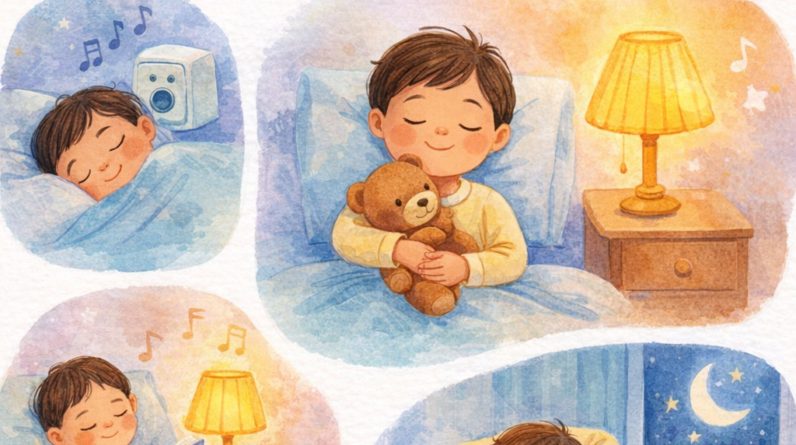
A night light can be helpful for some children who are uncomfortable with complete darkness. It is not necessary for every child, and there is no single correct choice for every family.
If you use one, consider keeping the light gentle rather than bright and stimulating.
Choose a Calm Light
A small, soft light may help a child see enough of the room to recognise familiar objects without turning the bedroom into a brightly lit play space.
The purpose is reassurance, not entertainment.
Let Your Child Help Choose the Light
Giving your child a small amount of control can make the light feel like part of their bedtime routine rather than something being imposed on them.
You could say:
“Would you like your little light on tonight, or would you like to try the room darker?”
If your child is very young, keep the choices simple and age-appropriate.
There Is No Need to Rush Darkness
If your child currently needs a small light to feel comfortable, you do not need to turn it off suddenly because you want them to become less afraid.
Confidence can develop gradually.
How to Reassure a Frightened Child
The most useful reassurance is usually calm, brief and consistent.
Use a Calm Voice
When your child is frightened, your voice becomes part of the environment. Speak slowly and quietly rather than responding with alarm.
Use the Same Reassuring Phrase
A repeated phrase can become familiar over time.
For example:
“The room is safe, I am nearby, and it is time to rest.”
Or:
“Everything is settled. You are safe and ready for sleep.”
Choose words that feel natural to you.
Avoid Promising Something You Cannot Guarantee
Try not to make absolute promises such as “Nothing bad will ever happen” simply to end the conversation.
Instead, focus on what your child can rely on right now:
- The bedroom has been checked.
- A trusted adult is nearby.
- The bedtime routine is familiar.
- The child has a way to ask for help if genuinely needed.
This creates reassurance without making unrealistic promises.
Create a Predictable Bedtime Routine
A predictable sequence can make the transition into darkness feel less abrupt.
Your routine might look like this:
- Finish active play.
- Use the bathroom.
- Brush teeth.
- Put on pyjamas.
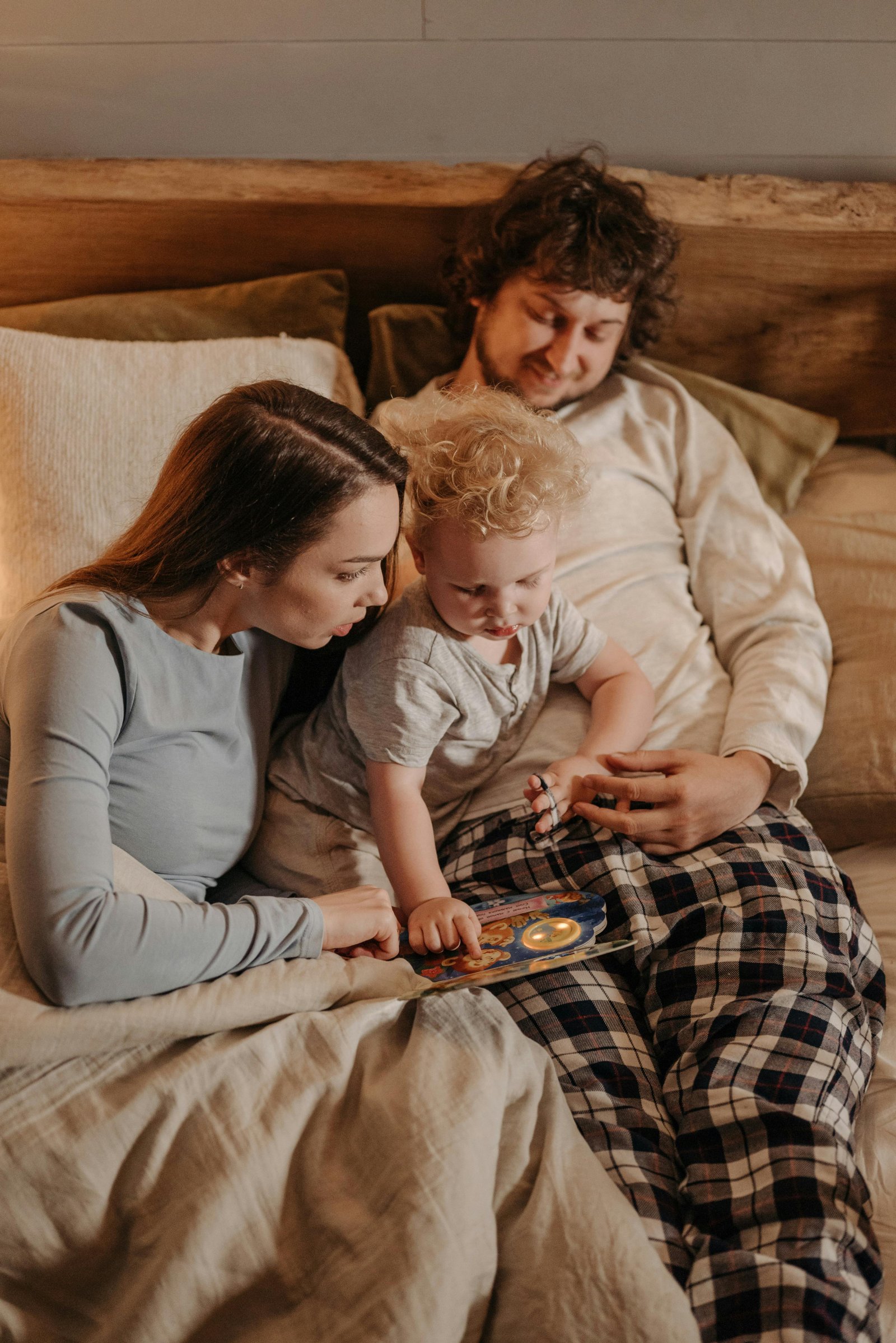
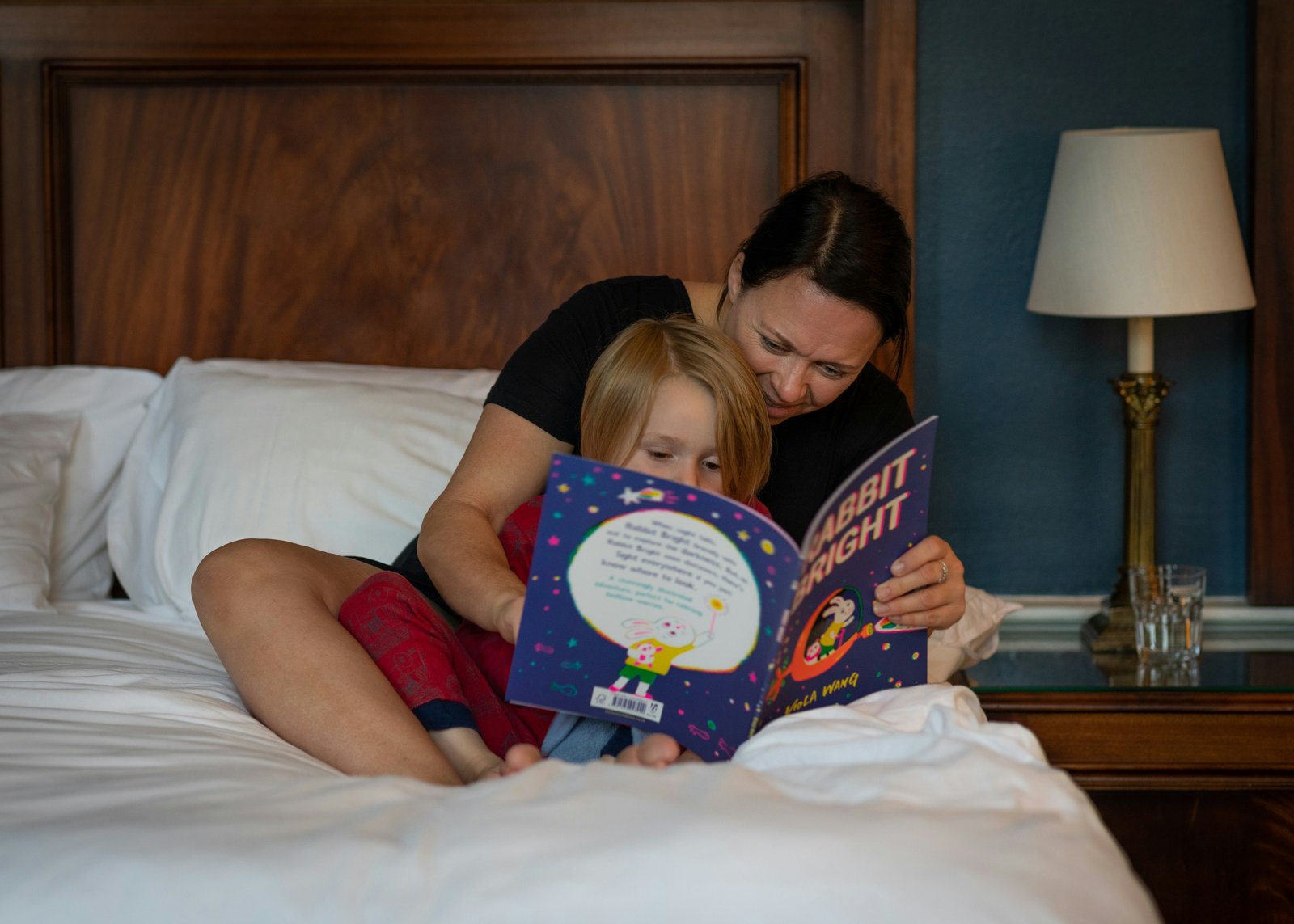
- Choose a story.
- Dim the lights.
- Read together.
- Have a short cuddle.
- Use the familiar goodnight phrase.
- Settle into sleep.
The exact sequence can be adapted to your family. What matters is that the child begins to recognise the pattern.
Give Warnings Before Transitions
Instead of suddenly announcing bedtime, give your child a little notice.
“Five more minutes of playing, then we are going upstairs for pyjamas and our story.”
A second reminder can follow when the transition is approaching.
This can make the move from active play to quiet bedtime feel less abrupt.
Use Gentle Bedtime Stories
For a child who is afraid of the dark, what they imagine before sleep can matter. A frightening story can give an already active imagination more material to work with.
A gentle story can provide a different kind of mental focus.
Look for Reassuring Story Elements
Good choices may include:
- Friendly animals.
- Cosy homes.
- Moonlight and stars.
- Quiet gardens.
- Helpful characters.
- Familiar bedtime routines.
- Small problems with clear solutions.
- Peaceful endings.
For a sensitive child, avoid stories that introduce frightening creatures, threatening villains, intense danger or suspense immediately before sleep.
Let the Story End With Safety
The final image matters.
A character getting into bed, a moon shining over a quiet home, a sleepy animal settling into its nest or a family saying goodnight can provide a gentle final image before lights out.
For more ideas, explore our guide to non-scary bedtime stories for kids.
Repetition Can Be Reassuring
If your child wants the same story repeatedly, there is no need to assume that repetition is a problem. Familiar stories can become part of the bedtime signal.
Your child knows the characters, knows what happens and knows that the story ends safely.
A Calming Bedtime Story to Share
If your child enjoys listening to stories as part of the bedtime routine, you can also use a gentle narrated story. Keep the volume low and make sure the video itself does not become a stimulating screen-time activity immediately before sleep.
Parent tip: If screens make your child more alert, consider listening to the story without watching the screen, or use the story as inspiration for a screen-free bedtime reading routine.
Give Your Child Small Choices
Fear can sometimes make children feel powerless. Small choices can give them an appropriate sense of control while keeping the adult in charge of the bedtime boundaries.
Try offering two choices:
- “Would you like the moon story or the animal story?”
- “Would you like the door slightly open or closed?”
- “Would you like your teddy beside you or your blanket?”
- “Would you like the little light on or dimmed?”
Avoid offering unlimited choices because this can turn bedtime into another decision-making activity.
Parent Tip
Give the choice before the final part of the routine. Once the choice has been made, calmly move on rather than reopening the decision several times.
When Darkness and Separation Worries Happen Together
Some children are not only afraid of the dark. They are also worried about being alone once the parent leaves the room.
This can create a cycle:
Lights go out → child feels worried → child calls parent → parent returns → child feels better temporarily → parent leaves → worry returns.
The aim is not to ignore the child. Instead, try making the final part of the routine predictable.
Tell Your Child What Happens Next
“We will finish the story, have our cuddle and then I will say goodnight. I will be nearby while you get comfortable.”
Use a Consistent Goodbye
A short goodbye can become familiar:
“Goodnight. I love you. Your room is safe. I will see you in the morning.”
Keep the wording consistent enough that your child recognises it as the normal end of the routine.
If separation difficulties are persistent or significantly affecting your child’s sleep or family life, consider discussing them with an appropriate healthcare or child-development professional.
What Not to Do When Your Child Is Afraid of the Dark
Do Not Mock the Fear
Avoid phrases such as “Don’t be silly” or “Big children aren’t scared of the dark.” These responses may make children less willing to tell you about their worries.
Do Not Create More Fear as a Joke
Do not pretend that a monster is hiding somewhere, even as a joke intended to make the child laugh. If the child already has a fear of the dark, this can make the bedroom feel less safe.
Do Not Turn Every Fear Into a Long Investigation
Listen and check genuine practical concerns, but avoid spending a long time searching for imaginary threats.
Once you have reassured your child, return to the familiar bedtime routine.
Do Not Force Complete Darkness
If your child currently needs a small light to feel comfortable, there is no need to make the transition to darkness into another battle.
Comfort and confidence can develop gradually.
Do Not Use Frightening Stories Before Sleep
If your child is already sensitive to darkness, avoid adding scary imagery, suspense or threatening characters to the final part of the evening.
Choose stories that leave the child with a feeling of safety and completion.
Help Your Child Gradually Build Confidence
The long-term goal is not necessarily to make your child comfortable with complete darkness immediately. It is to help them develop confidence in their ability to settle at night.
Celebrate Small Steps
Notice progress without putting pressure on your child.
For example:
“You noticed the shadow and checked what it was. You stayed calm while we looked together.”
This focuses on the child’s ability to handle the situation rather than simply whether the fear disappeared.
Practise During the Day
If appropriate for your child, you can gently explore how familiar objects look in different lighting during the daytime.
For example, point out how a chair looks in daylight and then explain that it is still the same chair when the room becomes darker.
Keep this playful and brief rather than turning it into a formal exercise.
Build Confidence Through Familiarity
Repeatedly experiencing the same calm bedtime sequence can help children learn:
- I know what happens next.
- I know what my room looks like.
- I know the sounds around me.
- I know how bedtime ends.
- I know I can ask for help when I genuinely need it.
These familiar experiences can gradually make bedtime feel less uncertain.
A Simple 20-Minute Routine for a Child Afraid of the Dark
Here is a simple example that parents can adapt to their own evening.
| Time | Activity | Purpose |
|---|---|---|
| 0–5 minutes | Bathroom, teeth and pyjamas | Finish active bedtime tasks. |
| 5–8 minutes | Dim the room and choose comfort items | Make the transition toward rest predictable. |
| 8–15 minutes | Read one gentle story | Provide calm connection and reassuring imagery. |
| 15–17 minutes | Quick room check if needed | Address genuine practical worries without prolonging the routine. |
| 17–19 minutes | Cuddle and repeat the goodnight phrase | Provide a familiar closing signal. |
| 19–20 minutes | Say goodnight and settle | End the routine calmly and consistently. |
This is only an example. Some children need more time, while others settle more quickly. The most important part is creating a sequence that is calm enough to repeat consistently.
How Darkness Fears Can Look at Different Ages
| Age | What you may notice | Helpful approach |
|---|---|---|
| 2–3 years | Calling for a parent, crying after lights out or becoming attached to a comfort object. | Use very simple reassurance, repetition and a predictable routine. |
| 3–5 years | Imaginary creatures, shadows, noises or worries about being alone. | Listen briefly, identify practical triggers and use gentle stories and familiar phrases. |
| 5–7 years | More detailed fears, nightmares or questions about what might happen during the night. | Answer calmly while maintaining a clear bedtime boundary. |
| 7 years and older | Specific worries, imagination-driven fears or concerns connected to things they have seen or heard. | Encourage age-appropriate discussion and help the child develop their own calming strategies. |
Children develop differently, so these age ranges are only general guides. A child’s temperament, experiences and current circumstances can affect how they respond to darkness.

Parent Checklist: Helping a Child Who Is Afraid of the Dark
Before lights out, ask yourself:
- Have I listened to what my child is actually afraid of?
- Have I checked for obvious shadows or unfamiliar sounds?
- Is the bedroom comfortable?
- Does my child have a familiar comfort item if they want one?
- Have I kept the lighting calm rather than turning bedtime into playtime?
- Have I chosen an appropriate bedtime story?
- Have I kept reassurance short and consistent?
- Have I given my child one or two small choices?
- Have I explained what happens next?
- Will we finish with the same goodnight signal?
You do not need to achieve everything perfectly. The checklist is simply a reminder that small, repeated signals of safety can make a difference over time.
When to Seek Additional Support
Occasional fears around darkness are part of childhood for many families. However, it may be worth seeking additional advice if your child’s fear is persistent, severe or significantly affecting sleep, daytime functioning or family life.
Consider speaking with an appropriate healthcare or child-development professional if your child:
- Experiences intense distress around bedtime regularly.
- Frequently loses significant sleep because of fear.
- Has fears that are becoming more widespread during the daytime.
- Has a significant change in behaviour alongside the night-time fear.
- Continues to struggle despite consistent support and routine changes.
This article provides general parenting guidance and is not a substitute for individual medical or psychological advice.
Frequently Asked Questions About Children Afraid of the Dark
Why is my child suddenly afraid of the dark?
Children’s fears can change as their imagination develops, routines change or they become more aware of unfamiliar sounds, shadows and separation. Sometimes a recent story, television programme, dream or experience can also influence what feels frightening at night.
Should I leave a night light on for my child?
A small, gentle night light may help some children feel more comfortable. There is no need to force complete darkness if your child currently feels safer with a little light. Keep the light calm rather than bright or stimulating.
What should I say when my child says there is a monster in the room?
Acknowledge that your child feels frightened without pretending that a monster is actually present. You can calmly check the room together and say, “I can see that you are worried. We checked the room, and everything is okay. Now it is time to rest.”
Should I check under the bed?
If your child is very frightened, one brief practical check may provide reassurance. Try not to turn checking into a long nightly ritual, because repeated searching can unintentionally make the imaginary danger feel more important.
Can bedtime stories help a child who is afraid of the dark?
Gentle bedtime stories can become a calming part of the routine. Familiar characters, peaceful imagery and reassuring endings may give children something comfortable to focus on before sleep.
Should I let my child sleep with the bedroom light on?
Families can choose what works for their child. If complete darkness causes significant distress, a softer light can be a reasonable transitional support while the child gradually becomes more comfortable at bedtime.
What if my child keeps calling me after lights out?
Respond calmly and consistently. Check whether there is a genuine need, offer brief reassurance and return to the familiar bedtime boundary rather than beginning a long conversation each time.
Should I tell my child not to be scared?
It is usually more helpful to acknowledge the feeling rather than dismiss it. You can say, “I know the dark feels scary right now,” and then offer reassurance about what your child can rely on.
How long does fear of the dark last?
There is no single timeline. Some children become comfortable relatively quickly, while others need longer periods of predictable support. If fear is persistent, severe or significantly affecting sleep and daily life, consider seeking appropriate professional guidance.
What is the best bedtime routine for a child afraid of the dark?
A useful routine is predictable, calm and simple. It might include pyjamas, teeth, dimming the lights, one gentle story, a cuddle, a repeated goodnight phrase and a consistent transition to sleep.
Related Bedtime Resources
Final Thoughts
When a child is afraid of the dark at bedtime, the goal is not to force the fear away. A more helpful approach is to make the evening predictable, listen to what your child is experiencing and provide calm reassurance.
Check practical triggers, make the bedroom comfortable, use a gentle routine and choose bedtime stories that leave your child with peaceful rather than frightening images.
Most importantly, remember that confidence can develop gradually. Your child does not need to become comfortable with darkness in one night.
With patience, consistency and a familiar bedtime rhythm, the bedroom can gradually become associated with safety, connection and rest.
The goal is simple: your child knows what happens next, knows they are cared for and can settle into the night with a little more confidence.