



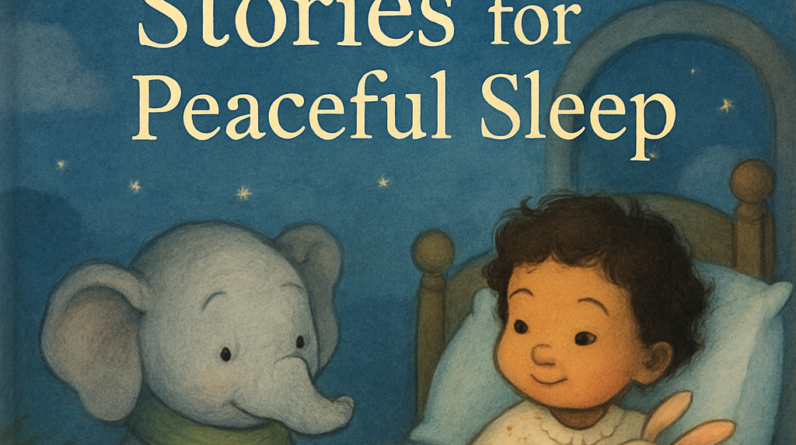
Micro Bedtime Stories (3–6 Minutes) for Calm Sleep
If nights feel rushed, wiggly, or emotionally loud, micro bedtime stories can be the simplest reset button.
These tiny tales are designed to fit into real life—quick enough for busy evenings, gentle enough to quiet a buzzing mind,
and structured enough to help bedtime feel predictable (in the best way).
In this guide, you’ll learn what makes a story “micro,” why short storytelling supports calm sleep, and how to use
3–6 minute stories to build a soothing routine for kids (and adults). You’ll also get ready-to-use story templates,
a quick routine you can follow tonight, and a calming video + images you can share with your little listener.
Low-stimulation
Gentle endings
Kid-friendly
Adult-friendly
What Are Micro Bedtime Stories (and What They Aren’t)
Micro bedtime stories are short, soothing stories that take about 3 to 6 minutes to read aloud.
They’re built for wind-down, not entertainment marathons. Think: a gentle moment, a calm setting, a small
comforting action, and a soft landing at the end.
Micro stories are designed for “bedtime reality”
- Short length: You can finish one without bargaining for “one more chapter.”
- Low stakes: No villains, no dramatic twists, no cliffhangers.
- Soft sensory language: Cozy blankets, quiet rain, warm lights, sleepy animals.
- Predictable ending: The ending feels like a yawn—calm, complete, and safe.
What micro bedtime stories are NOT
- High-energy adventures that rev up imagination into “play mode.”
- Long story arcs with suspense or unresolved conflict.
- Fast, funny, or overly silly stories that spike arousal before sleep.
Tip: If you’re building a bedtime library, keep micro bedtime stories in a dedicated folder or printed stack.
When kids know the “micro story basket” comes out at night, bedtime becomes easier to predict—one of the most
calming signals you can give.
Why Micro Bedtime Stories Work for Calm Sleep
Bedtime is a transition. Your brain and body need to move from “doing” to “resting.”
The simplest way to help that shift is to reduce stimulation and increase predictability.
Micro stories do both.
They reduce decision fatigue
Long stories can invite choices: “One more?” “Which chapter?” “Can we start a new book?”
Short calming bedtime stories provide a clean, clear boundary: one story, then lights out.
Fewer choices often means fewer battles.
They create a reliable “sleep cue”
When you repeat a consistent routine—same chair, same lamp, same story tone—the brain starts linking
the pattern with sleep. That association becomes stronger when the story is short and ends the same way:
calm setting → gentle action → cozy ending.
They keep imagination soothing instead of stimulating
Kids love imagination, but bedtime imagination should be slow and safe.
Micro bedtime stories make room for wonder without building suspense.
That’s why themes like stargazing, floating clouds, sleepy forests, and quiet trains work so well.
A 3–6 Minute Bedtime Routine Built Around Micro Bedtime Stories
Here’s a simple routine that fits into real evenings. It’s designed to take about 5 minutes total,
which makes it easy to repeat—even when you’re tired.
Step 1 (60 seconds): Dim + Downshift
- Lower lights (or use a warm lamp).
- Put devices away (even just across the room).
- Use a quiet “transition phrase” like: “Now we’re switching to sleepy time.”
Step 2 (60 seconds): Comfort check
- Bathroom, water sip, favorite blanket, stuffed animal.
- One quick cuddle or hand squeeze.
Step 3 (60 seconds): One slow breath pattern
Try: inhale for 3, exhale for 4. Do it together 3–5 times.
Keep it light and playful: “Let’s make our breathing soft like a feather.”
Step 4 (3–6 minutes): Read one micro story
Choose one story. Read slowly. Pause for cozy words.
End with a consistent line, such as: “Safe, cozy, sleepy—goodnight.”
Want more ideas for quick nights? Visit our collection of
short bedtime stories for kids
to keep bedtime calm even when the day was busy.
The Best Structure for Short Calming Bedtime Stories
You don’t need to be a professional writer to create soothing micro bedtime stories.
Use this simple structure and you’ll have a calm, repeatable story format that works for almost any theme.
1) A gentle setting (10–20 seconds)
Pick one calm place: a quiet forest, a cozy bedroom, a moonlit porch, a slow train, a soft ocean.
Use sensory details that feel safe and warm.
2) A tiny problem (optional) with a tiny solution (60–120 seconds)
If you include a “problem,” keep it very small: a bunny can’t find a comfy spot, a star feels shy,
a teddy wants an extra blanket. Then solve it softly—no big drama.
3) A calming action loop (1–3 minutes)
Repeat a soothing action 2–4 times: walking slowly, tucking in, counting stars, listening to raindrops.
Repetition helps the brain settle.
4) A soft landing ending (20–40 seconds)
Bring the character to rest in a cozy, safe place. Close with predictable language:
“Everything was quiet. Everything was safe. And sleep came gently.”
Pro tip for creators: If you publish bedtime content, a quick SEO audit + competitor analysis can reveal which “3–5 minute bedtime stories” terms are easiest to rank for. For deeper research, use Mangools (KWFinder + SERPChecker + LinkMiner) to identify low-competition keywords, confirm search intent, and plan internal linking.
Bonus: With backlink tracking + content optimization, you can keep your bedtime pages improving over time.
Micro Bedtime Stories (3–6 Minutes): Ready-to-Read Examples
Below are original, ready-to-read micro bedtime stories you can use tonight. Read slowly, soften your voice,
and let pauses do some of the calming work.

Story 1: The Little Lantern That Learned to Glow Softly (3–4 minutes)
In a quiet hallway, there was a small lantern with a glass belly and a warm, golden heart.
Every evening, the lantern tried to shine as bright as it could—so bright that it made the walls look awake.
One night, a sleepy cat padded by and blinked slowly. “Lantern,” the cat whispered, “your light is kind…
but it’s very loud.”
The lantern felt surprised. “My light is loud?”
The cat nodded, curling its tail like a comma. “Some lights are for finding things. Some lights are for waking up.
And some lights are for resting. Tonight, we need a resting light.”
The lantern took a gentle breath—if a lantern can breathe—and tried something new.
It softened its glow, just a little. The hallway turned honey-colored.
“Softer,” the cat murmured, blinking twice.
The lantern softened again. Shadows became gentle. Corners became cozy.
The cat’s whiskers stopped twitching.
“Even softer,” the cat whispered, as if the words were floating on feathers.
The lantern softened until the light felt like a blanket—warm, quiet, and safe.
In that soft glow, the hallway looked like a place where dreams could walk slowly.
The cat yawned a yawn that stretched all the way to morning. “That’s it,” it said.
“Now your light is saying: everything is okay.”
The lantern stayed softly glowing. The house grew quieter. The night felt kind.
And, one by one, everyone drifted into sleep—safe, cozy, and calm.

Story 2: The Cloud Elevator (4–5 minutes)
High above the rooftops, a small cloud floated in place like it was waiting for something.
If you listened closely, you might hear it humming a slow, sleepy tune.
“I’m the Cloud Elevator,” the cloud said, in a voice as soft as fog. “I lift worries up and set them down gently.”
A little worry arrived first—tiny and fidgety. It bounced on the cloud’s edge.
“I’m worried about tomorrow,” it squeaked.
The Cloud Elevator didn’t rush. It simply lowered a small, fluffy step.
“Come sit,” it said. “We’ll rise slowly.”
The worry sat down. The cloud hummed. And up they went—just a little.
Not fast. Not high. Just enough to feel space around the worry.
A bigger worry arrived next. “I’m worried I forgot something,” it sighed.
“Come sit,” the cloud said again. It made room the way clouds do—by being gentle.
The humming continued, steady and calm.
Up they rose, slowly. The worries began to feel lighter, as if the air itself was kinder.
One more worry showed up—quiet but heavy. It didn’t speak. It just sat and tried not to shake.
The cloud did not ask questions. It simply hummed.
“Now,” the Cloud Elevator whispered, “we set things down.”
It opened a small, invisible door in the sky—just a door to softness.
One by one, the worries stepped out and landed on a pillow of moonlight below.
They did not disappear. They simply rested.
The Cloud Elevator drifted back down, humming its slow tune.
The world below was quiet. The mind felt wider. The heart felt calmer.
And sleep arrived like a gentle wave, smoothing everything into rest.
Story 3: The Sleepy Train’s Last Stop (5–6 minutes)
On a track made of silver lines, a sleepy train traveled through the night.
It did not chug loudly. It did not whistle sharply.
It made a sound like: shhh… shhh… shhh…
The conductor was a small fox in a soft cap. “Tickets, please,” the fox said kindly.
But the tickets were simple: one slow breath, then another.
The train stopped at the Station of Shoulders. “Drop your shoulders,” the fox announced.
Everyone on board let their shoulders sink like heavy coats sliding off.
Shhh… shhh… shhh…
Next stop: The Station of Foreheads. “Unwrinkle your forehead,” said the fox.
Foreheads smoothed out like calm water.
Shhh… shhh… shhh…
Next stop: The Station of Hands. “Let your hands rest,” the fox said.
Fingers curled gently. Palms became warm and still.
Shhh… shhh… shhh…
The train rolled through a tunnel made of quiet. The windows showed stars that blinked slowly,
as if even the sky was getting sleepy.
“Final stop,” the fox whispered, “The Cozy Station.”
The doors opened to a place filled with soft blankets and pillows that smelled like clean sheets.
The air was warm. The lights were low. The floor felt safe.
Everyone stepped off the train and found a spot to rest.
The fox tipped its cap. “You rode the sleepy train,” it said. “You did enough for today.”
The train gave one last gentle sound—shhh… shhh… shhh…—and the night held you kindly.
Safe, cozy, sleepy—goodnight.
Prefer printable stories? Grab our free bedtime stories PDF to keep a few micro tales ready for screen-free nights.
Calming Bedtime Story Variations by Age
The best micro bedtime stories match the listener’s age and sensitivity.
Use the guidelines below to tailor pacing, vocabulary, and story “energy.”
Ages 2–4: ultra-simple and sensory
- Use short sentences and repeated phrases.
- Keep characters familiar: bunny, bear, cat, duck.
- End with a tuck-in or goodnight ritual.
Ages 5–7: gentle imagination, still low stakes
- Add a tiny quest (find the coziest pillow, count the stars).
- Include calm dialogue and predictable repetition.
- Keep endings soft—no “surprise” twist.
Ages 8–12: soothing “slice of life” stories
- Use cozy scenes: cabins, libraries, campsites, late-night trains.
- Include a small emotional theme: confidence, comfort, belonging.
- Avoid suspense—aim for reassurance and closure.
Teens and adults: slower language, more atmosphere
- Lean into calm imagery: rainfall, ocean waves, quiet cities at night.
- Choose reflective tone over plot.
- Repeat the same story for a week to strengthen the sleep association.
If you want a broader collection beyond micro stories, visit our main bedtime library of
calming bedtime stories.
Content Optimization Tips for Micro Bedtime Stories
Whether you’re reading to a child, recording an audio track, or publishing a bedtime blog post,
these tips help keep your micro bedtime stories truly calming—not accidentally stimulating.
Use “sleepy verbs” and soft transitions
- Prefer: drift, settle, float, soften, rest, nestle, hush.
- Avoid: race, burst, chase, shout, crash, sprint.
Keep sentence rhythm slow
Use commas and gentle pauses. Read a little slower than you think you should.
If a child interrupts, respond warmly, then return to the same calm pace—predictability is soothing.

End with the same closing line
A consistent ending becomes a bedtime anchor. Choose one and keep it:
“Safe, cozy, sleepy—goodnight.” Or “You are warm, you are safe, you can rest.”
For publishers: build internal links with intention
One strong internal link to your pillar page helps both users and SEO. Keep anchors natural,
avoid repeating the same exact anchor twice, and place links where they genuinely help the reader
(like after a story set or a routine section).
A 3-Minute Micro Bedtime Story Video to Pair With Reading
Some nights, listening can be easier than reading—especially when your voice is tired.
Here’s a short, calming bedtime story video you can play at low volume after your routine:
Tip: If screens are overstimulating for your child, keep the brightness very low, turn off autoplay,
and consider audio-only options when possible.
Frequently Asked Questions
What makes a bedtime story “micro”?
A micro bedtime story is intentionally short—usually 3 to 6 minutes—so it fits into a consistent routine.
It uses calming language, low-stakes scenes, and a gentle ending. The goal isn’t to entertain endlessly;
it’s to guide the mind into a quieter state where sleep can arrive naturally.
Should micro bedtime stories be different every night?
Not necessarily. Many kids (and adults) sleep better with repetition because it reduces novelty and mental effort.
You can rotate a small set of micro bedtime stories through the week, or repeat the same story for several nights,
especially during stressful periods or schedule changes.
How do I keep a child from asking for “one more story”?
Set the expectation before you start: “Tonight we’ll read one tiny story, then lights out.”
Use a consistent closing phrase and pair it with a predictable action (kiss, hug, tuck-in).
If they ask again, gently repeat the boundary with warmth and keep the routine consistent.
Can micro bedtime stories help with bedtime anxiety?
They can help by creating a calm, predictable transition and by offering soothing imagery that interrupts spiraling thoughts.
Choose stories with safety cues (home, warmth, gentle caregivers, cozy spaces) and avoid suspense.
Combine the story with slow breathing and consistent lighting for a stronger calming effect.
What if my child gets energized by stories?
Switch to lower-stimulation themes and language. Avoid adventurous plots, funny surprises, or exciting character voices.
Read more slowly, dim the lights further, and choose “slice of calm” scenes like stargazing or listening to rain.
Ending with a quiet routine line can help bring their nervous system back down.
How long should the whole routine take?
If you’re aiming for calm sleep, shorter and consistent often works best.
Many families do 5–10 minutes: a quick comfort check, a minute of slow breathing, and one micro story.
The key is repeating the same pattern nightly so the body recognizes the sequence and relaxes faster.
Conclusion: Tiny Stories, Big Calm
The magic of micro bedtime stories isn’t that they’re short—it’s that they’re repeatable.
A 3–6 minute story gives you a dependable way to end the day with connection, calm, and closure.
When you keep the pace slow, the stakes low, and the ending soft, bedtime becomes less of a battle and more of a ritual.
Start tonight: dim the lights, take a few slow breaths, read one tiny story, and close with the same gentle goodnight line.
Over time, that pattern becomes a powerful signal: it’s safe to let go, it’s okay to rest, and sleep can arrive quietly.