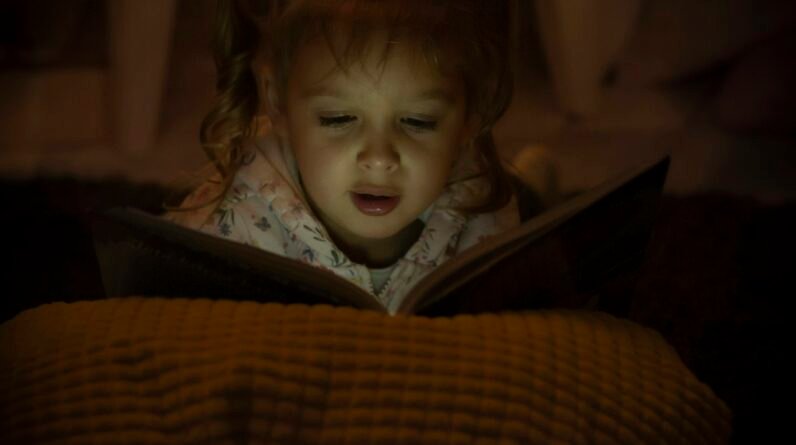
5 Simple Bedtime Stories for Preschool Kids: Easy Sleep Stories
Simple bedtime stories for preschool kids do not need complicated adventures or dramatic plots. For many children ages 3–6, a gentle story with familiar characters, soothing repetition, and a peaceful ending is a lovely way to move from a busy day into a calmer bedtime.
Below you will find 5 complete, ready-to-read bedtime stories created especially for preschoolers. There is a sleepy bear, a cozy cloud, a kind blanket, a whispering toy train, and a little star saying goodnight.
You will also find practical ideas for choosing a preschool bedtime story, reading it calmly, creating your own simple stories, and making storytime part of a predictable evening routine.

Key Takeaways
- Preschool bedtime stories are often easiest to follow when the plot stays simple and gentle.
- Familiar animals, stars, clouds, toys, and everyday bedtime moments make comforting story themes.
- Repetition and a familiar closing phrase can make storytime feel more predictable.
- Story length should follow your child’s attention and energy rather than a rigid number of minutes.
- Reading slowly and reducing dramatic voices can help keep storytime calm.
- Repeating a favourite story is perfectly fine—preschoolers often enjoy familiarity.
- Bedtime learning can stay light and playful rather than becoming another lesson.
Simple Bedtime Stories for Preschool Kids
If your child enjoys listening as well as reading, you can also use a gentle bedtime video earlier in the wind-down. Keep the transition afterwards simple so the video does not turn into another long activity.
Why Simple Bedtime Stories Work Well for Preschool Kids
Preschoolers are taking in enormous amounts of information throughout the day. Bedtime does not have to add another complicated experience.
A simple story gives a child something easy to follow while offering a quiet moment of connection with a parent or caregiver.
Gentle bedtime stories can support:
- A predictable transition from daytime activities to bedtime
- Warm parent-child connection
- Listening and language development
- Familiar vocabulary and repeated phrases
- A quieter alternative to stimulating evening activities
- Positive associations with books and reading
The story does not need to make your child fall asleep. Its job is simply to create a calm, enjoyable part of the bedtime routine.
For a larger selection organized around this age group, explore our
Preschool Bedtime Stories
guide.
What Makes a Good Preschool Bedtime Story?
A preschool bedtime story can be imaginative without becoming complicated. In fact, some of the easiest stories to read at bedtime follow a very small structure.
A Gentle Preschool Story Might Include:
- One main character your child can easily remember
- One calm setting such as a bedroom, pond, garden, cloud, or moonlit hill
- One small event rather than a long adventure
- Gentle language such as drift, whisper, tiptoe, snuggle, and rest
- One repeated phrase your child can recognize
- A reassuring ending that brings the story to a clear close
For example:
“The room is quiet. The day is done. It is time to rest.”
If your child is especially sensitive to frightening themes, our
non-scary bedtime stories for kids
provide more gentle options.
How Long Should a Preschool Bedtime Story Be?
There is no single ideal story length for every child. Attention span, tiredness, reading experience, and temperament all matter.
The table below is a practical guide rather than a strict rule.
| Age / Stage | Story Approach | Helpful Features |
|---|---|---|
| Young toddlers | Very short stories or picture-led storytelling | Repetition, familiar objects, simple sentences |
| Ages 3–4 | Short, straightforward stories | Animals, bedtime routines, moon and nature themes |
| Ages 4–5 | Short stories with a little more detail | Repetition, friendship, kindness, simple feelings |
| Ages 5–6 | Longer stories when attention allows | Simple plots, richer vocabulary, early-reader elements |
Watch your child rather than the clock. If they are becoming restless, turning storytime into a negotiation, or struggling to follow the plot, a shorter story may work better that evening.
For particularly short nights, you can also explore our
micro bedtime stories
5 Simple Bedtime Stories for Preschool Kids
These five original stories are deliberately simple. Read them exactly as written or personalize small details such as your child’s favourite animal, blanket colour, or bedtime toy.
Story 1: Benny Bear and the Quiet Pond
Best for: ages 3–5
Approximate reading time: 2–3 minutes
Theme: Calm breathing
Benny Bear walked slowly to the quiet pond.
The moon was round.
The trees were still.
The water made tiny silver circles.
Benny sat on a soft patch of grass and took one small breath.
In went the calm.
Out went the busy day.
A little frog blinked from a lily pad.
“The pond is sleepy tonight,” whispered Frog.
Benny nodded.
He tucked his paws under his chin.
The stars blinked slowly.
The pond grew quiet.
Benny yawned a warm bear yawn.
In went the calm. Out went the busy day.
Then Benny closed his eyes and drifted into a soft, safe dream.
Story 2: Luna Cloud Finds a Cozy Roof
Best for: ages 4–5
Approximate reading time: 3–4 minutes
Theme: Belonging and rest
Luna was a little cloud who floated above the town.
All day, she had drifted from hill to hill.
By evening, Luna felt tired.
“I need a cozy place to rest,” she whispered.
She floated over a red barn.
She floated over a quiet garden.
She floated over a small blue house with one warm window glowing.
Below the window, a kitten curled on a blanket.
“You can rest here,” said Kitten.
Luna smiled.
She settled softly above the roof.
The wind slowed down.
The garden flowers closed their petals.
The moon rose higher.
Luna whispered, “Soft roof, soft sky, sleepy cloud drifting by.”
Then she became still and peaceful until morning.
Story 3: Sam and the Kind Blanket
Best for: ages 4–6
Approximate reading time: 2–3 minutes
Theme: Kindness
Sam had a warm blue blanket.
It was soft, cozy, and just right for bedtime.
One night, Sam saw his little toy rabbit sitting beside the pillow.
“You look cold,” Sam said.
Rabbit did not answer, but Sam knew what to do.
He shared one corner of the blanket.
Now Sam was warm.
Rabbit was warm too.
Sam smiled.
“Kindness is a cozy blanket,” he whispered.
The room grew quiet.
The moon shone gently through the curtain.
Sam closed his eyes.
Rabbit rested beside him.
And the blue blanket kept them both warm until morning.
Story 4: The Sleepy Train of Tired Toys
Best for: ages 3–6
Approximate reading time: 4–5 minutes
Theme: Tidying and routine
Every night, when the bedroom lamp turned soft and golden, the Sleepy Train came down the carpet track.
It was not a loud train.
It was a whisper train.
Shh-shh, shh-shh, shh-shh.
The first passenger was Teddy Bear.
“I am ready for my shelf,” said Teddy.
The second passenger was a wooden car.
“I am ready for my basket,” said Car.
The third passenger was a tiny dinosaur.
“I am ready for my cozy corner,” said Dinosaur.
The Sleepy Train rolled slowly around the room.
It carried every toy to its resting place.
Then the train stopped beside the bed.
“Last stop,” whispered the train. “Sleepy child station.”
The child climbed under the blanket.
The toys were resting.
The room was still.
Shh-shh, shh-shh, good night.
Story 5: The Little Star That Blinked Goodnight
Best for: ages 3–6
Approximate reading time: 3–4 minutes
Theme: Safety and bedtime closure
High above the rooftops, one little star blinked in the sky.
It blinked at the trees.
It blinked at the birds.
It blinked at the quiet streets.
Then it looked down and saw a child getting ready for bed.
The child brushed teeth.
The child put on soft pajamas.
The child climbed under the blanket.
The little star blinked once.
“Good job,” it seemed to say.
The child smiled.
The room was calm.
The pillow was soft.
The blanket was warm.
The little star blinked again.
“Good night, little light.”
And the child rested while the star watched gently until morning.

30 Simple Bedtime Story Ideas by Theme
Once you know the basic structure of a gentle bedtime story, you can create dozens of variations. Use these prompts when your child asks for something new.
Calming Animal Stories
- Moon Bear counts five stars
- Sleepy Bunny finds a soft pillow
- Otter floats down a quiet river
- Kitten tiptoes past the moon
- Owl watches the night grow still
Gentle Moral Stories
- A bear shares a blanket
- A fox tells the truth about a broken lantern
- A puppy waits patiently for storytime
- A bunny helps a tired friend
- A panda says thank you to the moon
Peaceful Nature Stories
- A cloud finds a place to rest
- A flower closes its petals at sunset
- A tiny boat drifts across a pond
- A sleepy seed grows into a pillow tree
- A soft breeze tucks in the garden
Funny but Calm Stories
- The pajama parade walks very slowly
- A pillow keeps yawning
- A sock looks for its sleepy pair
- A teddy bear forgets how to snore
- A blanket tries to become a cape but gets too sleepy
Simple Early-Reader Stories
- I See the Moon
- The Cat Can Nap
- Sam Sits in Bed
- The Sun Is Down
- Meg Has a Red Blanket
Gentle Imaginative Stories
- The Whispering Map
- The Slow Train to Dreamland
- The Lantern Garden
- The Cloud Library
- The Secret of Sleepy Hill
For more imaginative ideas, visit our
magical bedtime stories
.
How to Read Bedtime Stories So Storytime Stays Calm
The way you read can matter as much as the story itself. A dramatic performance may be wonderful during the day, but bedtime often benefits from a quieter approach.
10 Gentle Read-Aloud Tips
- Lower the lights before the story begins.
- Use a comfortable, unhurried speaking pace.
- Pause briefly after especially gentle lines.
- Use the same reading spot when practical.
- Reduce loud character voices and dramatic sound effects.
- Choose a shorter story when your child is already very tired.
- Repeat a familiar closing phrase.
- Keep questions to a minimum close to sleep.
- Let your child simply listen without needing to perform or answer.
- Finish before storytime turns into another high-energy activity.
For a broader evening framework, see our
bedtime routine that actually works
.
A 5-Step Formula for Writing Your Own Simple Bedtime Story
You do not need to be a professional writer to invent a little bedtime story for your child. Start with five simple pieces.
- Choose one character.
Try a bunny, bear, kitten, cloud, star, train, or favourite toy. - Choose one calm setting.
A pond, bedroom, garden, moonlit hill, quiet forest, or cloud can work well. - Add one small event.
The character might find a blanket, help a friend, watch the stars, or look for somewhere cozy to rest. - Choose one repeated phrase.
For example: “Slow and soft, the night is kind.” - Bring the story to rest.
Finish the small event and let the character settle somewhere safe and comfortable.
Fill-in-the-Blank Bedtime Story Template
[Character] felt [small feeling]. [Character] went to [calm place].
There, [small gentle event happened]. [Character] took a slow breath
and said, “[gentle phrase].” Then [character] settled down to rest.
Personalizing the character with your child’s favourite animal, toy, or colour can make an extremely simple story feel special.
A 7-Day Bedtime Story Plan
If storytime has become inconsistent, try one week of deliberately simple reading. The aim is not to guarantee a change in sleep. It is to discover what type of story and routine your child enjoys most at bedtime.
| Day | Story Type | What to Observe |
|---|---|---|
| Day 1 | Calming animal story | Does your child enjoy a familiar animal character? |
| Day 2 | Moon or star story | Does a quiet nighttime setting hold their attention? |
| Day 3 | Kindness story | Does your child connect with a simple emotional theme? |
| Day 4 | Funny but gentle story | Can the story stay playful without becoming too exciting? |
| Day 5 | Simple early-reader story | Does your child enjoy joining in with repeated words? |
| Day 6 | Child-choice story | Which theme does your child choose? |
| Day 7 | Repeat the favourite | Does familiarity make storytime easier? |
What You Can Track
- Which story your child requested again
- Whether the story felt too short, too long, or just right
- Whether your child preferred listening or joining in
- Which repeated phrase they remembered
- Whether storytime stayed calm or became more energetic

How to Make Bedtime Stories Educational Without Making Them Stressful
Preschool stories naturally expose children to vocabulary, sentence patterns, characters, sequencing, and ideas. You do not need to turn bedtime into a formal lesson to gain those benefits.
If your child enjoys interacting with the story, keep the learning moment small.
Simple Learning Ideas
- Ask, “Who was your favourite character?”
- Let your child finish a familiar repeated phrase.
- Point out one interesting new word.
- Ask your child to name an animal or object in an illustration.
- Let them tell you their favourite part.
If your child simply wants to listen, that is fine too. Bedtime does not need a quiz.
For children beginning to engage more actively with text, see our
reading stories for kindergarten
.
Troubleshooting Common Bedtime Story Problems
My Child Always Wants One More Story
Decide how many stories you will read before you begin. When the last story finishes, use a familiar closing phrase.
“That was our last story. The book is resting now, and we can read again tomorrow.”
If repeated requests have become a broader bedtime pattern, our guide on
stopping bedtime negotiations
may help.
The Story Makes My Child More Excited
Try a slower plot with fewer surprises, quieter character voices, and a clear ending. Save highly adventurous stories for earlier in the day if they make your child energetic.
My Child Keeps Talking Through the Story
Preschoolers often want to contribute. You can acknowledge the idea briefly without turning the story into a long conversation.
“I like that idea. Let’s finish our story, and we can talk about it tomorrow.”
My Child Becomes Frightened
Stop or change the story rather than insisting on finishing it. Return to something familiar and reassuring.
You may also find
How to Make Bedtime Feel Safe
useful.
Storytime Is Making Bedtime Too Long
Choose the number of stories before you start and select a shorter story on tired evenings. A predictable ending is usually more useful than abruptly stopping because bedtime has already run late.
My Child Is Too Tired for a Full Story
You do not have to finish a long book every night. Choose a
short bedtime story
or tell a tiny familiar story from memory.
Frequently Asked Questions About Preschool Bedtime Stories
What makes a good bedtime story for a 3-year-old?
Look for a straightforward story with a small number of characters, familiar ideas, gentle repetition, and a clear ending. Some three-year-olds enjoy only a very short story, while others are happy to listen longer.
How long should a preschool bedtime story be?
There is no required length. A few minutes may be enough for a tired child, while another preschooler may enjoy a longer read. Choose a length that keeps the experience pleasant without extending bedtime unnecessarily.
What kinds of stories are good for preschool bedtime?
Gentle animal stories, moon and star stories, quiet nature stories, friendship stories, familiar routine stories, and simple imaginative tales can all work well. The individual child’s preferences matter most.
Is it okay to read the same bedtime story every night?
Yes. Many preschool children enjoy repetition and may request the same favourite story repeatedly. Familiarity can also make the bedtime routine easier to predict.
Should a preschool bedtime story teach a lesson?
It can, but it does not have to. A simple theme such as kindness, patience, friendship, or gratitude can fit naturally into a story without turning bedtime into a lesson.
Can funny bedtime stories work for preschoolers?
Yes. Gentle humour can make reading enjoyable. If very silly stories make your child more energetic, choose quieter humour close to lights out and save the bigger laughs for daytime reading.
What should I do if my child wants another story?
Set the expectation before reading begins—for example, “Tonight we’re reading one story.” When it ends, acknowledge that your child would like another and save it for the next storytime.
What if my preschooler does not want a bedtime story?
Storytime does not need to be forced. You might try a shorter story, tell a simple story from memory, look quietly at a picture book, or use another calm connection activity your child enjoys.
Can I make up my own bedtime stories?
Absolutely. A familiar character, one small event, a repeated phrase, and a peaceful ending are enough to create a simple preschool bedtime story.
Final Thoughts
Simple bedtime stories for preschool kids work beautifully when they are easy to understand, enjoyable to hear, and gentle enough to fit naturally into the end of the day.
You do not need a complicated plot. Benny Bear only needs a quiet pond. Luna Cloud only needs somewhere cozy to rest. Sam only needs his blanket and toy rabbit. A familiar character, one small moment, and a peaceful ending can be enough.
Start tonight with three simple steps:
- Choose one short, gentle story.
- Read it slowly without turning storytime into another activity.
- Finish with a familiar goodnight phrase.
And when your child asks for the same story tomorrow night, you do not necessarily need a new one. Sometimes the familiar story is exactly the one they want to hear.