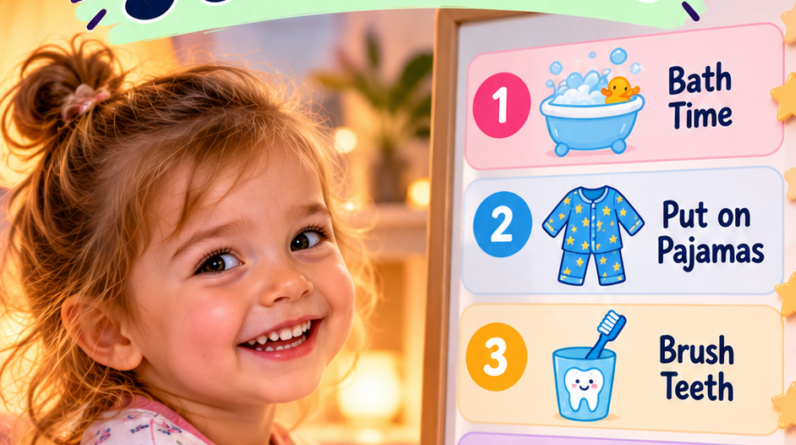
Toddler Bedtime Routine Chart: 5 Simple Steps
Does bedtime feel like a daily negotiation at your house? Perhaps your toddler asks for one more drink, refuses to put on pajamas, or suddenly remembers five things they need before going to sleep. If this sounds familiar, you’re not alone.
A Toddler Bedtime Routine Chart can significantly ease the bedtime process, turning what can be a stressful time into a calm and enjoyable experience for both you and your child.
A simple visual bedtime routine chart for toddlers can help make evenings more predictable. Instead of reminding your child about every step, you can use pictures to show what happens next and help your little one participate in the routine.
Using a Toddler Bedtime Routine Chart helps children visualize the order of activities, making them more likely to engage in the process.
The goal isn’t to make every bedtime perfect. It’s to create a familiar sequence that supports cooperation, connection, and a calmer transition from daytime activity to nighttime rest.
Implementing a Toddler Bedtime Routine Chart can create a soothing environment that supports better sleep habits.
What Is a Visual Bedtime Routine Chart?
A visual bedtime routine chart is a simple sequence of pictures, photographs, or symbols showing the activities your child follows before bed. For example, it might show putting on pajamas, brushing teeth, choosing a bedtime story, having a cuddle, and turning out the lights.
By incorporating a Toddler Bedtime Routine Chart, you provide your child with a clear outline of what to expect at bedtime.
Rather than relying only on spoken instructions, you give your toddler something concrete to see and follow. This can make the routine easier to understand and give your child a sense of participation.
Every toddler is different, so a chart may not eliminate bedtime resistance. However, a clear, familiar sequence can help reduce uncertainty and make the routine easier to follow.
A Toddler Bedtime Routine Chart can also help parents feel more confident in their approach to managing bedtime.
Why a Bedtime Chart May Help Your Toddler
- Predictability: Your child can see which activities come next.
Using a Toddler Bedtime Routine Chart allows your child to understand that bedtime is a series of enjoyable activities.
- Fewer repeated reminders: The chart gives you a shared reference point.
- Growing independence: Your toddler can point to a picture or move a marker after completing a step.
With a Toddler Bedtime Routine Chart, you can encourage your child’s independence while maintaining a structured routine.
- Small choices: You can offer choices within a routine that still has clear boundaries.
- Connection: Storytime and cuddles can become familiar opportunities to spend quiet time together.
A Toddler Bedtime Routine Chart makes it easier for parents and children to bond during this important time of day.
Watch: A Simple Approach to Calmer Bedtime
Before creating your chart, watch this short video for practical ideas to help your toddler move through bedtime with less stress.
Watching videos on creating a Toddler Bedtime Routine Chart can provide you with additional insights and tips.
3 Visual Bedtime Routine Charts You Can Try
Experimenting with different Toddler Bedtime Routine Charts can help you find the best fit for your family.
There isn’t one perfect chart for every family. Here are three simple designs you can adapt to your child’s age, interests, and bedtime needs.
1. The Simple Illustrated Bedtime Chart
This Toddler Bedtime Routine Chart is a fantastic way to introduce structure into your evening.
This is a good starting point for younger toddlers. Use clear illustrations that are easy to recognize, with one picture for each activity.
Suggested five steps:
- Put on pajamas.
- Brush teeth.
- Choose a bedtime story.
- Have a cuddle and say goodnight.
- Turn out the lights.
Keep the wording short and use the same pictures each evening. You can point to each picture together as you move through the routine.
Using the same Toddler Bedtime Routine Chart each night helps reinforce the routine.
2. A Personal Photo Bedtime Chart
Creating a personalized Toddler Bedtime Routine Chart can boost your child’s engagement even more.
For a more personal approach, take photographs of your child completing familiar bedtime activities, where appropriate. You could photograph pajamas laid out on the bed, a toothbrush beside the sink, or a favorite bedtime book.
Familiar images in your Toddler Bedtime Routine Chart will resonate more with your child.
Print the pictures and arrange them in the order your family normally follows. Familiar images may make the chart easier for your child to understand.
You don’t need professional photographs or special equipment. Simple, clear pictures are enough.
Remember, the best Toddler Bedtime Routine Chart is one that works for your unique family dynamics.
3. An Interactive Bedtime Chart
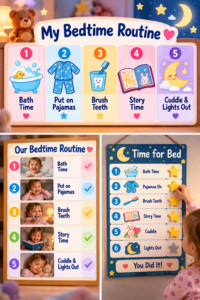
If your toddler enjoys hands-on activities, make the chart interactive. Use a magnetic board, laminated cards, or simple paper pictures with removable markers.
Interactive elements in your Toddler Bedtime Routine Chart can make it more enjoyable for your toddler.
After each activity, invite your child to move a marker or turn over the picture. Keep the process light and encouraging rather than treating it as a test your child must pass.
For safety, keep magnets, small pieces, pins, and detachable parts out of reach of young children. Choose age-appropriate materials and supervise their use.
How to Make Your Own Toddler Bedtime Chart
You don’t need an expensive kit. A sheet of paper, a few pictures, and some clear labels are enough to get started.
Gathering the right materials for your Toddler Bedtime Routine Chart is an essential first step.
Step 1: Choose Four to Six Familiar Activities
Start with the steps your family already follows. Too many pictures can make the chart confusing, so keep it simple.
Step 2: Use Pictures Your Toddler Recognizes
Choose clear illustrations, photographs, or familiar symbols. Add a short label under each picture if helpful, but don’t rely on words alone if your child is not yet reading.
Step 3: Arrange the Steps in Order
Place the pictures from the beginning of the routine to the end. Make sure the chart reflects your actual evening rather than an ideal routine you may find difficult to maintain.
Step 4: Put the Chart at Your Toddler’s Eye Level
Choose a place where your child can see it easily with you nearby. Keep it away from hazards and avoid hanging anything heavy above the bed.
Step 5: Introduce It During the Day
Show your toddler how the chart works when everyone is relaxed. Talk through the pictures together before trying it at bedtime.
Gentle Phrases That Help Your Toddler Follow the Chart
The way you introduce the chart matters. Try using calm, encouraging language instead of repeating commands.
- Instead of: “Put your pajamas on right now!”
Try: “Let’s look at our chart. What’s next?” - Instead of: “Stop asking for another story!”
Try: “You can choose our bedtime story. After the story, it’s time for our goodnight cuddle.” - Instead of: “You’re not following the chart!”
Try: “Let’s look together and see what we still need to do.” - Instead of: “Go to bed. I’ve told you already!”
Try: “We’ve finished our bedtime steps. I’ll help you settle now.”
You can acknowledge your child’s feelings while keeping the routine predictable. For example: “I know you want to keep playing. It’s hard to stop when you’re having fun. Now it’s time for pajamas.”
Make Storytime a Special Part of the Routine
Including a storytime segment in your Toddler Bedtime Routine Chart can enhance the overall experience.
A bedtime story can become a gentle transition between busy activities and a quieter end to the day. It also gives you and your child a few minutes to reconnect without rushing through another instruction.
Choose a short, comforting story and make it part of the chart. Your toddler can help select the book, settle beside you, and enjoy a familiar story before the final goodnight.
🎁 Get Your FREE 5-Minute Bedtime Stories
Looking for gentle stories to add to your child’s bedtime routine? Download our free collection of calming, non-scary bedtime stories for children ages 3–6.
Short, comforting stories in a printable PDF format make it easy to create a cozy storytime moment.
Want more storytime options for your family? Explore the Cozy Bedtime Stories Collection, featuring 30 gentle stories for peaceful evenings and meaningful moments together.
What If Your Toddler Still Resists Bedtime?
A visual chart is a support tool, not a guarantee that bedtime will go smoothly. Toddlers may still feel tired, upset, excited, or reluctant to stop playing.
- Keep the routine consistent, but allow reasonable flexibility.
- Offer two simple choices when possible, such as which pajamas to wear or which story to read.
- Acknowledge feelings without abandoning the bedtime boundary.
Make adjustments to your Toddler Bedtime Routine Chart as your child’s needs evolve.
- Avoid using the chart to shame, threaten, or punish your child.
- Adjust the steps as your child’s needs and abilities change.
If bedtime difficulties are persistent or accompanied by significant distress, pain, or concerns about breathing or sleep, seek advice from your child’s healthcare professional.
Key Takeaways
- A visual bedtime routine chart makes the sequence of activities easier to see.
- Four to six familiar steps are a useful starting point.
- Illustrations, personal photos, or movable markers can all work.
- Introduce the chart when your child is calm and explain how it works.
- Use gentle language, clear boundaries, and realistic expectations.
- Make a comforting bedtime story part of the routine if it suits your family.
Frequently Asked Questions
What should be included in a toddler bedtime routine chart?
Start with four to six familiar activities, such as putting on pajamas, brushing teeth, choosing a bedtime story, having a cuddle, and turning out the lights. Adapt the steps to your family’s routine.
At what age can a child use a visual bedtime chart?
Many toddlers can begin using simple picture cues with a parent’s help. Choose pictures that match your child’s understanding and let them participate at their own pace.
Should I reward my toddler for completing the chart?
You can offer encouragement and celebrate participation, but a reward system isn’t necessary. Keep the focus on learning the routine rather than achieving perfection or making your child feel guilty when a step is difficult.
What if my toddler refuses to follow the chart?
Stay calm, simplify the routine if needed, and guide your child through the next step. The chart is there to support you both, not to create another bedtime battle.
Can a bedtime routine chart stop bedtime resistance?
It may help make bedtime more predictable and reduce uncertainty, but it cannot guarantee that resistance will disappear. Sleep needs, emotions, developmental changes, and family circumstances can all influence bedtime.
Related Bedtime Resources
- Free 5-Minute Bedtime Stories — gentle stories to include in your child’s evening routine.
- The Cozy Bedtime Stories Collection — 30 gentle stories for cozy family storytime.
Bedtime doesn’t have to be perfect to become more peaceful. Start with a few familiar steps, give your toddler a way to see what’s coming next, and use the chart as an invitation to cooperate rather than another rule to enforce.
With gentle consistency, a little flexibility, and a comforting story at the end of the day, you can build a bedtime routine that feels more manageable for your whole family.