Best Books for Toddler Sleep Problems: Parent Guide
In this guide, we’ll explore some of the best books for toddler sleep problems, explain who each book may suit, and share gentle ways to make bedtime feel more predictable and reassuring for your child.
Our goal: Help you find a useful starting point without adding more pressure to an already tiring part of family life.

Key Takeaways
- Best for a practical parent workbook: The Essential Guide to Children’s Sleep by Andrea C. Roth, Allison Shale, and Shelby F. Harris.
- Best for parents who prefer gradual changes: The No-Cry Sleep Solution for Toddlers and Preschoolers by Elizabeth Pantley.
- Best for comparing sleep approaches: Precious Little Sleep by Alexis Dubief.
- Best for a structured sleep plan: The Sleepeasy Solution by Jennifer Waldburger and Jill Spivack.
- Best everyday complement: A familiar, calming bedtime story paired with a consistent routine.
These recommendations are based on each book’s stated focus and intended approach, not on a claim that one method works for every toddler. Always check the latest edition and decide whether the guidance fits your family.
How to Choose the Best Book for Toddler Sleep Problems
Before buying a toddler sleep training book, take a moment to identify the problem you most want to address. A child who repeatedly gets out of bed may need a different approach from one who becomes frightened when the lights go out.
1. Identify your toddler’s main sleep challenge
Consider which situation sounds most familiar:
- Bedtime resistance: Your toddler repeatedly asks for another drink, another story, or one more hug.
- Frequent night waking: Your child wakes during the night and needs help settling again.
- Separation anxiety: Your toddler becomes upset when you leave the room.
- Fear of the dark: Your child feels frightened or unsafe at bedtime.
- Nap difficulties: Your toddler resists daytime sleep, and evenings become particularly challenging.
- An unpredictable routine: Bedtime varies because of family schedules, travel, illness, or changes at home.
Choosing a book that addresses your actual difficulty is generally more useful than trying to follow several sleep programs at once.
2. Choose an approach that fits your family
Some parents prefer clear schedules and step-by-step plans. Others feel more comfortable with gradual adjustments and frequent reassurance. Neither preference should be treated as a measure of how much you care about your child.
Look for a guide that explains its approach, acknowledges individual differences, and gives you enough information to make thoughtful decisions. You do not need to implement every suggestion in a book.
3. Check the age range and the author’s expertise
Make sure the book covers toddlers or preschoolers rather than focusing exclusively on newborns. Sleep patterns and developmental needs change with age, so advice written for babies may not translate directly to a two-, three-, or four-year-old.
4. Look for practical advice rather than guaranteed results
Useful guides explain what parents can try, how to adapt a plan, and what to consider when an approach is not helping. Be cautious of claims that promise perfect sleep within a fixed number of nights.
Best Books for Toddler Sleep Problems
1. The Essential Guide to Children’s Sleep
Authors: Andrea C. Roth, PsyD; Allison Shale, PsyD; and Shelby F. Harris, PsyD, DBSM.
Best for: Parents who want a practical, age-aware workbook to help them understand and work through sleep difficulties.
Published by the American Psychological Association in 2025, The Essential Guide to Children’s Sleep: A Tired Caregiver’s Workbook for Every Age and Stage covers sleep concerns from infancy through the teenage years, including a dedicated section for toddlers.
The book describes different sleep challenges and offers strategies, examples, worksheets, and planning tools. Its focus on individual circumstances makes it a useful option for parents who want to understand the problem before deciding which changes to make.
Why consider it?
- It covers several childhood age groups, including toddlers.
- It approaches sleep problems by considering the child’s particular circumstances.
- It includes practical worksheets to help parents develop a plan.
- It can help families who want a structured resource without assuming that every child needs the same solution.
One thing to consider: This is a parent-focused guide, not a collection of bedtime stories to read aloud to your toddler. You may want to pair it with a simple, comforting evening routine.
Explore the book: The Essential Guide to Children’s Sleep — American Psychological Association.

2. The No-Cry Sleep Solution for Toddlers and Preschoolers
Author: Elizabeth Pantley.
Best for: Parents who want to explore gradual, gentle changes to their toddler’s sleep habits.
Elizabeth Pantley’s The No-Cry Sleep Solution for Toddlers and Preschoolers is a well-known option for families looking for an alternative to more rigid sleep-training plans.
Its approach appeals to parents who want to work on bedtime difficulties progressively while considering their child’s need for comfort and reassurance.
Why consider it?
- It focuses specifically on toddlers and preschoolers.
- It may appeal to parents who prefer making changes gradually.
- It provides another perspective for families comparing different sleep approaches.
One thing to consider: Gradual approaches still require patience and consistency. Progress can vary, and a gentle approach does not guarantee that night waking or bedtime resistance will disappear.
Before purchasing, check the edition and current availability through your preferred bookseller.
3. Precious Little Sleep
Author: Alexis Dubief.
Best for: Parents who want to compare practical sleep strategies and understand different approaches to childhood sleep.
Precious Little Sleep is another book parents may encounter when researching toddler sleep problems. It discusses sleep habits and practical strategies for families experiencing difficult nights.
Why consider it?
- It offers a different perspective from books centered on gradual, low-distress changes.
- It can help parents compare strategies instead of relying on isolated tips from social media.
- It may suit readers who prefer direct, practical explanations.
One thing to consider: Read the sections relevant to your child’s age and circumstances. Decide in advance which methods fit your family’s comfort level, and do not feel obliged to use an approach simply because it appears in a book.
For more information, look for the author’s official book information or a reputable bookseller listing.
4. The Sleepeasy Solution
Authors: Jennifer Waldburger and Jill Spivack.
Best for: Parents who prefer a clearly structured plan for working on sleep difficulties in babies, toddlers, and preschoolers.
The Sleepeasy Solution: The Exhausted Parent’s Guide to Getting Your Child to Sleep from Birth to Age 5 presents a structured approach to helping young children develop sleep skills. The authors describe a customized plan and provide step-by-step guidance for parents.
Why consider it?
- It covers the early-childhood years, including the toddler stage.
- It offers a defined framework rather than a collection of unrelated suggestions.
- It may appeal to parents who feel more comfortable following a plan.
One thing to consider: Its approach may not suit every family’s preferences. Read the methodology before deciding whether it feels appropriate for your child and household.
Explore the book: The Sleepeasy Solution — Simon & Schuster.

Which Toddler Sleep Book Is Right for You?
Use this comparison to narrow down your options.
| Book | Best suited to | Style |
|---|---|---|
| The Essential Guide to Children’s Sleep | Parents who want a practical, age-aware workbook | Educational and structured |
| The No-Cry Sleep Solution for Toddlers and Preschoolers | Parents who prefer gradual changes | Gentle, step-by-step approach |
| Precious Little Sleep | Parents comparing practical sleep strategies | Direct and practical |
| The Sleepeasy Solution | Parents who want a defined plan | Structured and plan-based |
Note: This is a guide to choosing a book, not a clinical ranking. The recommendations reflect each title’s stated focus and general approach; they are not based on a head-to-head trial of the books.
How to Use a Toddler Sleep Book Without Feeling Overwhelmed
Even a helpful book can feel like too much when you are already tired. Instead of trying to change everything at once, start with one manageable goal.
Step 1: Observe what happens at bedtime
For several evenings, make a simple note of when your toddler starts the bedtime routine, when they appear ready to sleep, how long settling takes, and whether they wake during the night.
Also note any recent changes, such as illness, travel, a new sibling, changes in childcare, or a shift in naps. A short record may help you notice patterns without turning bedtime into a complicated project.
Step 2: Choose one practical change
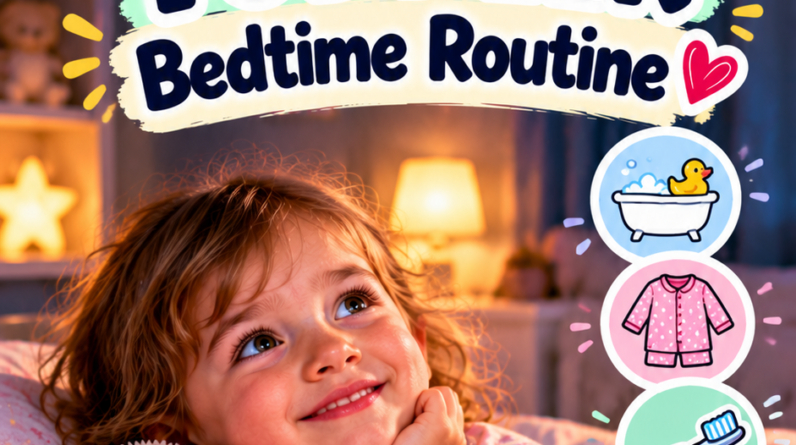
For example, if bedtime becomes difficult because your toddler repeatedly asks for another activity, you might introduce a predictable sequence: pajamas, teeth brushing, one or two stories, a cuddle, and lights out.
If separation is the main difficulty, focus instead on helping your child feel secure and knowing what to expect when you leave the room.
Step 3: Keep the routine predictable
A consistent sequence of familiar activities can help children anticipate bedtime. The exact routine will depend on your family’s schedule, but it should be realistic enough to follow on ordinary evenings.
You do not need an elaborate routine. A few calm, repeatable steps are often easier to maintain than a long list of activities.
Step 4: Review the approach rather than blaming yourself
If a strategy is not helping, pause and consider whether it suits your child’s age, temperament, current circumstances, and your family’s needs. A book offers guidance, not a test of your parenting ability.
If sleep difficulties persist, significantly affect daytime functioning, or come with concerning symptoms, discuss them with your child’s healthcare professional.
Can Bedtime Stories Help With Toddler Sleep Problems?
Parent guides and bedtime storybooks serve different purposes. A parent guide helps you understand sleep challenges and decide what changes to try. A bedtime story gives you and your child a shared, calming activity that can become part of the evening routine.
For some families, the transition from busy daytime activities to bedtime is itself a challenge. A familiar story can offer a quieter moment, encourage connection, and give your toddler a predictable signal that the day is winding down.
Choose stories with a calm tone, reassuring endings, and themes your child finds comforting. If your toddler becomes frightened by particular characters or events, choose something simpler and more familiar.
Try a short, calming bedtime story
You do not need to read for a long time to create a meaningful bedtime ritual. Even a few quiet minutes together can become a reassuring part of the evening.
Looking for a gentle place to start? Books For Minds offers free calming bedtime stories designed to help families create peaceful moments together.
Get your free calming 5-minute bedtime stories and discover a simple way to add storytelling to your child’s bedtime routine.
Build a Calmer Bedtime Routine Around Your Chosen Book
Once you have chosen a parent guide, consider how you will put its ideas into practice. A small number of consistent steps can make an evening feel more predictable for both you and your toddler.
- Begin winding down: Reduce stimulating activities as bedtime approaches.
- Follow a familiar sequence: Keep activities in roughly the same order each evening.
- Offer connection: Make space for a cuddle, a reassuring conversation, or a short story.
- Use calm, clear language: Tell your toddler what comes next without turning every step into a negotiation.
- Allow for individual needs: Adapt the routine when your child is unwell, travelling, or experiencing a major change.
For more practical ideas, explore our related resources:
- Calm Bedtime Routine for Toddlers
- Toddler Bedtime Battles: Gentle Ways to Help
- How to Reset Your Toddler’s Sleep Schedule
- How to Make Bedtime Feel Safe for Children
- Bedtime Stories for Big Feelings
Make Storytime a Special Part of the Evening
If your toddler enjoys being read to, you can build on that interest with a small collection of gentle stories. Repeating a favorite story is perfectly fine; familiarity can be comforting, especially when other parts of the day feel unpredictable.
Look for stories with soothing language, friendly characters, and reassuring themes. Let your child choose between two suitable options when that helps them feel involved, while keeping the overall bedtime routine simple.
Want more stories ready for bedtime? Explore the Cozy Bedtime Stories Collection from Books For Minds for a collection of gentle stories designed for peaceful family storytime.
Remember that a bedtime story is a supportive routine tool, not a guaranteed solution for sleep difficulties. If your child continues to struggle, you can combine comforting routines with appropriate professional guidance.
When Should You Seek Professional Advice About Toddler Sleep?
Books can be a helpful starting point, but some sleep difficulties need individual assessment rather than another change to the bedtime routine.
Speak with your child’s pediatrician or another qualified healthcare professional if sleep problems persist, significantly affect your child’s daytime wellbeing, or leave you concerned about their health or development.
Seek medical advice for symptoms such as habitual loud snoring, pauses in breathing, unusual breathing difficulty during sleep, or persistent signs of pain or illness. Breathing difficulty that appears urgent requires prompt medical attention.
A professional can help you consider possible contributing factors and decide what support is appropriate for your child. You do not have to work everything out from a book alone.
Frequently Asked Questions
What is the best book for toddler sleep problems?
There is no single best book for every family. The Essential Guide to Children’s Sleep is worth considering if you want a practical workbook covering different childhood sleep challenges. Parents who prefer gradual changes may also wish to explore The No-Cry Sleep Solution for Toddlers and Preschoolers.
Which toddler sleep training book is best for gentle methods?
The No-Cry Sleep Solution for Toddlers and Preschoolers by Elizabeth Pantley is a well-known option for parents who prefer gradual changes. Read the approach carefully and choose strategies that fit your child and family.
Can books solve toddler sleep problems?
Books can help parents understand common sleep difficulties and explore practical strategies, but they cannot guarantee a solution. Persistent or concerning problems may require advice from a qualified healthcare professional.
Are bedtime stories good for toddlers who resist sleep?
Bedtime stories can become a calming, predictable part of an evening routine. They may help children transition from active play to quieter time with a caregiver, although stories alone will not resolve every cause of bedtime resistance.
Should I use more than one toddler sleep book?
You can compare different books, but trying several approaches simultaneously may make it difficult to understand what is helping. Start with one guide that fits your priorities, then introduce manageable changes and review how your child responds.
What if my toddler wakes up crying every night?
Repeated night waking can have different causes, including developmental changes, fear, discomfort, illness, or sleep habits. Consider keeping a simple sleep record and speak with your child’s healthcare professional if the pattern persists, causes significant distress, or comes with other concerning symptoms.
What should I look for in a bedtime book for toddlers?
Choose age-appropriate stories with reassuring themes, calm language, and an ending that feels comfortable for your child. If your toddler is easily frightened, avoid stories with intense conflict or unsettling imagery.
When should I worry about toddler sleep problems?
Consider seeking professional advice if the difficulties persist, substantially affect daytime wellbeing, or concern you because of symptoms such as loud habitual snoring, breathing pauses, or signs of pain or illness. A healthcare professional can help determine whether further assessment is needed.
Final Thoughts: Choose a Book That Fits Your Family
The best books for toddler sleep problems do more than offer a list of bedtime rules. They help parents understand their child’s needs, consider practical options, and make thoughtful changes without expecting every family to follow the same path.
If you want a workbook covering different childhood sleep challenges, consider The Essential Guide to Children’s Sleep. If you prefer a gradual approach, explore The No-Cry Sleep Solution for Toddlers and Preschoolers. If a structured plan suits you better, review the approach described in The Sleepeasy Solution before deciding whether it fits your family.
Whatever guide you choose, start small. A predictable routine, a reassuring connection, and a familiar bedtime story can provide a gentle foundation for calmer evenings.
Start with one peaceful moment tonight. Get your free calming 5-minute bedtime stories from Books For Minds and make storytime part of your family’s evening routine.
https://youtu.be/wNK1G2vCL5Q