Preschool Bedtime Stories: Simple Night Stories for Kids
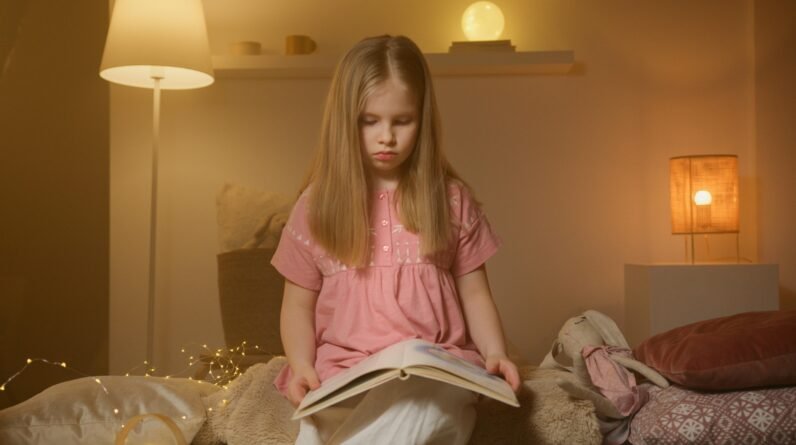
Preschool bedtime stories work best when they are short, gentle and easy to follow. For children ages 3–6, a familiar story can become an important part of the transition from a busy day to a quieter bedtime.
When a preschooler is overtired, overstimulated, worried about the dark or asking for “one more story,” an exciting adventure may make settling harder. A simple story about a sleepy bear, a quiet moon, a drifting cloud or a warm blanket can create a much softer ending to the day.
This guide gives you practical ways to choose and read preschool bedtime stories, three original ready-to-read stories, calming scripts, age-appropriate ideas and a simple routine you can begin using tonight.
Key Takeaways
- Preschool bedtime stories should usually be short, calm and predictable.
- Children ages 3–6 often respond well to gentle animal, moon, star, cloud, garden and friendship themes.
- Slow reading, repetition and peaceful endings can make storytime less stimulating.
- A familiar closing phrase can help signal that storytime is finished and bedtime has begun.
- Repeating a favourite story is perfectly fine and can make bedtime feel more predictable.
- On especially tired evenings, a very short story may work better than extending bedtime with another long book.
Why Preschool Bedtime Stories Can Help Kids Settle
Preschool children are still learning how to move from activity to rest. At the end of the day, their bodies may be tired while their minds are still processing play, conversations, new experiences and emotions.
A predictable bedtime story creates a clear change of pace. Instead of asking a child to move immediately from activity to sleep, storytime provides a quiet bridge between the two.
Stories Create Predictability
Young children often respond well to routines they can anticipate. When the sequence becomes familiar—pyjamas, story, cuddle, goodnight—the child knows what comes next.
Stories Create Calm Connection
Reading together provides a few minutes of focused parent-child connection without requiring complicated activities. A familiar voice and reassuring presence can help make bedtime feel warmer and safer.
Stories Can Replace High-Energy Evening Activities
Moving from energetic play or screens to a quiet story can reduce stimulation before lights out. The story itself should also become progressively calmer rather than building towards a dramatic climax.
Stories Give Busy Minds Something Gentle to Follow
A preschooler who is thinking about tomorrow, worrying about a noise or simply resisting bedtime can focus instead on one slow, predictable story.
If bedtime itself feels uncertain or uncomfortable for your child, our guide on how to make bedtime feel safe offers additional practical ideas.
How to Choose the Best Preschool Bedtime Stories
The best bedtime story is not necessarily the most educational, longest or most exciting. At bedtime, the goal is usually to find something engaging enough to hold attention but gentle enough to support the transition towards rest.
1. Keep the Story Manageable
For many preschoolers, approximately 3–10 minutes is enough. If your child is already very tired, choose something shorter.
2. Choose a Gentle Theme
Good preschool bedtime themes include:
- Sleepy animals returning to their nests or dens.
- The moon travelling quietly across the sky.
- Stars dimming for the night.
- Clouds floating slowly.
- Gardens becoming quiet.
- Friends helping one another.
- Favourite blankets, toys and familiar bedrooms.
3. Look for Simple Language
Short sentences and familiar words are easier for tired children to follow. Bedtime does not need to become a vocabulary lesson.
4. Use Repetition
A repeated line gives the story a familiar rhythm. Examples include:
“The night is quiet. The room is safe. It is time to rest.”
5. Avoid Unnecessary Suspense
Fast chases, frightening characters, unresolved problems and cliffhangers can increase alertness. If your child is sensitive to frightening themes, choose from our non-scary bedtime stories for kids.
6. Check the Ending
A good preschool bedtime story should clearly communicate that the small problem is over, the character is safe and nothing else needs to happen tonight.
Watch a Gentle Preschool Bedtime Story
If your family sometimes uses video storytime, keep the experience calm and avoid moving from one video to another once the bedtime story is complete.
Bedtime Story Length by Age
There is no perfect bedtime story length for every child. Mood, tiredness and attention matter more than reaching a particular number of minutes. The following ranges are practical starting points.
| Age | Suggested Length | Story Style |
|---|---|---|
| 2–3 years | 2–5 minutes | Very simple animal, blanket, moon or repetitive stories |
| 3–4 years | 3–6 minutes | Short stories with repetition and one simple event |
| 4–5 years | 4–8 minutes | Gentle stories with slightly richer characters and imagery |
| 5–6 years | 5–10 minutes | Longer picture stories and simple early-reader stories |
For broader age-specific recommendations beyond the preschool years, explore our bedtime stories for kids by age guide.
8 Calming Preschool Bedtime Story Ideas
These simple ideas are designed around familiar preschool themes and peaceful endings. You can use them as inspiration for your own story or simply describe the idea in a few sentences on nights when you do not have a book nearby.
1. Sleepy Star
Best for: Ages 3–5
Theme: Slow breathing and rest
A tiny star discovers that it does not have to shine brightly all night. It learns to glow more softly with every slow breath.
Closing phrase: “Breathe like the sleepy star.”
2. Bear’s Warm Den
Best for: Ages 2–4
Theme: Safety and comfort
A gentle bear checks on each friend before settling into a warm den beneath the trees.
Closing phrase: “The den is warm. The night is kind.”
3. The Quiet Boat
Best for: Ages 4–6
Theme: Slow movement
A little boat floats past three sleepy islands before returning quietly to shore beneath the moon.
Closing phrase: “The boat rocks softly home.”
4. Moon’s Slow Ride
Best for: Ages 3–5
Theme: Nighttime reassurance
The moon travels slowly above houses, trees and gardens, watching each part of the neighbourhood settle for sleep.
Closing phrase: “The moon is here. It is time to rest.”
5. Daisy’s Blanket
Best for: Ages 3–5
Theme: Comfort and sharing
A little rabbit finds her favourite blanket and shares one warm corner with her teddy bear.
Closing phrase: “Soft blanket, sleepy bunny, quiet night.”
6. Clouds That Count
Best for: Ages 2–4
Theme: Counting and slowing down
Fluffy clouds drift across the evening sky, each moving a little more slowly than the one before.
Closing phrase: “Clouds drift slow. Time to rest.”
7. The Little Lantern
Best for: Ages 3–6
Theme: Feeling safe at night
A small lantern helps tired woodland animals find their familiar sleeping places beneath the stars.
Closing phrase: “The little light is glowing. The night is safe.”
8. Goodnight Garden
Best for: Ages 3–5
Theme: Nature and rest
Flowers close their petals, tiny creatures find their sleeping places and the garden becomes still.
Closing phrase: “The garden rests, and so do we.”

3 Ready-to-Read Preschool Bedtime Stories
These short original stories are designed for calm reading. Slow your voice as each story progresses and allow a brief pause after the repeated phrases.
Story 1: Sleepy Star
High above the rooftops, one little star blinked in the evening sky.
It was not a busy blink.
It was a slow, sleepy blink.
The little star looked down and saw a child getting ready for bed.
The child brushed their teeth.
The child put on soft pyjamas.
The child climbed beneath a warm blanket.
The little star whispered, “Breathe in slowly. Breathe out softly.”
The child took one slow breath.
The star blinked gently.
The room became quieter.
The pillow felt cool.
The blanket felt warm.
The little star whispered again, “Breathe like the sleepy star.”
The child took another gentle breath.
Outside, the moon moved slowly across the sky.
Inside, everything felt still.
The little star gave one final sleepy blink.
The child closed both eyes.
The star stayed nearby, glowing softly until morning.
Story 2: Bear’s Warm Den
Bear had a warm little den beneath an old pine tree.
Every evening, Bear made sure everyone was comfortable before going to sleep.
First, he tucked in Fox.
“Goodnight, Fox,” said Bear.
“Goodnight, Bear,” Fox whispered.
Next, Bear tucked in Bunny.
“Goodnight, Bunny.”
Bunny pulled the blanket beneath her chin.
“Goodnight, Bear.”
Then Bear found Mouse a tiny soft leaf to use as a blanket.
“Goodnight, Mouse.”
Mouse gave a tiny yawn.
“Goodnight, Bear.”
The den became quiet.
Outside, the wind moved softly through the pine branches.
Inside, everyone was warm.
Bear climbed into his own bed and pulled his blanket up to his chin.
He looked at his sleepy friends and whispered:
“The den is warm. The night is kind.”
Fox closed his eyes.
Bunny closed her eyes.
Mouse curled beneath the little leaf.
Bear closed his eyes too.
The den was warm.
The forest was quiet.
Everyone rested safely until morning.
Story 3: The Quiet Boat
A little boat floated on a quiet lake.
The boat was not in a hurry.
It rocked slowly beneath the evening sky.
Rock… rest. Rock… rest.
First, the boat passed Sleepy Island.
The trees there were becoming still.
“Goodnight, trees,” whispered the boat.
Rock… rest. Rock… rest.
Next, it passed Moon Island.
The sand looked silver beneath the moonlight.
“Goodnight, moon,” whispered the boat.
Then it passed Star Island, where tiny lights blinked softly overhead.
“Goodnight, stars.”
The little boat gave a long, sleepy yawn.
“It is time to go home,” whispered the moon.
The boat turned gently towards shore.
Rock… rest. Rock… rest.
The water became still.
The sky became quiet.
The little boat reached its familiar shore and rested beneath the stars.
Nothing else needed to happen tonight.
The journey was finished.
It was time to sleep.
Short Calming Scripts for Preschool Bedtime
If the story has finished but your child still needs a little help transitioning towards rest, use one short calming script rather than automatically starting another story.
Gentle Cloud Script
“Imagine a soft cloud floating across the sky. It moves slowly over the sleepy hills. The busy day is finished. The cloud keeps floating, soft and slow. Now it is time to rest.”
Cozy Den Script
“Your blanket is warm. Your pillow is soft. Your room is safe. The day is finished. Everything can become quiet now.”
Moon Boat Script
“The little moon boat rocks slowly. Rock and rest. Rock and rest. The water is quiet. The sky is calm. The boat is safely home.”
How to Read Preschool Bedtime Stories Aloud
The way you read can matter just as much as the story you choose. Bedtime storytelling works best when it feels noticeably calmer than daytime reading.
Use a Softer Voice
You do not need to whisper. Use a warm, comfortable voice and gradually reduce your volume towards the end.
Read More Slowly
A slightly slower pace makes the story feel less stimulating and gives your child time to follow the images and words.
Pause After Calming Lines
“The den is warm. The night is kind.”
Keep Character Voices Gentle
Funny voices can be wonderful during daytime reading, but loud or dramatic character performances can wake a tired preschooler back up.
Limit Questions
Bedtime does not need to become a reading-comprehension exercise. If you ask a question, keep it simple and gentle.
Use the Same Closing Phrase
“The story is finished. The room is quiet. It is time to rest.”
A Simple 4-Step Preschool Bedtime Story Routine
A story is most useful when it sits inside a predictable evening routine rather than becoming an open-ended activity.
| Step | Example | Purpose |
|---|---|---|
| 1. Wind down | Quiet play and lower household energy | Begin reducing stimulation |
| 2. Get ready | Bathroom, teeth, pyjamas and water | Finish practical requests before reading |
| 3. Read | One short, calming bedtime story | Create connection and predictability |
| 4. Close | Cuddle, goodnight phrase and lights out | Signal that the bedtime routine is complete |
A consistent routine does not need to be complicated. For additional ideas, see our guide to a bedtime routine that actually works.
Preschool Bedtime Stories by Theme
Animal Bedtime Stories
Animal stories are especially easy for preschool children to understand because dens, nests, families and sleepy animals provide familiar images.
- Bear’s Warm Den
- Sleepy Bunny’s Blanket
- Little Fox Finds a Pillow
- Owl Watches the Moon
Moon and Star Bedtime Stories
The night sky naturally fits bedtime storytelling. Keep the moon and stars friendly and reassuring rather than mysterious or frightening.
- Sleepy Star
- Moon’s Slow Ride
- The Star That Blinked Goodnight
- Pocket of Stars
For another nighttime theme, explore our moon bedtime story for kids.
Cloud and Nature Stories
Clouds, gardens, quiet water and gentle breezes create slow sensory images that work naturally in bedtime stories.
- Clouds That Count
- Goodnight Garden
- Wind Whisper
- The Quiet Pond
Kindness Stories
A bedtime story can include a simple value without becoming a lesson. Show the value through the character’s actions and then allow the story to end peacefully.
- Daisy Shares Her Blanket
- The Little Lantern Helps
- Bear Tucks In His Friends
- The Bunny Who Waited

Bedtime Stories for Preschool and Early Readers Ages 5–6
Older preschoolers and kindergarten children may enjoy recognising familiar words or reading one or two lines themselves. Keep this optional at bedtime so storytime remains relaxing rather than becoming a reading test.
A Tiny Early-Reader Bedtime Story
I see the moon.
I see a star.
I see the cat.
The cat is in bed.
The cat can rest.
Goodnight, cat.
If your child enjoys participating in the reading, choose repeated words, short sentences and familiar vocabulary.
For dedicated early-reading material, visit our reading stories for kindergarten resource.
Create Your Own Preschool Bedtime Story
You do not need to be an experienced storyteller. A preschool bedtime story can be built from five simple ingredients.
| Story Part | What to Choose | Example |
|---|---|---|
| Character | Animal, child, star, cloud or toy | Little Bunny |
| Calm place | Bedroom, garden, den, boat or moonlit hill | Warm den |
| Gentle action | Yawn, tuck in, float, whisper or share | Bunny finds a blanket |
| Repeated phrase | One reassuring sentence | “Soft and slow, time to rest.” |
| Ending | The character becomes safe and still | Bunny closes both eyes |
Fill-in-the-Blank Preschool Story
Once there was a little [character] who lived near a quiet [place]. One evening, the little [character] found a [comforting object]. Everything became softer and quieter. The little [character] whispered, “[calming phrase].” Then both eyes closed, the night became still and everyone rested safely until morning.
Common Preschool Bedtime Story Mistakes to Avoid
Choosing a Story That Is Too Exciting
Save fast adventures, dramatic mysteries and high-energy humour for earlier in the day. Bedtime stories should gradually decrease rather than increase stimulation.
Reading for Too Long
More storytime is not always better. If your preschooler is exhausted, a three-minute story may be more useful than stretching bedtime with a long book.
Turning Storytime Into a Test
Questions such as “What happened?”, “What letter is that?” and “What do you think comes next?” can be valuable during daytime reading. At bedtime, simply enjoying the story together may be enough.
Beginning Another Story After the Agreed Limit
If the routine is one story, try to keep that boundary predictable. Follow the story with a short calming phrase or cuddle instead.
Introducing Frightening Content
Children differ considerably in what they find scary. If something worries your child, acknowledge it and choose a safer story rather than insisting that the story should not feel frightening.
Changing the Routine Every Night
Consistency often matters more than finding the perfect story. A familiar sequence and familiar ending can make bedtime easier to anticipate.
Frequently Asked Questions About Preschool Bedtime Stories
What are the best preschool bedtime stories?
The best preschool bedtime stories are usually short, easy to understand and emotionally reassuring. Gentle animal, moon, star, cloud, friendship and familiar-home stories work particularly well when they end peacefully.
How long should a bedtime story be for a preschooler?
Many preschoolers do well with approximately 3–10 minutes of bedtime reading. A younger or very tired child may prefer something shorter, while an older preschooler may enjoy a slightly longer story if it remains calm.
Is it okay to read the same bedtime story every night?
Yes. Repetition can make storytime predictable and reassuring. If your child repeatedly chooses a favourite story, there is no need to introduce a different one every evening.
What if my preschooler always asks for one more story?
Set the story limit before reading begins. When the story finishes, use the same short closing phrase or calming script instead of automatically starting another book.
Should preschool bedtime stories be educational?
They can contain useful language and gentle values, but bedtime does not need to become a lesson. Calm connection and a peaceful transition towards sleep are usually more important than testing learning at that moment.
What if my child is too tired for a full bedtime story?
Choose a very short story or a simple micro-story. A few calm minutes can preserve the familiar bedtime ritual without extending the evening unnecessarily.
Are scary stories suitable for preschool bedtime?
It depends on the child, but bedtime is generally better suited to stories that feel emotionally safe. If your child is sensitive to frightening themes, avoid threatening characters, unresolved danger and suspense before sleep.
Can preschool children help read their bedtime story?
Yes. Older preschoolers may enjoy recognising repeated words or reading a short line. Keep participation optional so bedtime reading remains relaxing rather than becoming a performance or test.
What should I do if bedtime stories make my child more excited?
Try a shorter story, reduce dramatic voices, choose a lower-energy theme and slow your reading towards the ending. You can also move especially exciting books to daytime reading.
What is a good way to end a preschool bedtime story?
Use a simple, consistent phrase that clearly closes both the story and the routine, such as: “The story is finished. The room is quiet. It is time to rest.”
Final Thoughts
Preschool bedtime stories do not need complicated plots or long reading sessions to become meaningful. For many children ages 3–6, one gentle character, one familiar setting and one peaceful ending are enough.
Choose a short story, lower the evening energy, read slowly and finish with the same reassuring phrase. If your child asks for the same favourite story tomorrow night, that familiarity can become part of the routine.
Over time, storytime can become a simple nightly signal: the busy part of the day is finished, connection is still here, and now it is time to rest.